Every year on July 14th, the skies of Paris are filled with dozens of fighter jets, helicopters, tankers, and other military aircraft during the traditional military parade. The 2026 edition was one for all the records, with more foreign participation, as well as many more aircraft involved and the celebrations of the 400th anniversary of the French Navy, the renowned Marine Nationale. This article looks back at this extraordinary edition of the flypast, both from the ground and in the air.
The 2026 parade over Paris
At precisely 10:28 a.m. on July 14th, 2026, the first aircraft crossed the skies above the iconic Place de la Concorde, officially opening the aerial phase of France's Bastille Day military parade. From the presidential tribune, President Emmanuel Macron, accompanied by numerous foreign heads of state, government officials and military representatives, watched one of the largest and most symbolic military displays in Europe.
Over the following minutes, an impressive succession of formations crossed the Parisian sky. In total, 98 aircraft and 33 helicopters flew over the capital with remarkable precision. Each formation maintained an interval of exactly 40 seconds, with fast jets flying at approximately 300 knots, slower aircraft at around 180 knots, and all aircraft passing overhead at an altitude of roughly 1,000 feet, demonstrating the exceptional coordination needed for such a complex event.
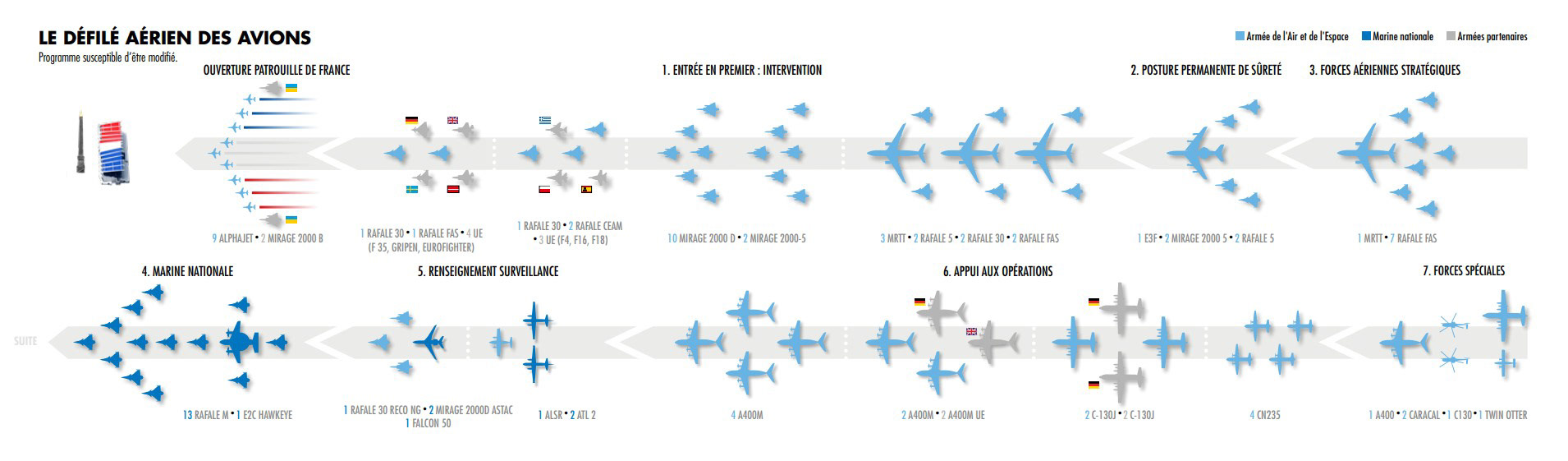
The central theme of the 2026 edition was European unity and solidarity with Ukraine. The parade opened with the Patrouille de France accompanied by two Mirage 2000B, each carrying a Ukrainian pilot in their backseat, symbolizing France's continued support for Ukraine and the growing cooperation between European air forces. From there, the air parade unfolded through a series of thematic formations, each illustrating a different operational capability of the French Armed Forces.
Following the opening display, the first sequence, Entry First: Intervention, was among the highlights of the parade. A remarkable multinational formation of ten fighter aircraft demonstrated Europe's increasing military interoperability, featuring French and Greek Rafale, a German Eurofighter Typhoon, British and Danish F-35 Lightning II, a Swedish JAS 39 Gripen, a Polish F-16 Fighting Falcon and a Spanish EF-18 Hornet. This was followed by a box of a dozen Mirage 2000s, primarily -D variants alongside two -5F air defence fighters. The sequence concluded with an impressive trio of A330 MRTT Phénix tanker aircraft, each escorted by two Rafale, illustrating France's ability to rapidly project air power over long distances through aerial refuelling.
Only moments later, the Permanent Air Security Posture took centre stage. An E-3F AWACS, escorted by two Mirage 2000-5F and two Rafale from Escadron de Chasse 1/5 Vendée, highlighted the permanent surveillance and protection of French airspace. This formation represented a part of the network of AEW&C and Quick Reaction Alert fighters that remain on standby around the clock to respond to any threat.
The next formation honoured the Strategic Air Forces, the airborne component of France's nuclear deterrent. An A330 MRTT Phénix accompanied by seven Rafale from Saint-Dizier AFB demonstrated the credibility and permanence of one of the two pillars of France's independent nuclear deterrent.
Celebrating the 400th anniversary of the Marine Nationale, the naval aviation component delivered one of the parade's most memorable formations. Twelve Rafale M fighters and an E-2C Hawkeye flew in the shape of a boat anchor, a symbolic tribute to four centuries of the Marine nationale. It marked the first time such a formation had been presented during the Bastille Day flypast.
The Intelligence and Surveillance sequence highlighted the diversity of France's reconnaissance capabilities. A Rafale equipped with the Reco NG reconnaissance pod led the formation, followed by two Mirage 2000D carrying ASTAC electronic intelligence pods. Behind them came a Falcon 50M assigned to maritime surveillance, a Beechcraft ALSR specializing in airborne intelligence gathering, and two Atlantique 2 maritime patrol aircraft, illustrating the complementary roles of tactical, electronic and maritime intelligence assets.
The sixth act, Operational Support, showcased France's strategic airlift capability. Four French A400M Atlas transport aircraft were followed by another formation of four A400Ms, including aircraft from Germany and the United Kingdom, underlining the importance of multinational cooperation in tactical air transport. The Binational Air Transport Squadron (BATS), based at Évreux Air Base, then presented four C-130J Super Hercules—two operated by France and two by Germany—before four CN235 CASA tactical transports brought the sequence to a close.
The final chapter of the flypast focused on French Special Operations. An A400M equipped for AAR operations flew alongside two EC725 Caracal helicopters, a DHC-6 Twin Otter and a C-130H Hercules. The appearance of the Hercules was particularly symbolic, likely marking its final Bastille Day parade before its progressive retirement from French service after decades of operational deployments worldwide.
Beyond the aerial display, the 2026 Bastille Day parade brought together 6,686 marching troops, 315 military vehicles and motorcycles, and 193 horses of the Republican Guard, offering a complete presentation of France's armed forces and internal security services. Nearly 500 military personnel from 35 partner nations also marched alongside their French counterparts, reinforcing this year's message of European solidarity and collective defence.
Combining aerial precision, multinational participation and a strong symbol, the 2026 Bastille Day parade stood out as the biggest and most internationally oriented editions in recent years, reflecting both the evolution of the French Armed Forces and the growing importance of European defence cooperation.
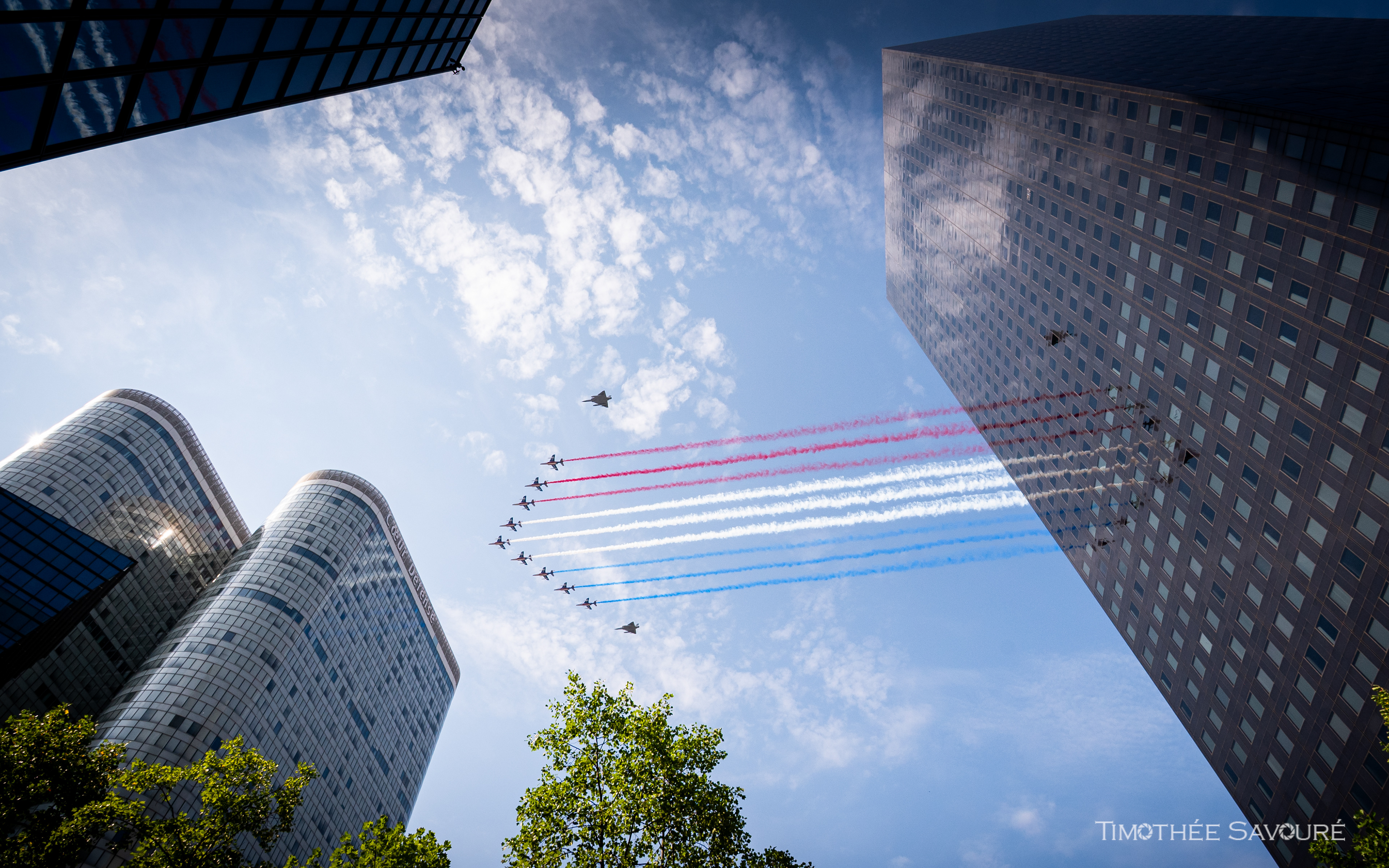
Patrouille de France escorted by a pair of Mirage 2000B with Ukrainian pilots onboard
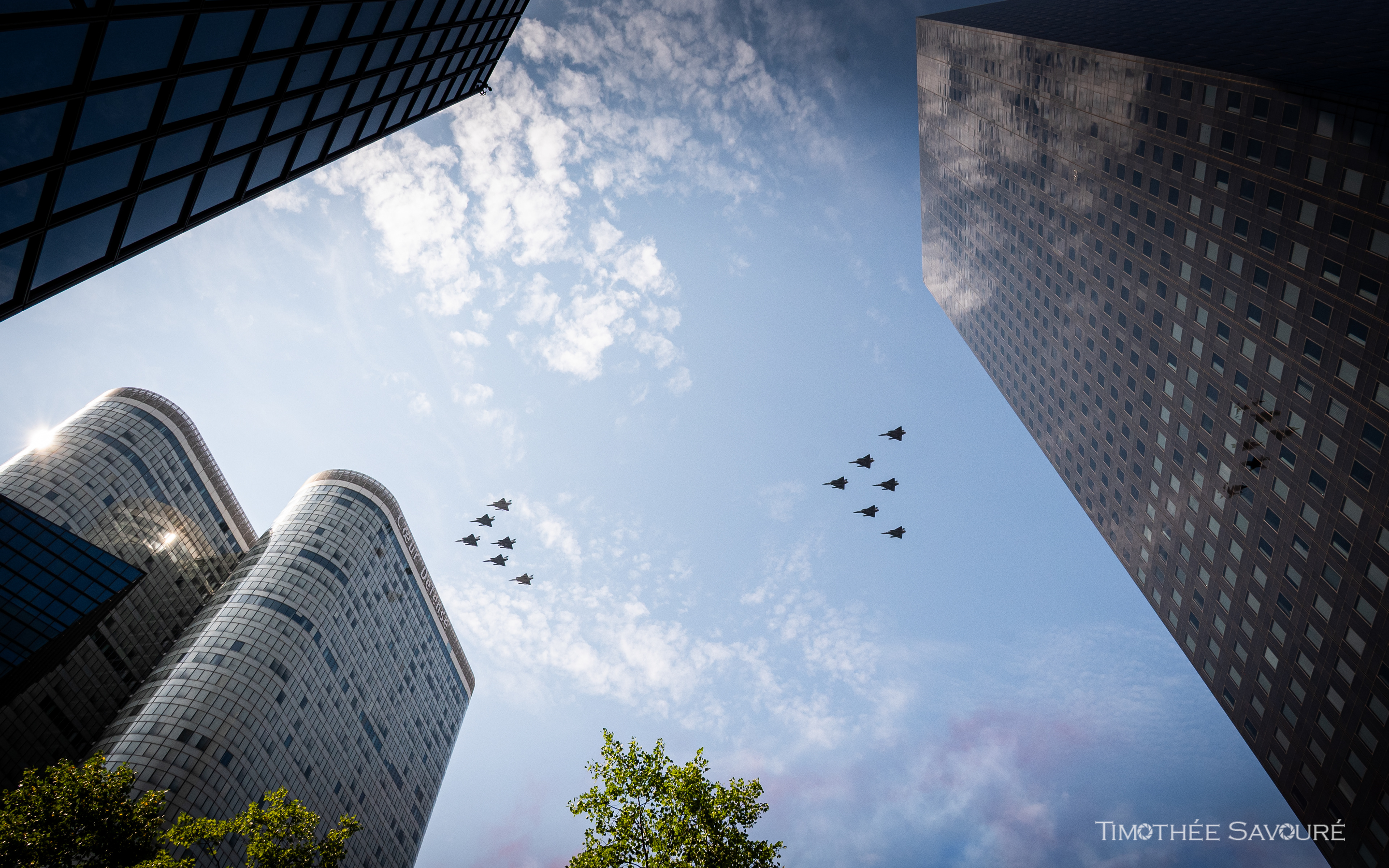
12 Mirage 2000 over La Défense for Bastille Day 2026
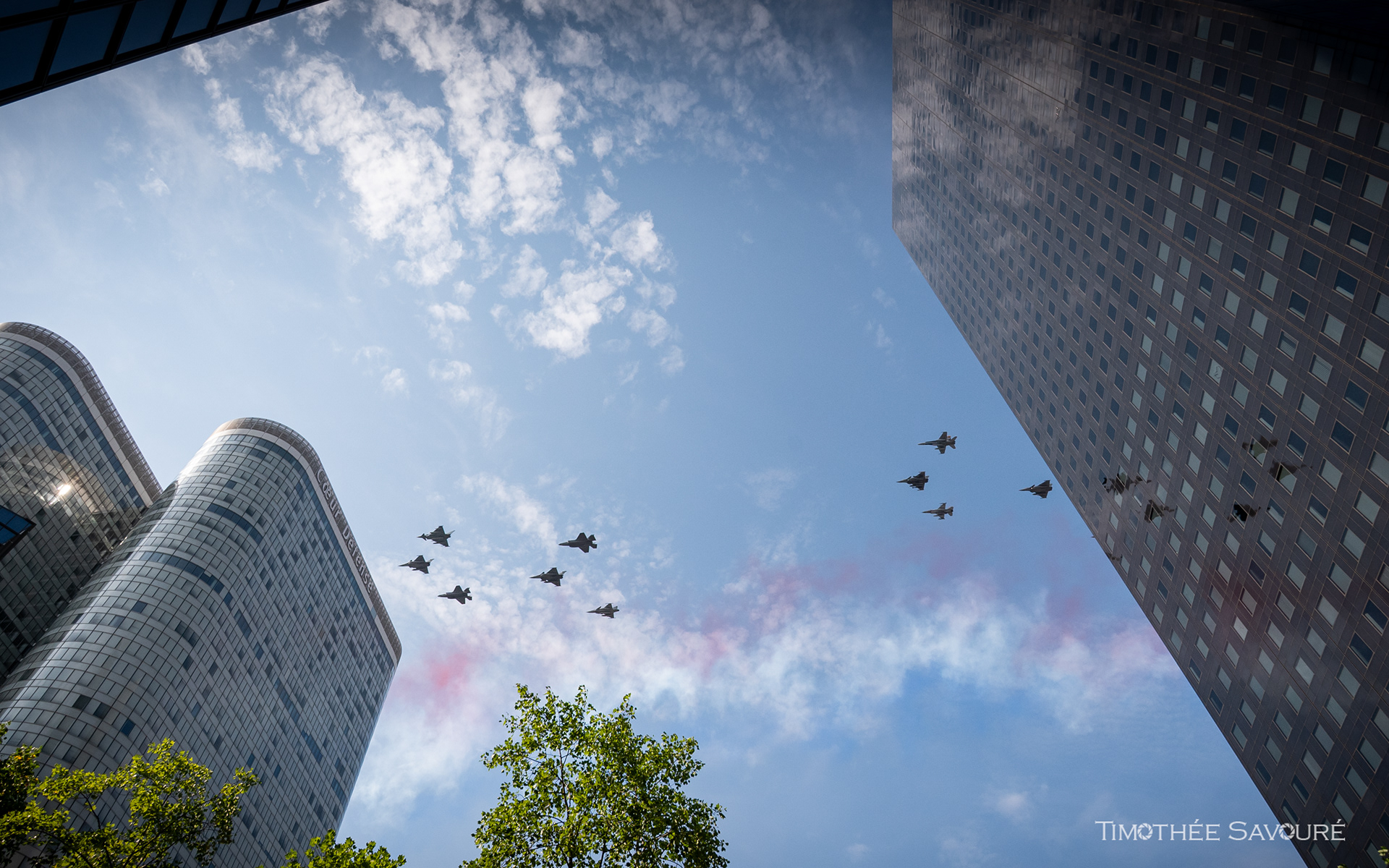
European cooperation in action with French, Greek, English, Danish, Polish, Spanish and Swedish fighters.
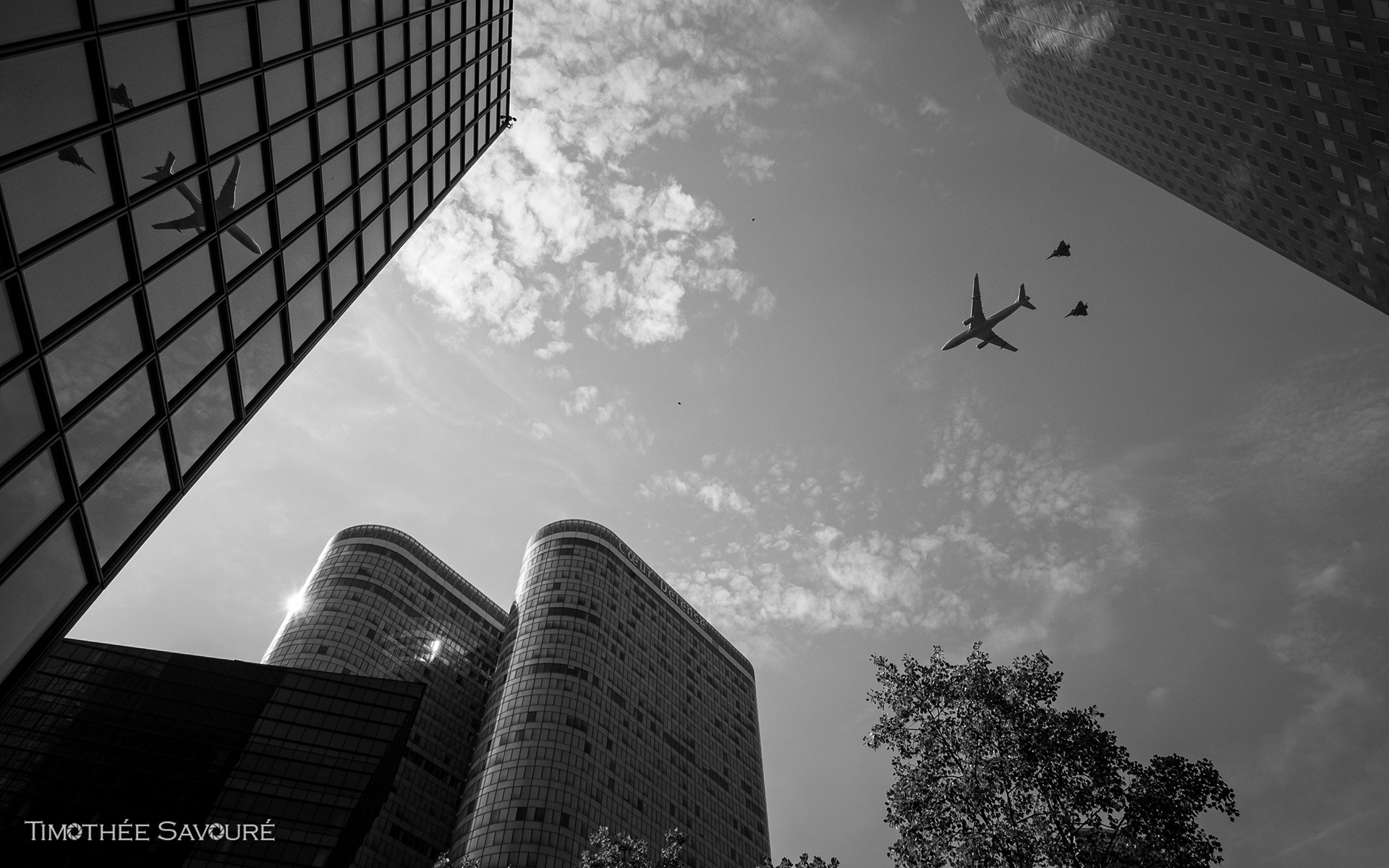
One of the MRTT composing the Entry First tableau
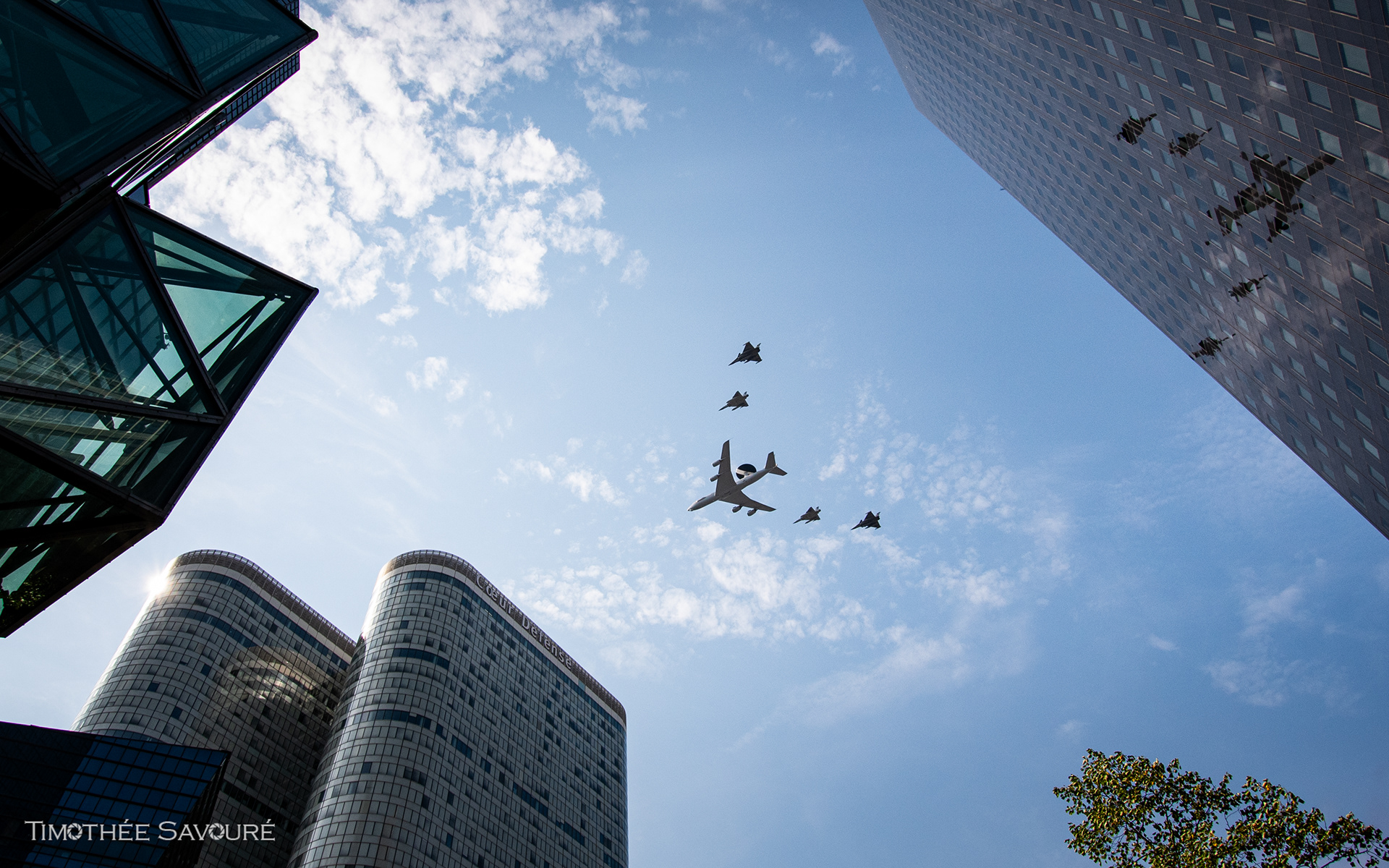
One of the French Air & Space Force E-3F AWACS with Mirage 2000 and Rafale
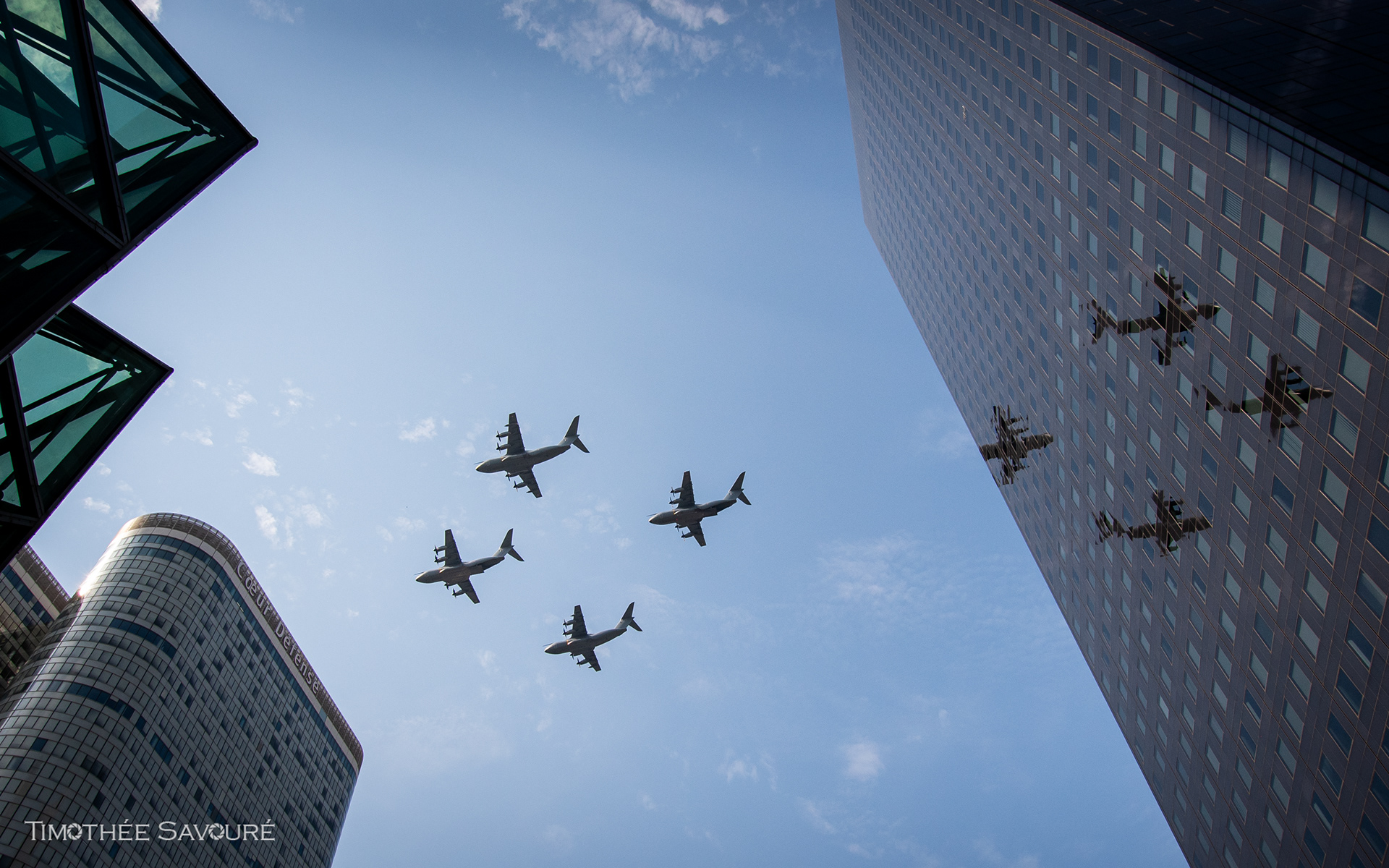
4 Airbus A400M Atlas from the Armée de l'Air et de l'Espace and Luftwaffe
2026: Marine Nationale 400th anniversary
In 2026, the French Navy (Marine Nationale) celebrates its 400th anniversary of existence, making it one of the oldest in the world. During the whole year, a series of events allow the public to witness the legacy of this Navy, and to look back to its incredible history.
The year 1626 marked the starting point of this long history. Under Louis XIII, Cardinal Richelieu was appointed "Grand Master, Chief, and Superintendent General of the Seas, Navigation, and Commerce." Behind this ancient title lay an idea that was modern for its time: to provide France with an organized, permanent navy capable of defending its coasts, supporting its trade routes, and asserting its standing on the oceans. Richelieu understood early on that the sea was not merely a distant horizon; it was already a realm of power, commerce, rivalry, and influence. Major European nations were engaged across the Atlantic, the Mediterranean, the Indies, and the Americas. To exert influence in this dynamic world, France needed robust ports, ships, trained crews, and an organization built to last.
It is this pivotal moment that the French Navy is commemorating in 2026. The anniversary celebrates not just a single date, but the gradual emergence of a French maritime ambition. Over the past four centuries, this ambition has evolved in form, means, and scale, while remaining driven by the same fundamental purpose: enabling France to operate at sea.
Over the centuries, the French Navy has played a part in major historical events. It has supported great scientific expeditions, protected maritime routes, taken part in decisive conflicts, and extended the French presence to distant regions.
One of the most renowned episodes is the Battle of the Chesapeake in 1781. The French fleet, commanded by Admiral de Grasse, played a pivotal role in the American War of Independence by helping to isolate British forces at Yorktown. This episode highlights a frequently overlooked reality: naval history sometimes unfolds far from French shores, yet carries major political consequences.
The Navy has also navigated through periods of technological transformation. Sail gave way to steam, wood to metal, conventional cannons to modern combat systems, and celestial navigation to digital tools. Each era demanded new methods of construction, navigation, combat, and crew coordination. This capacity for adaptation has been a constant theme throughout these 400 years. The French Navy moves with the times while upholding a deeply rooted culture of the sea, the mission, and life as a crew.
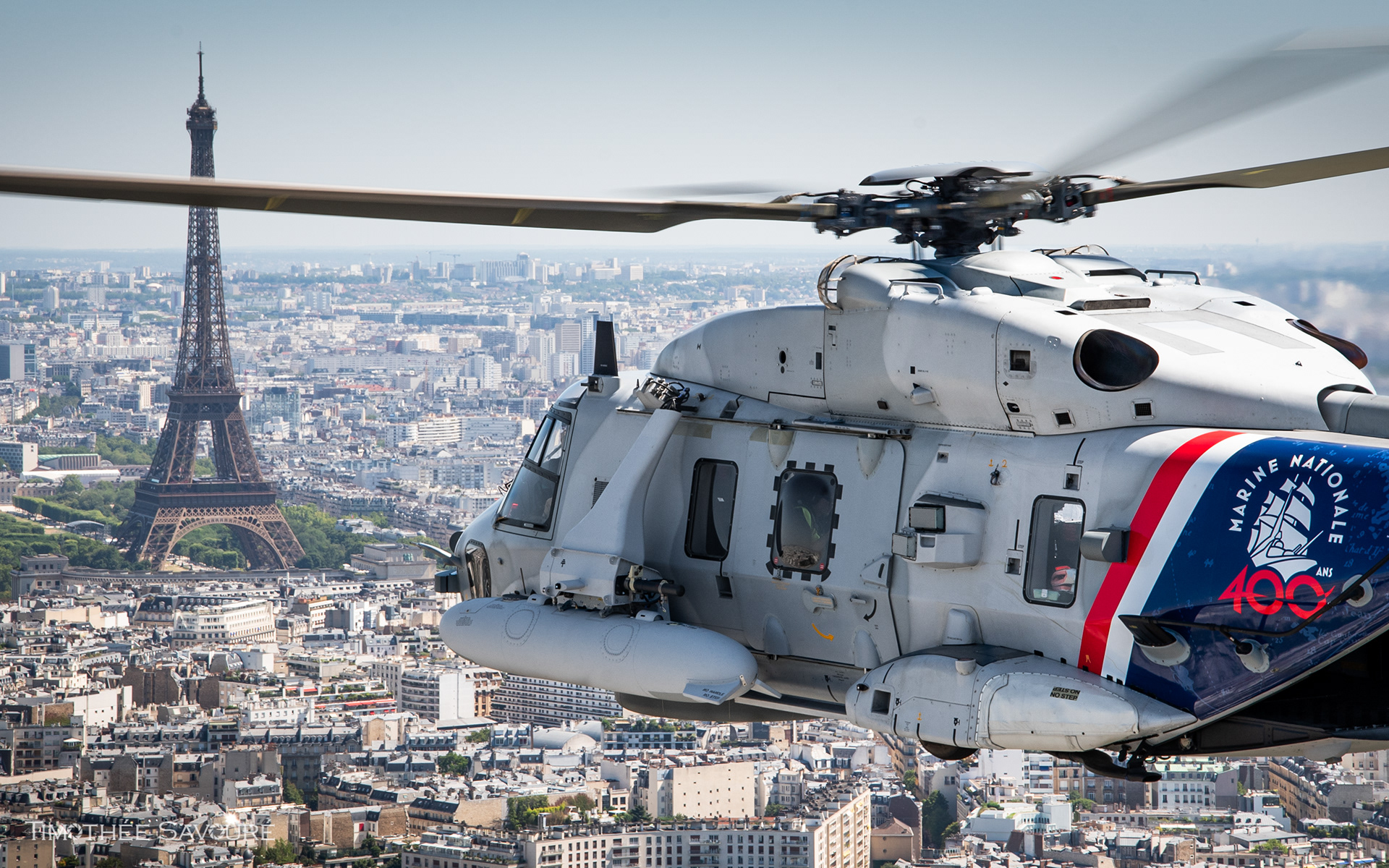
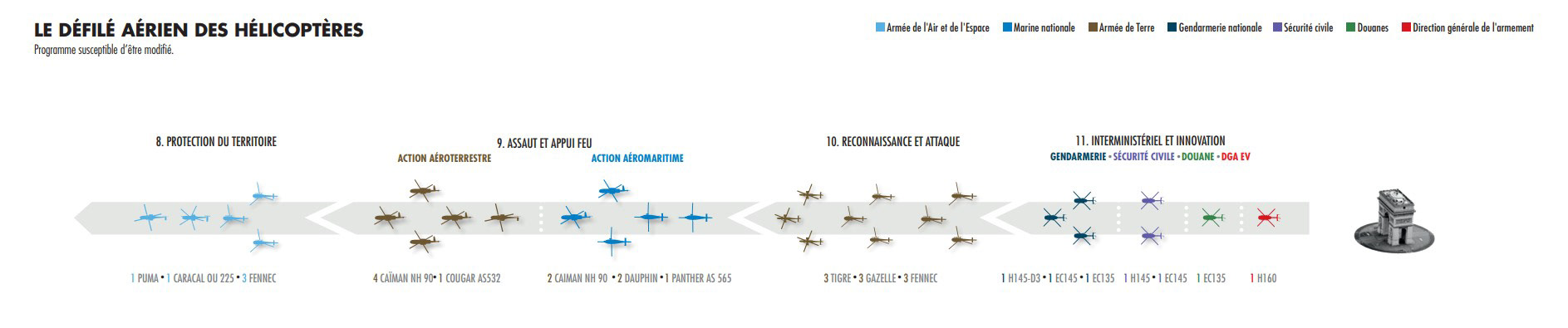
During the 2026 aerial parade, a diversity of aircraft and helicopters of the French Navy were shown to the public. As previously mentionned before, the airplane part of the parade saw 12 Rafale M, an E-2C Hawkeye, a Falcon 50M as well as a pair of Atlantique 2 maritime patrol aircraft. As for the helicopters, 2 NH-90 Caïman, 2 Dauphin N3 and a Panther took part to the parade. This strong presence from the Marine Nationale allowed the public to pay tribute to the men and women involved in the force.
On the ground, 1100 Navy personnel took part to the impressive 2026 parade. The first deployment of S-100 drones from Flotille 36F was one of the highlight of Bastille Day. Each year, the three armed services highlight one of their units. For this parade, the Navy has chosen the Mediterranean Mine-Clearance Diver Group (GPD MED). The unit operates both on land and underwater—at depths of up to eighty meters—during overseas deployments and on home soil. It carries out missions involving mine warfare, explosive ordnance disposal, the securing of strategic maritime routes, and underwater engineering. Forty sailors made up the marching contingent, led by Corvette Captain Pierre, commander of the GPD MED and the mine-clearance diving support vessel Pluton.
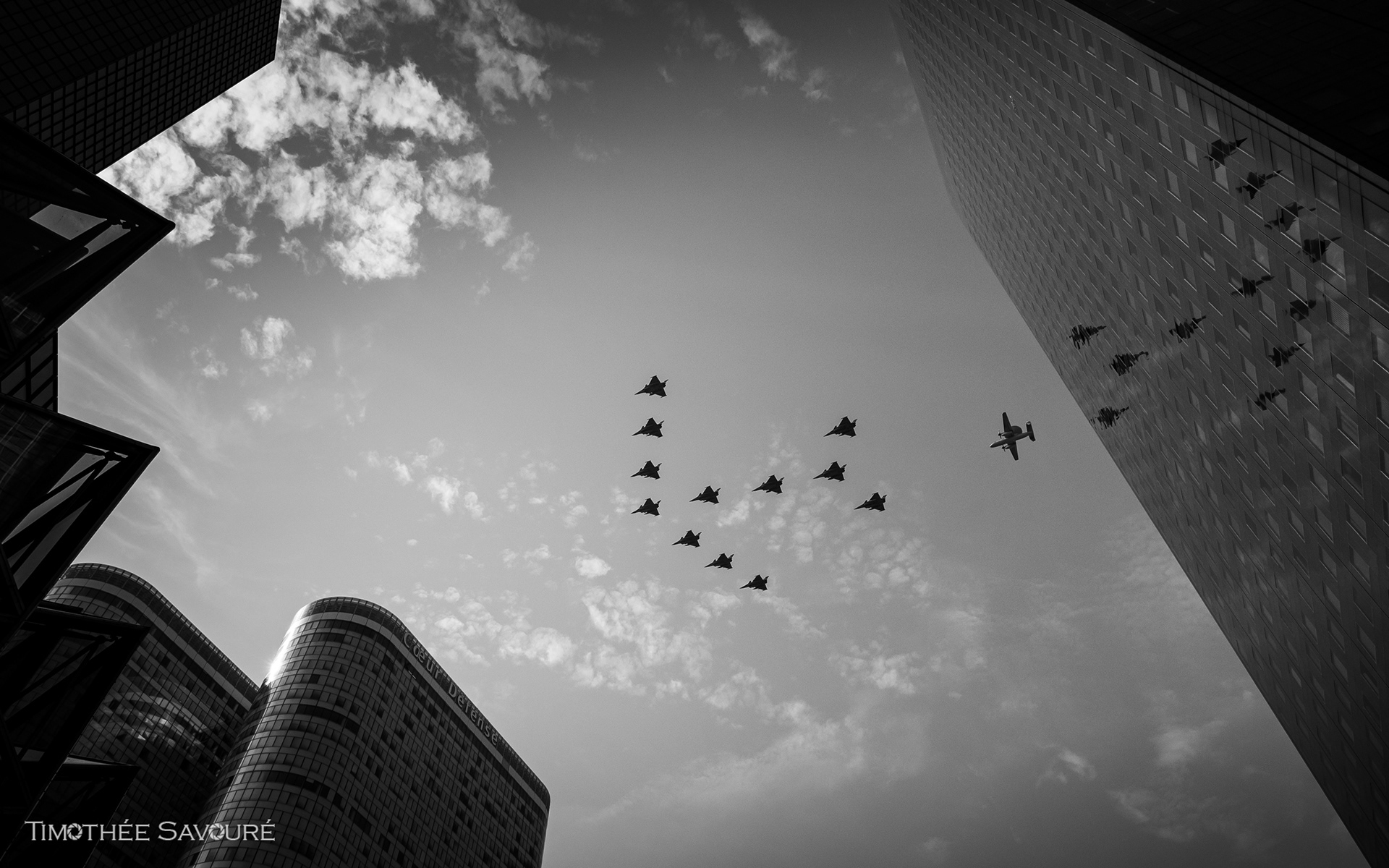
12 Rafale M from the French Navy in boat anchor formation, with the E-2C Hawkeye
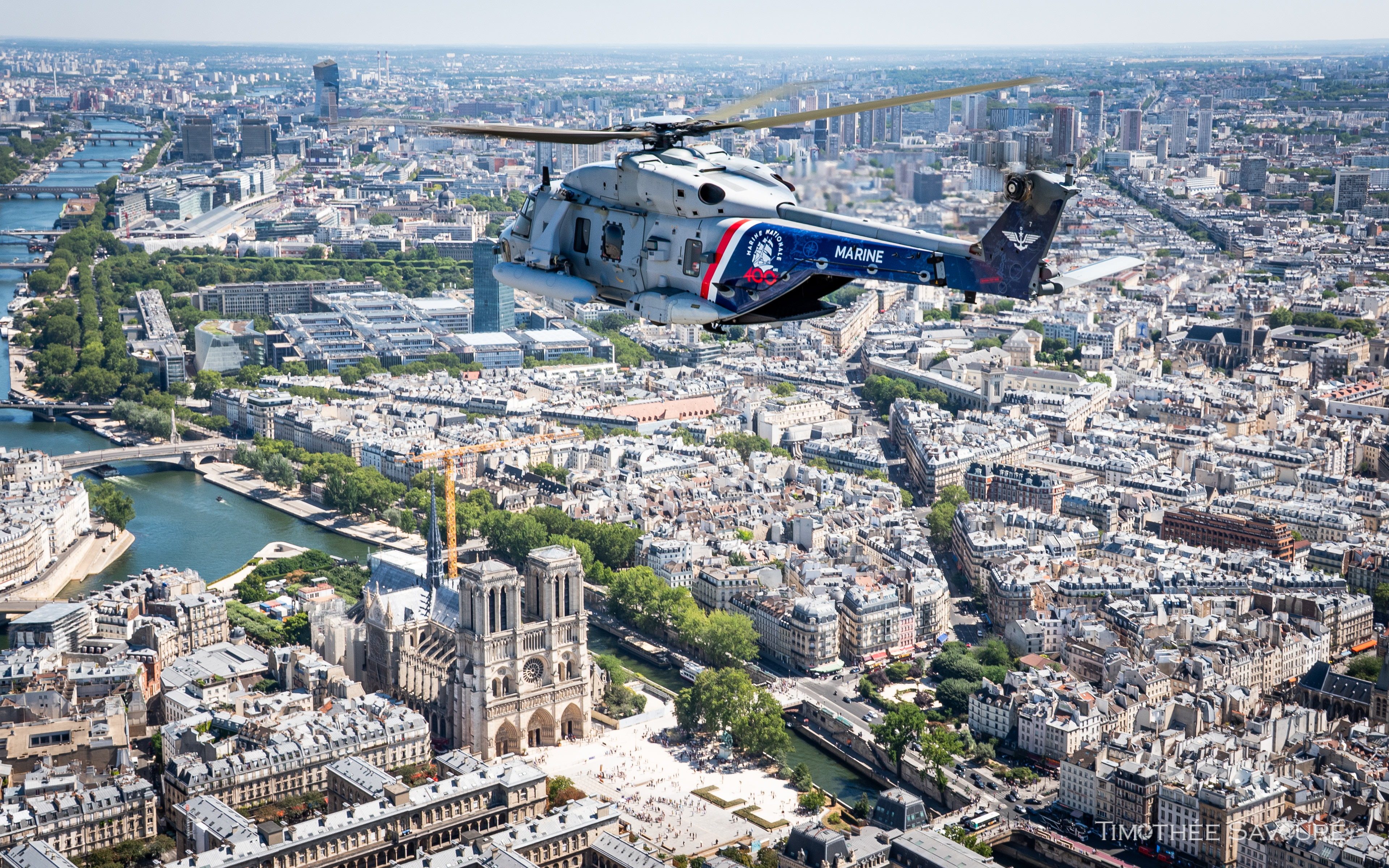
The Marine Nationale 400th anniversary NH-90 during the flypast over Paris
Flying with the French Navy
Jet Blast Area had the unique opportunity to embark onboard a Dauphin N3 from the French Navy during the Bastille Day rehearsals over Paris, on July 9th, 2026, as part of the celebrations of the Marine Nationale 400th anniversary. The opportunity to fly came with the Flottille 35F, one of the French Navy's most versatile helicopter units. Created in 1979, the squadron's primary mission is search and rescue at sea, proudly embodied by its motto, "Secourir sans faillir" ("To rescue without fail"). Beyond SAR duties, the 35F is also responsible for deploying the famous "Pedro" rescue helicopters aboard the French aircraft carrier Charles de Gaulle, always ready to recover pilots during flight operations. The squadron also contributes to maritime surveillance and counter-narcotics operations, operating a fleet of AS365N3 Dauphin helicopters. Upgraded throughout the 1990s, these aircraft offer around three hours of endurance and remain an asset for a wide range of naval missions until their replacement by H160M Guépard in the next decade.
The day began at 12:30 p.m. with the safety briefing and mission presentation before heading out to the flightline at Villacoublay Air Base, where the French Navy's helicopters are traditionally deployed during the Bastille Day preparations. Scheduled for a 2:45 p.m. departure, we arrived on the apron in time to witness the crew preparing the aircraft. The two maintenance specialists—responsible for the helicopter's mechanical systems and avionics—were already completing the final checks before the flight crew joined us. The crew was composed of the aircraft commander Enseigne de Vaisseau de 1ère Classe Gaël, the co-pilot Aspirant Mehdi, and the hoist operator Second Maitre Baptiste, whose role is central to the Dauphin's SAR missions.
After a walk-around inspection of the helicopter, it was time to climb aboard the Dauphin N3 and start the engines. Following a short taxi to the runway, the Cyclone formation lifted into a hover, waiting for the arrival of the French Army Aviation (ALAT). The "Assault and Fire Support" formation was led by ALAT with four NH90 Caïmans and a Cougar, which passed overhead Villacoublay to collect the French Navy contingent. The Cyclone formation comprised two NH90 Caïman Marine from Flottille 33F, two Dauphins—including the 35F aircraft carrying me and another from 34F—and a Panther from Flottille 36F, creating one of the most diverse helicopter formations of the parade.
Together, the formation proceeded to its holding area, orbiting for around 30 minutes while awaiting the final clearance from the parade control centre at Place de l'Étoile (the famous PC Etoile). Every second of the flypast is meticulously calculated, and only once the precise crossing time had been confirmed—3:51:03 p.m. over Place de la Concorde—did the helicopters leave their holding pattern and align with the historic axis of Paris.
Flying low over the French capital offered an unforgettable perspective. The passage alongside the skyscrapers of La Défense was particularly spectacular before the formation crossed Place de l'Etoile, swept down the Champs-Élysées, passed over Place de la Concorde and continued towards the Louvre, perfectly on schedule. In just a few minutes, the formation had flew over centuries of French history while performing one of the world's most demanding ceremonial flypasts. An unforgettable experience for the pilots, who had only a few instants to enjoy the view, otherwise extremely focused on keeping with the formation.
With the rehearsal successfully completed, the helicopters turned southwest and returned to Villacoublay, passing near the Versailles on approach before touching down shortly after 4:10 p.m. After months of preparation by hundreds of personnel, witnessing the precision and coordination required for just a few minutes over central Paris provided a fascinating insight into the professionalism of the French Armed Forces.
Jet Blast Area would like to warmly thank the Marine Nationale, in particular the Flotille 35F for their hospitality, as well as the SIRPA Marine for the organization of this report and the flight. Thanks to the crew of Cyclone 3 (EV1 Gaël, ASP Mehdi, SM Baptiste) for their explanations and the warm welcome!
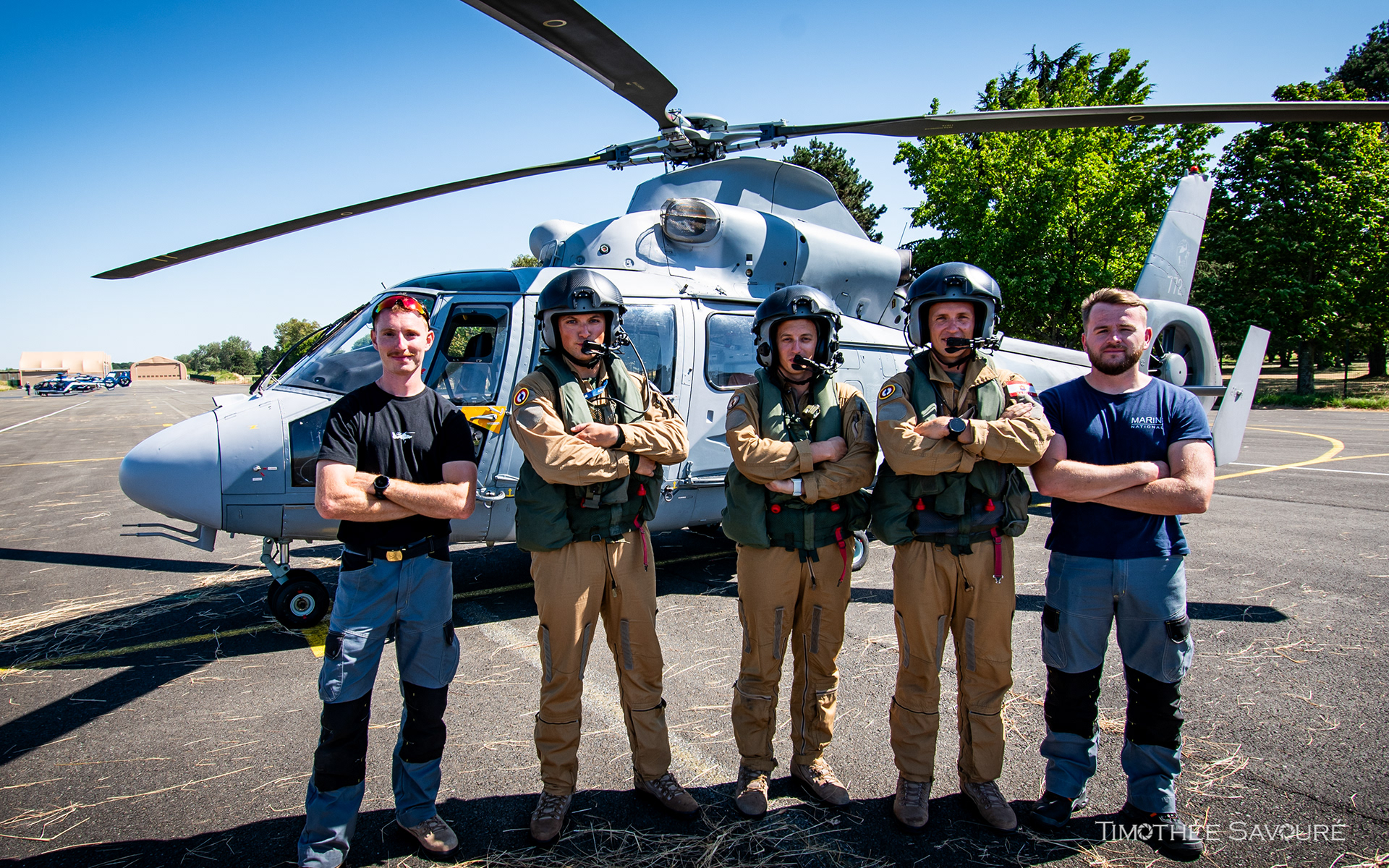
The 35F crew responsible for our helicopter. Two pilots, a hoist operator, a system and an avionics mechanic
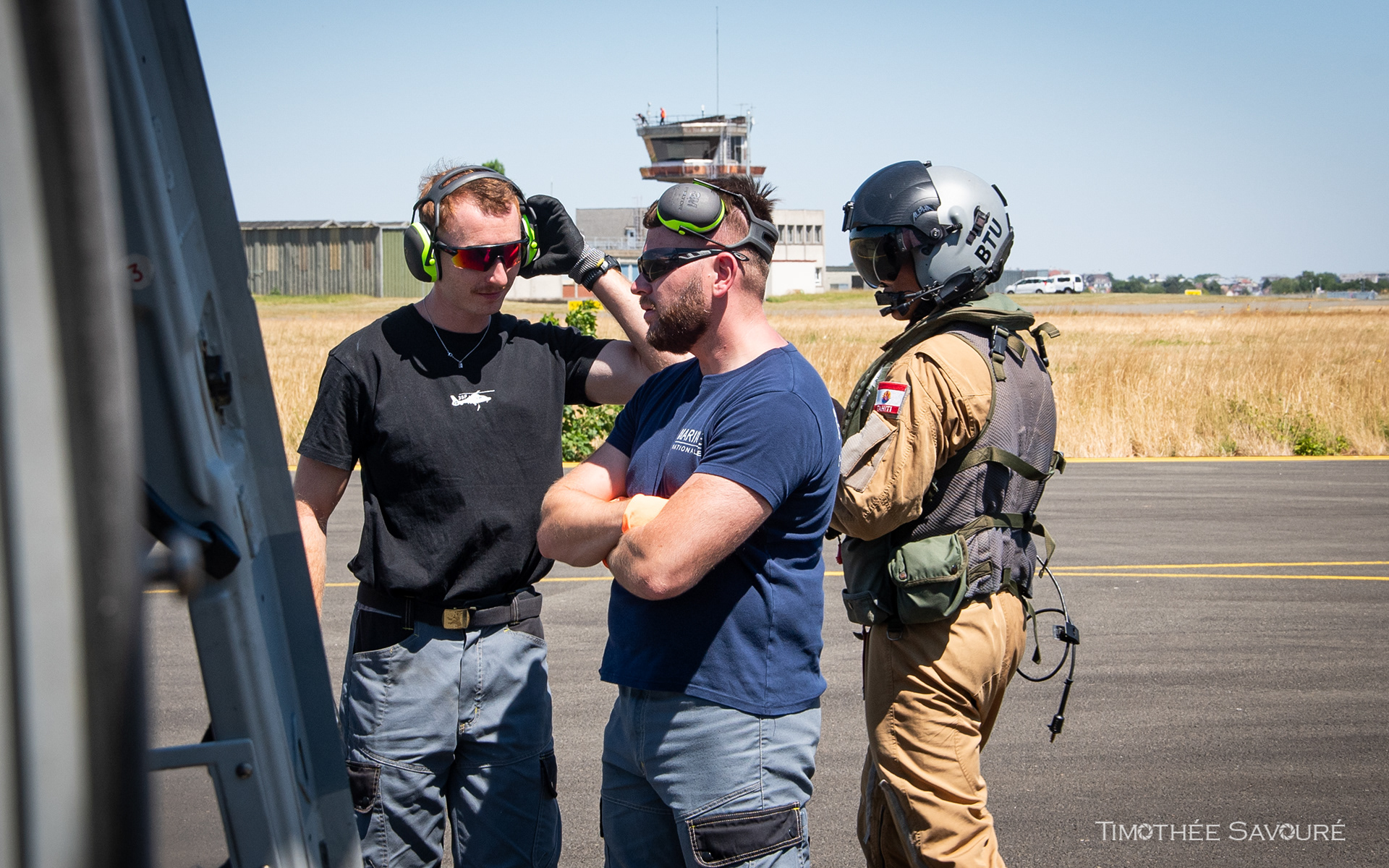
Getting ready for the flight
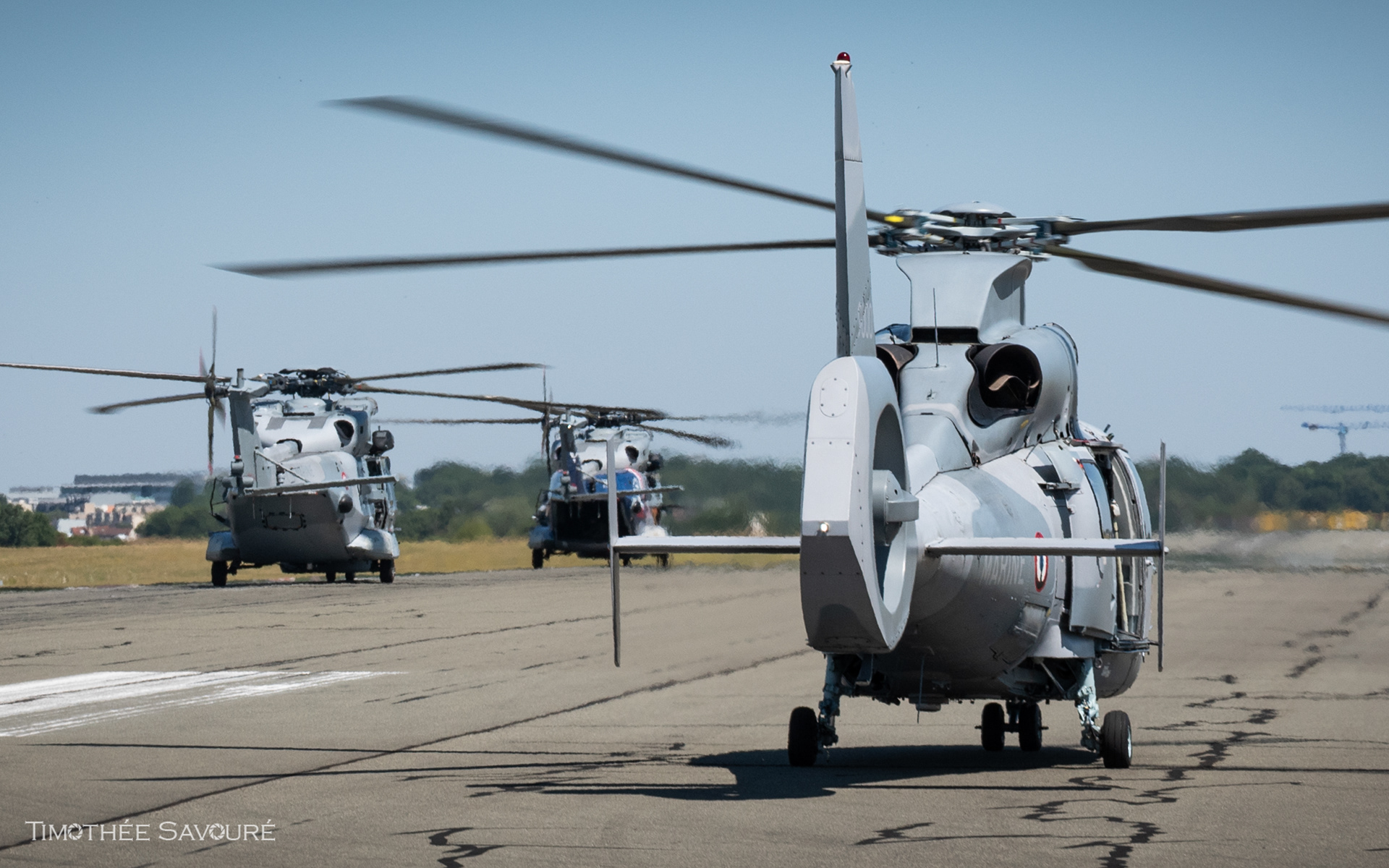
Cyclone formation lined up on Villacoublay runway 09
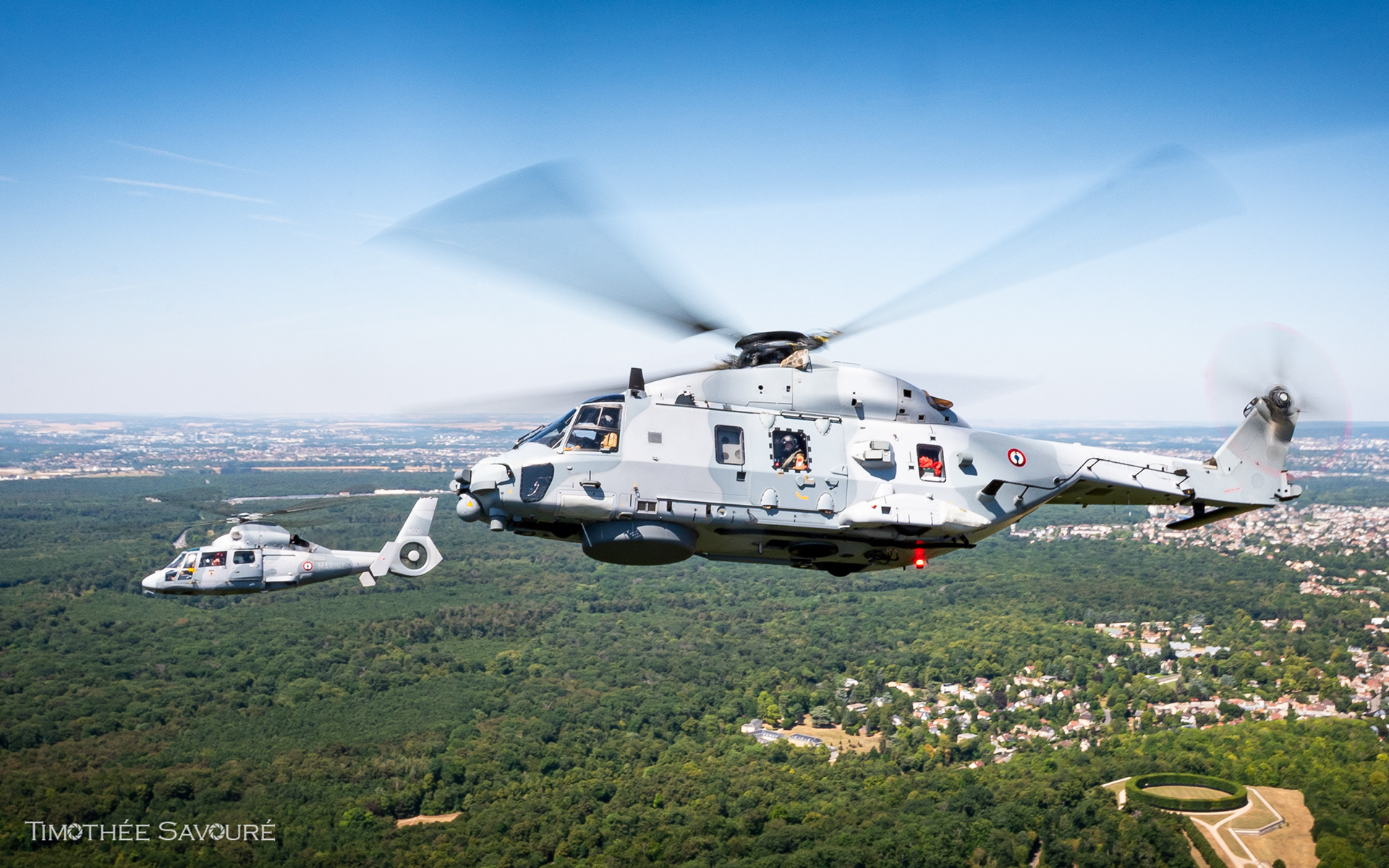
Flotille 34F Dauphin and 33F Caïman holding near Paris before the flypast
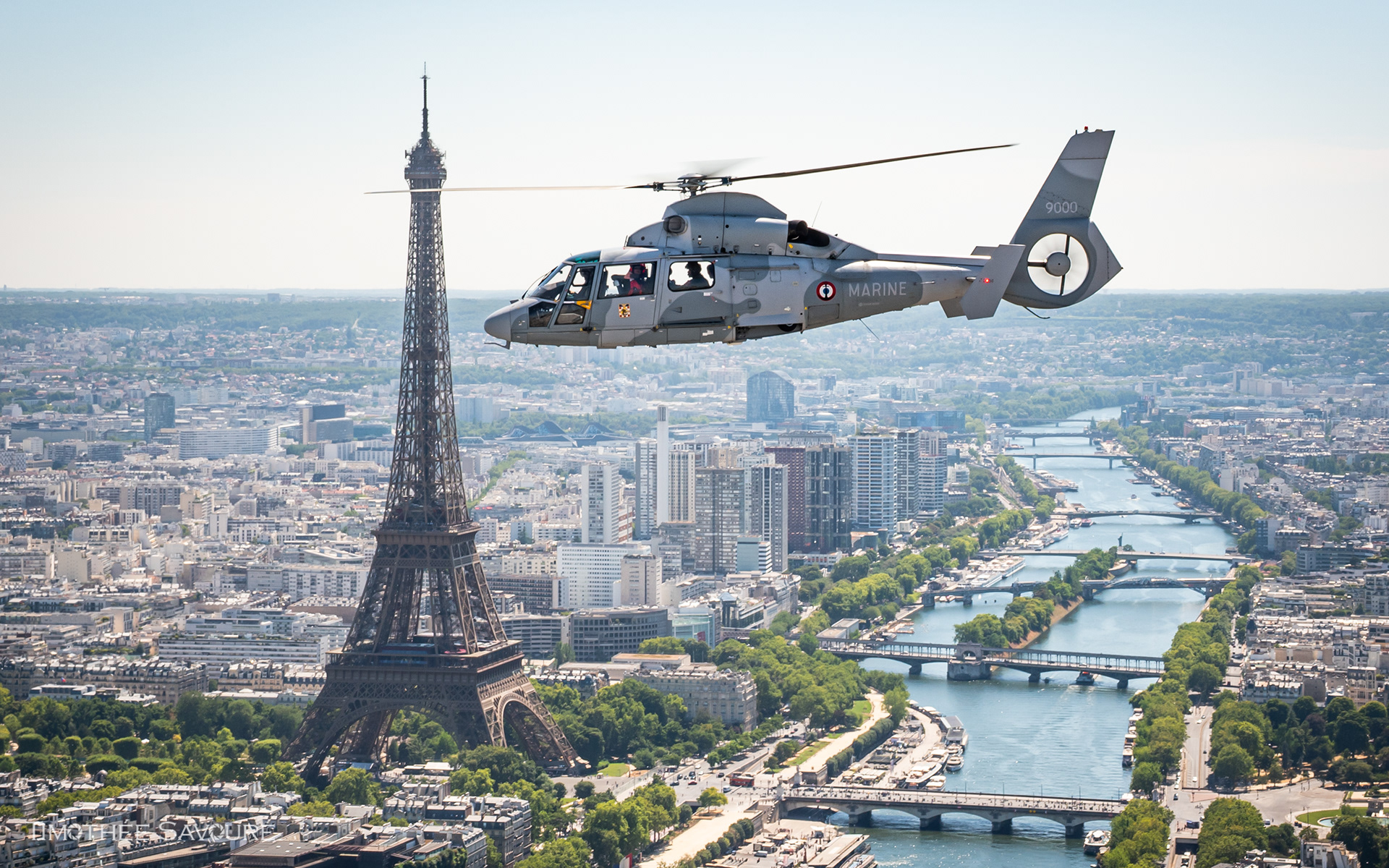
Marine Nationale AS365N3 Dauphin low over Paris with the Eiffel Tower
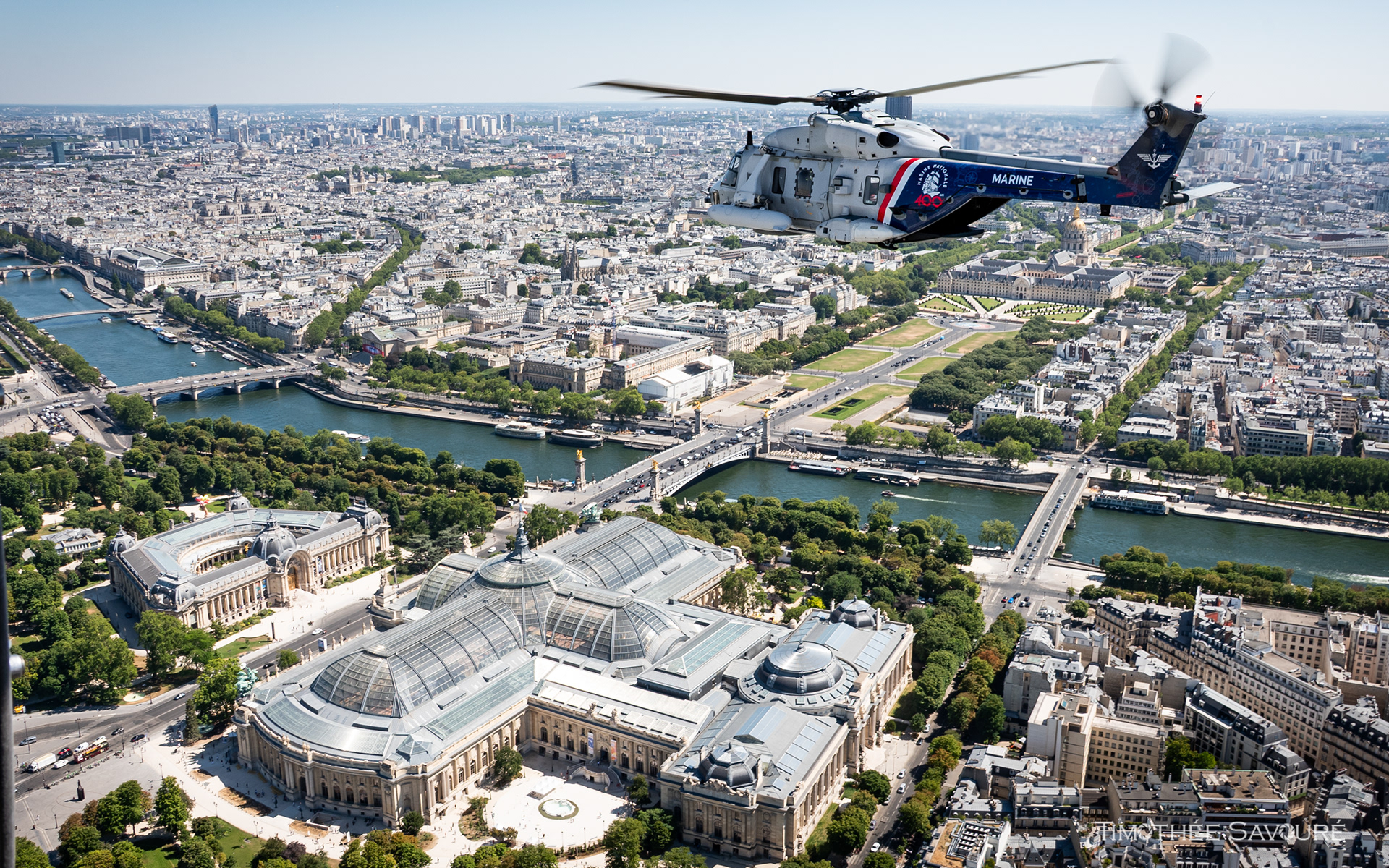
NH-90 Caïman "400 ans Marine" over the Grand Palais in Paris
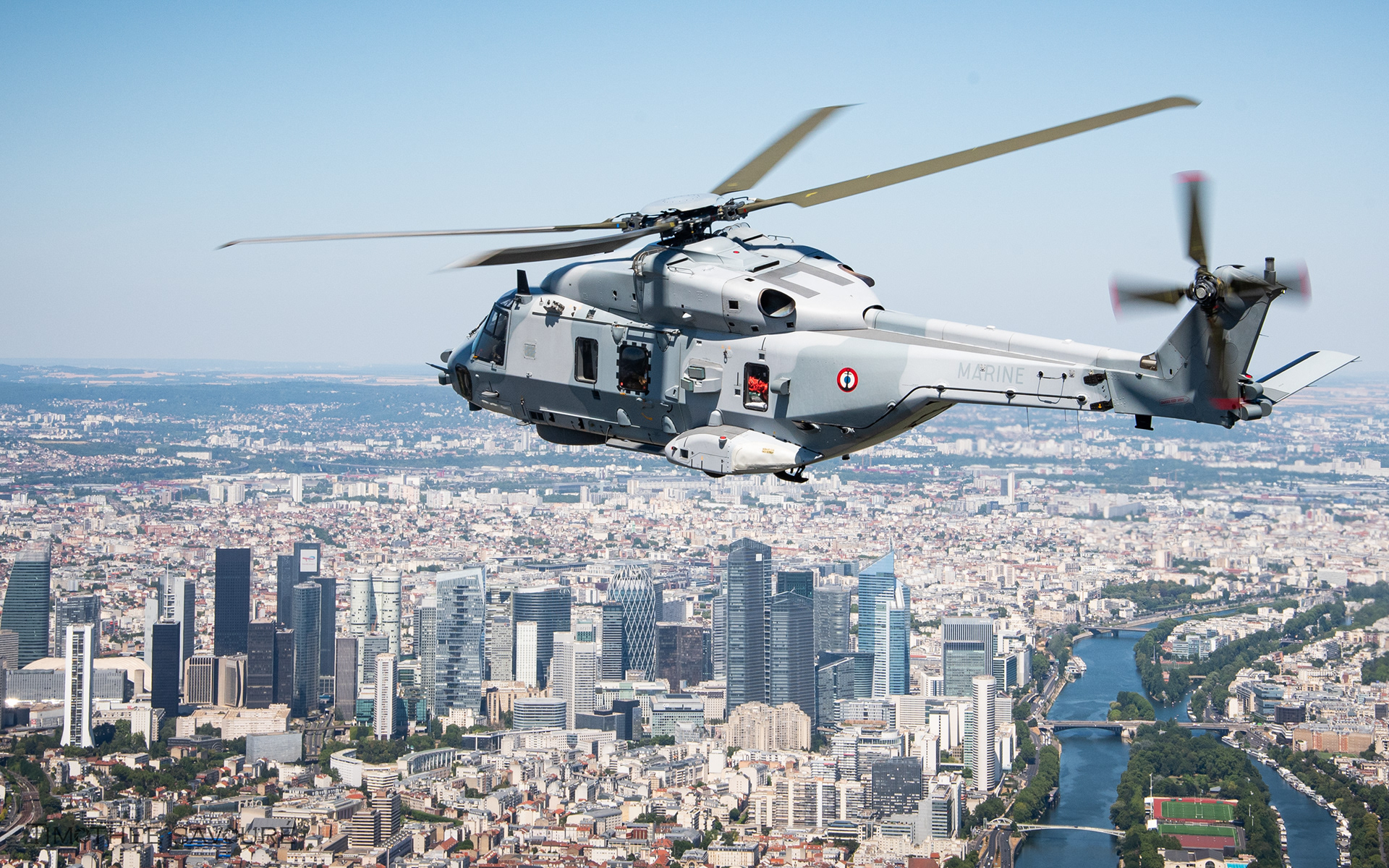
NH-90 Caïman near La Défense business district
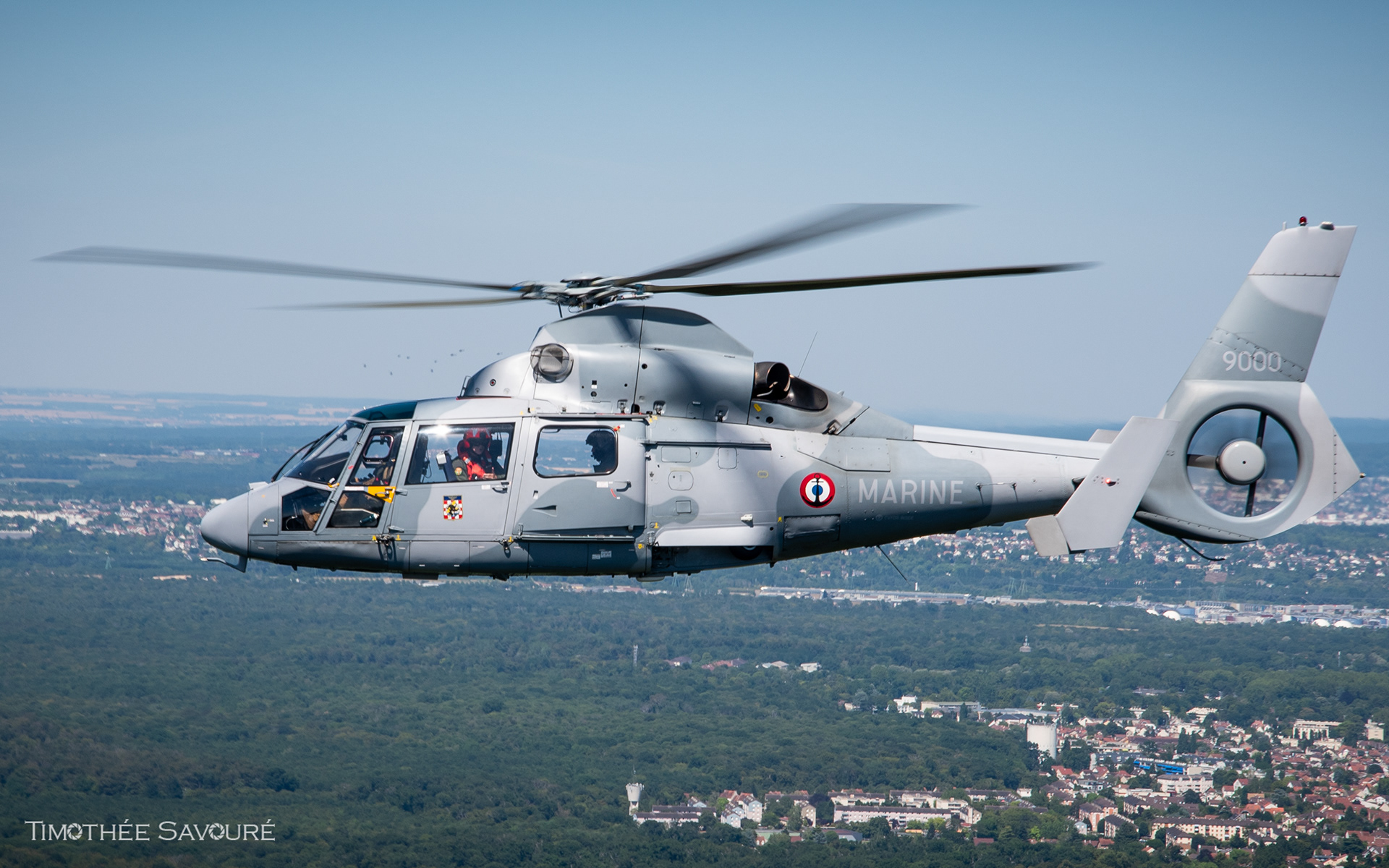
AS365N3 Dauphin in flight over Saint-Germain forest
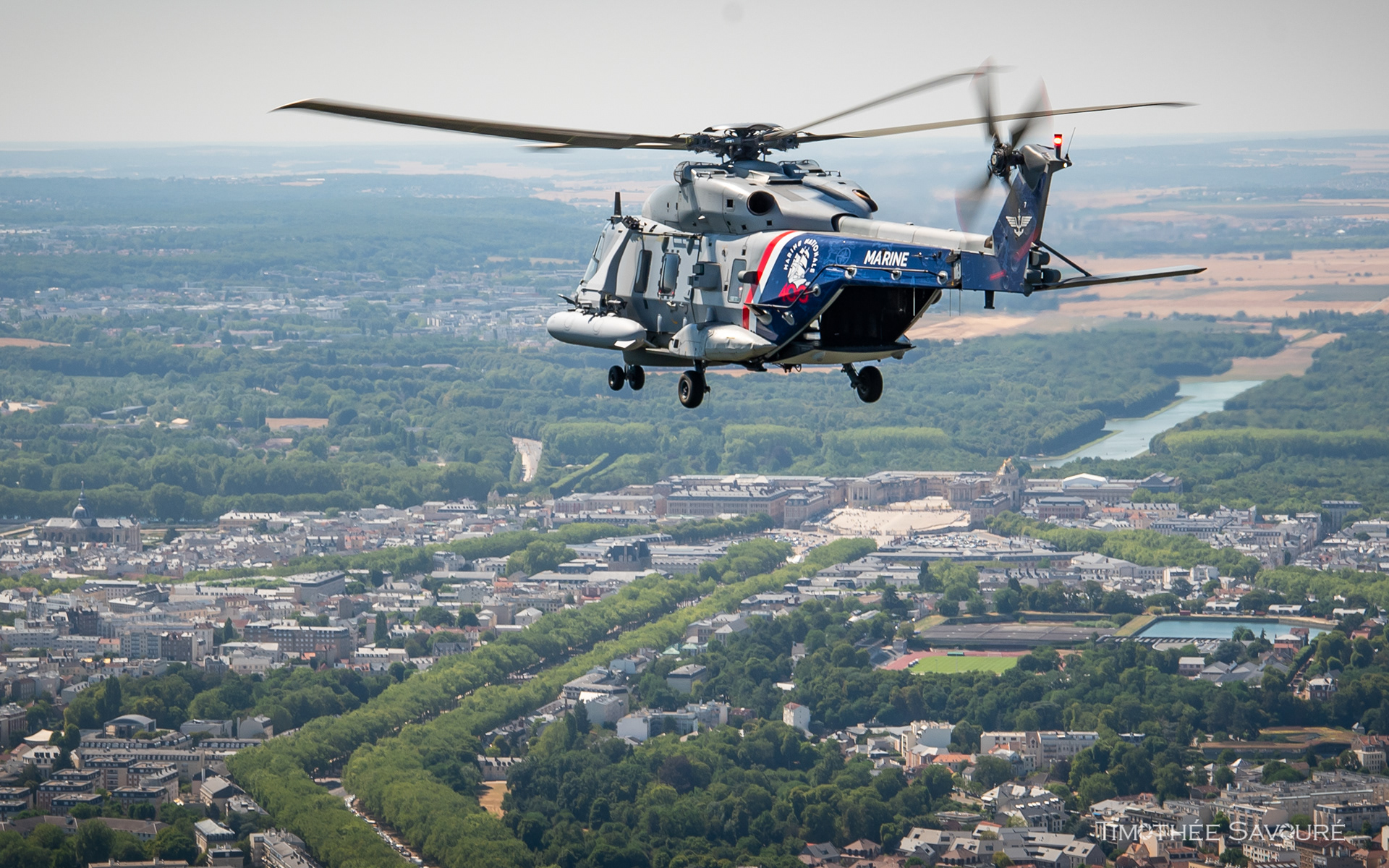
NH-90 Caïman "400 ans Marine" near Versailles palace
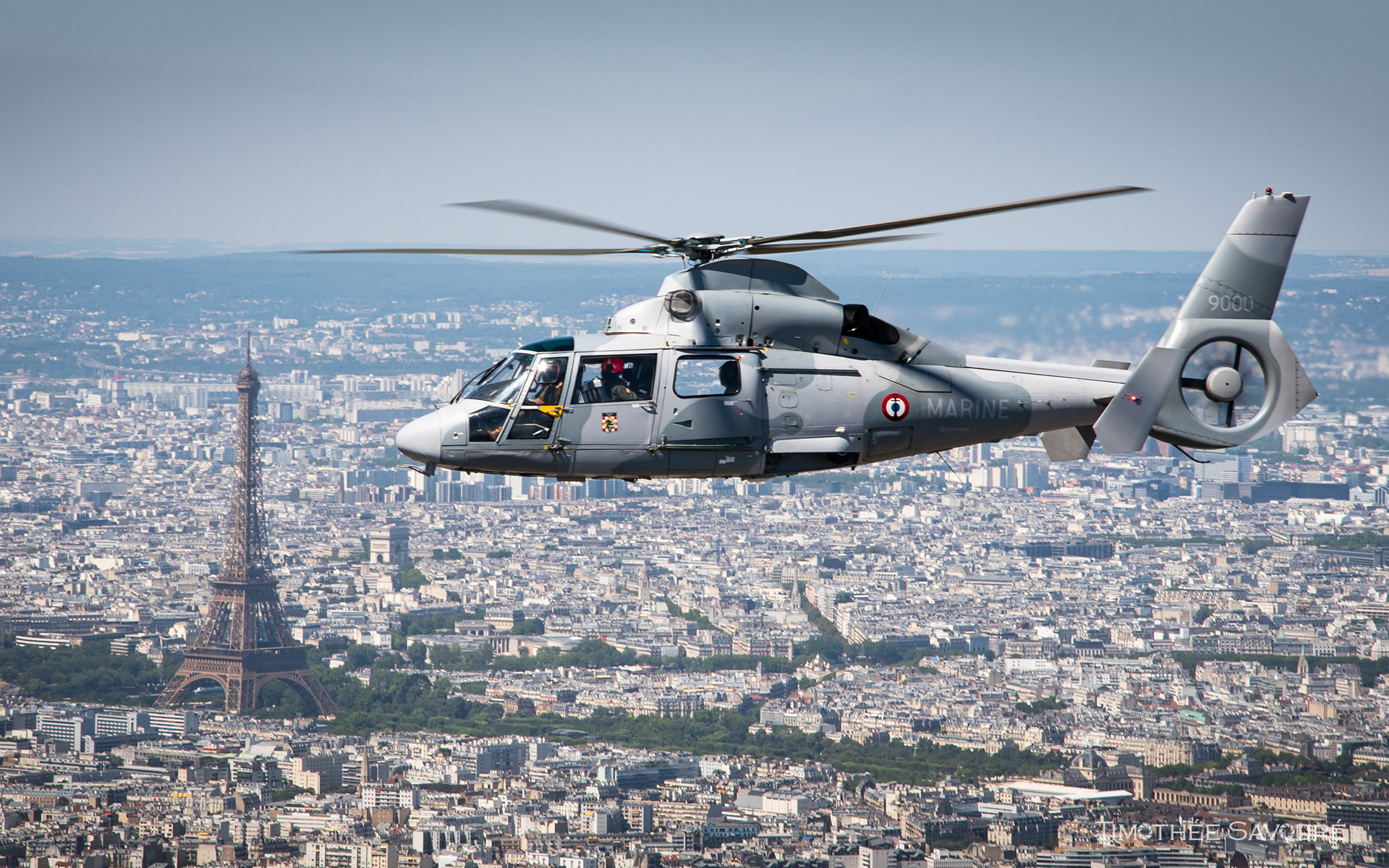
Marine Nationale AS365N3 Dauphin over Paris
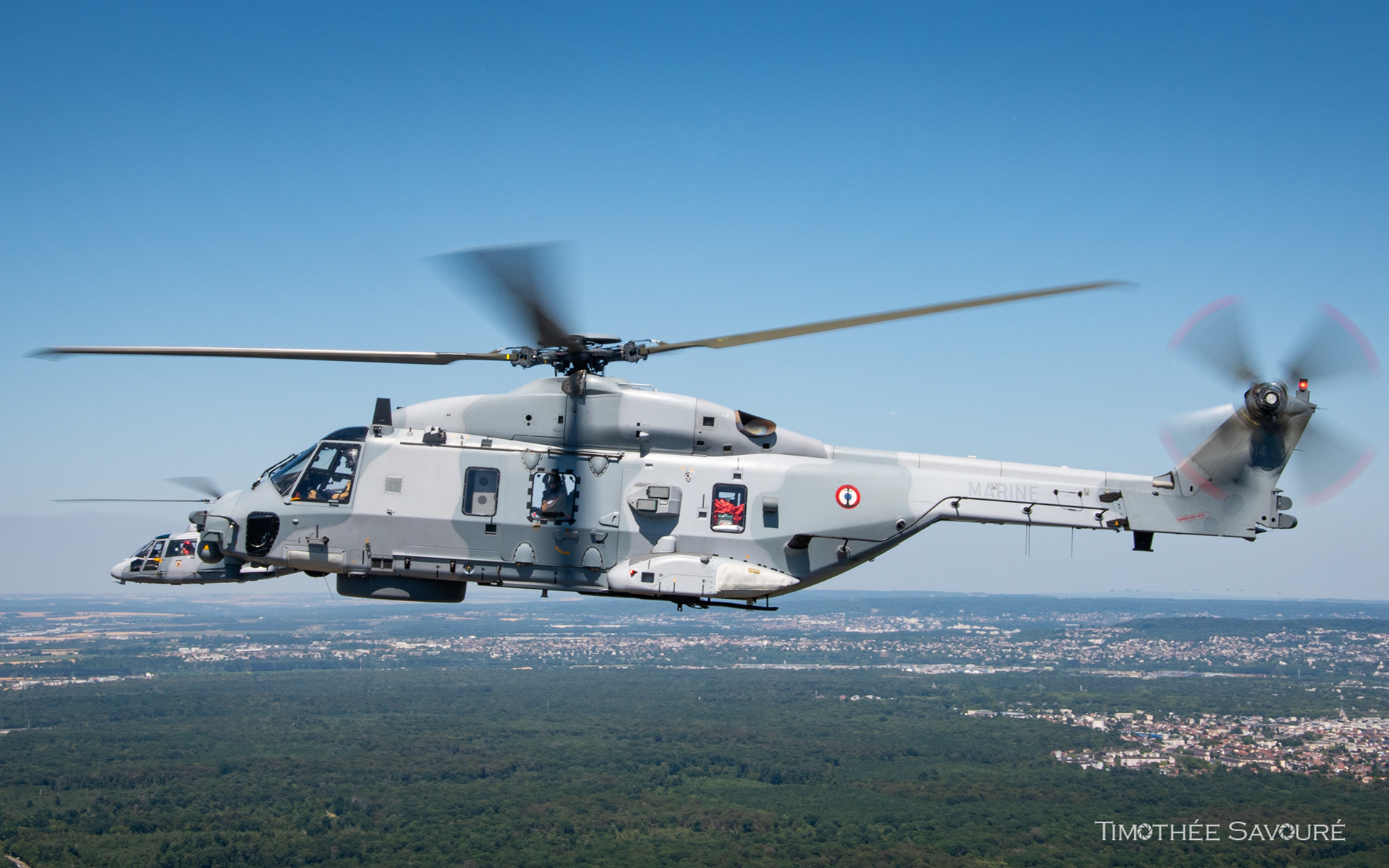
Marine Nationale Dauphin and Caïman holding near Paris before the flypast
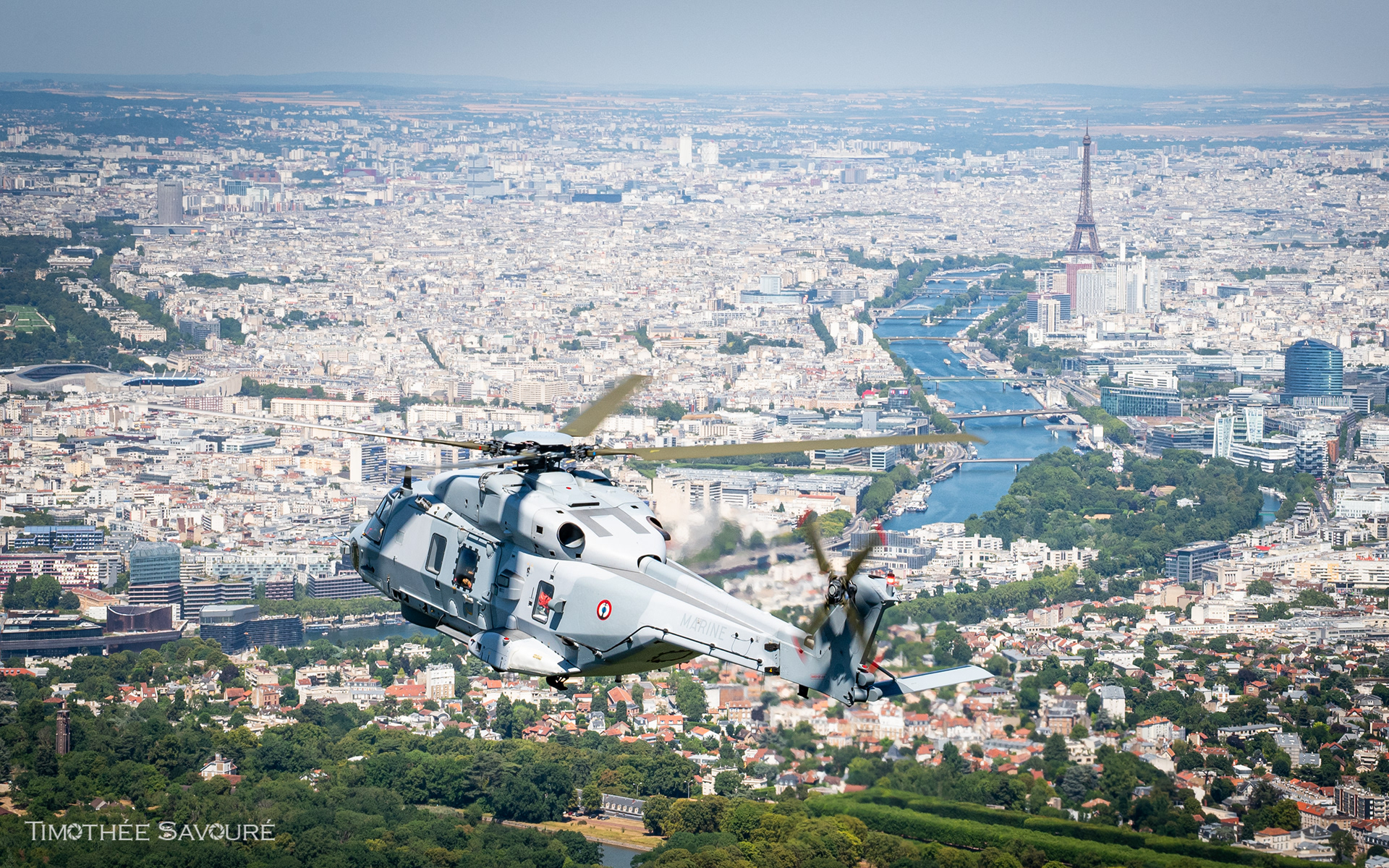
Marine Nationale NH-90 Caïman over Paris
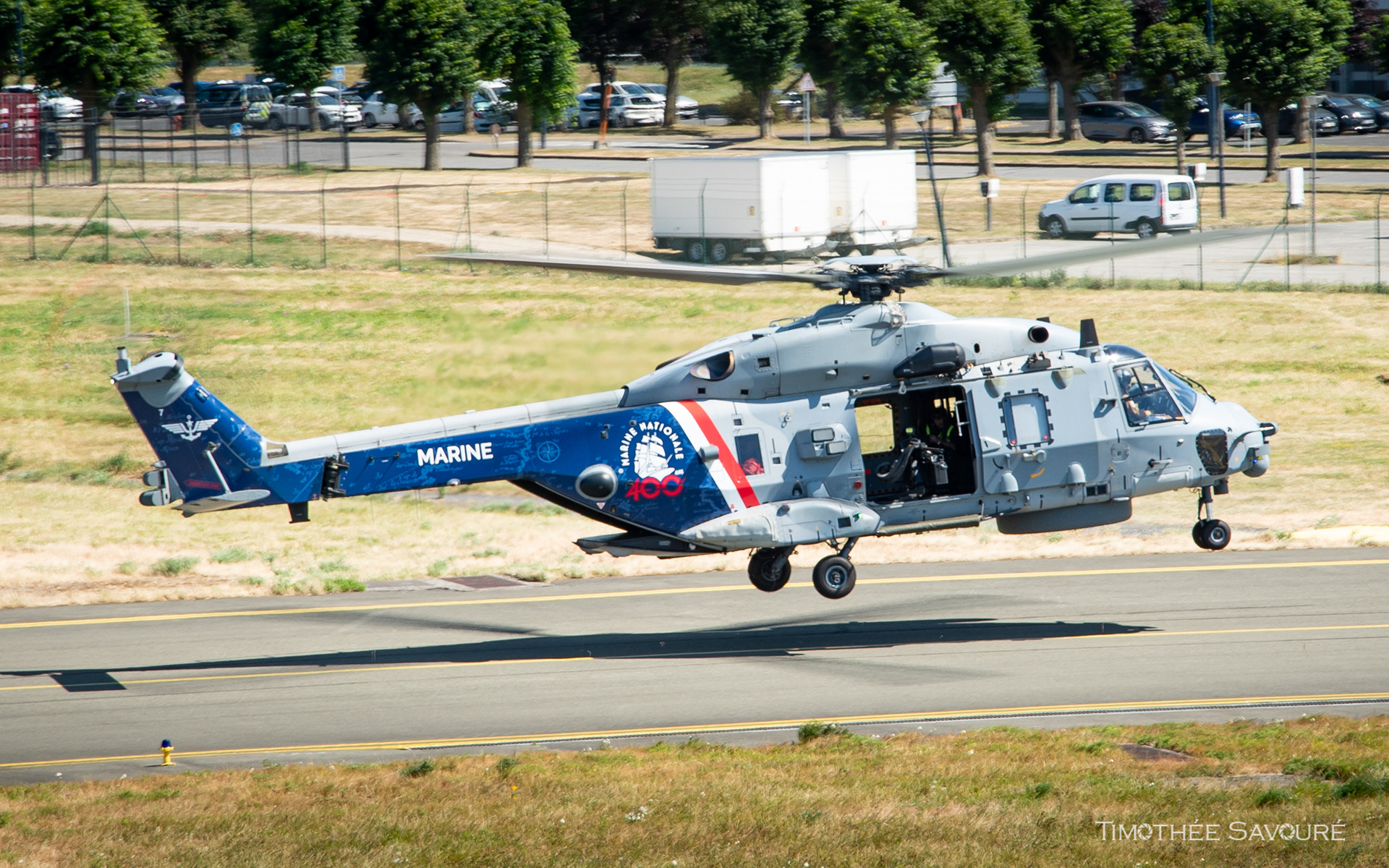
NH-90 Caïman "400 ans Marine" landing in Villacoublay
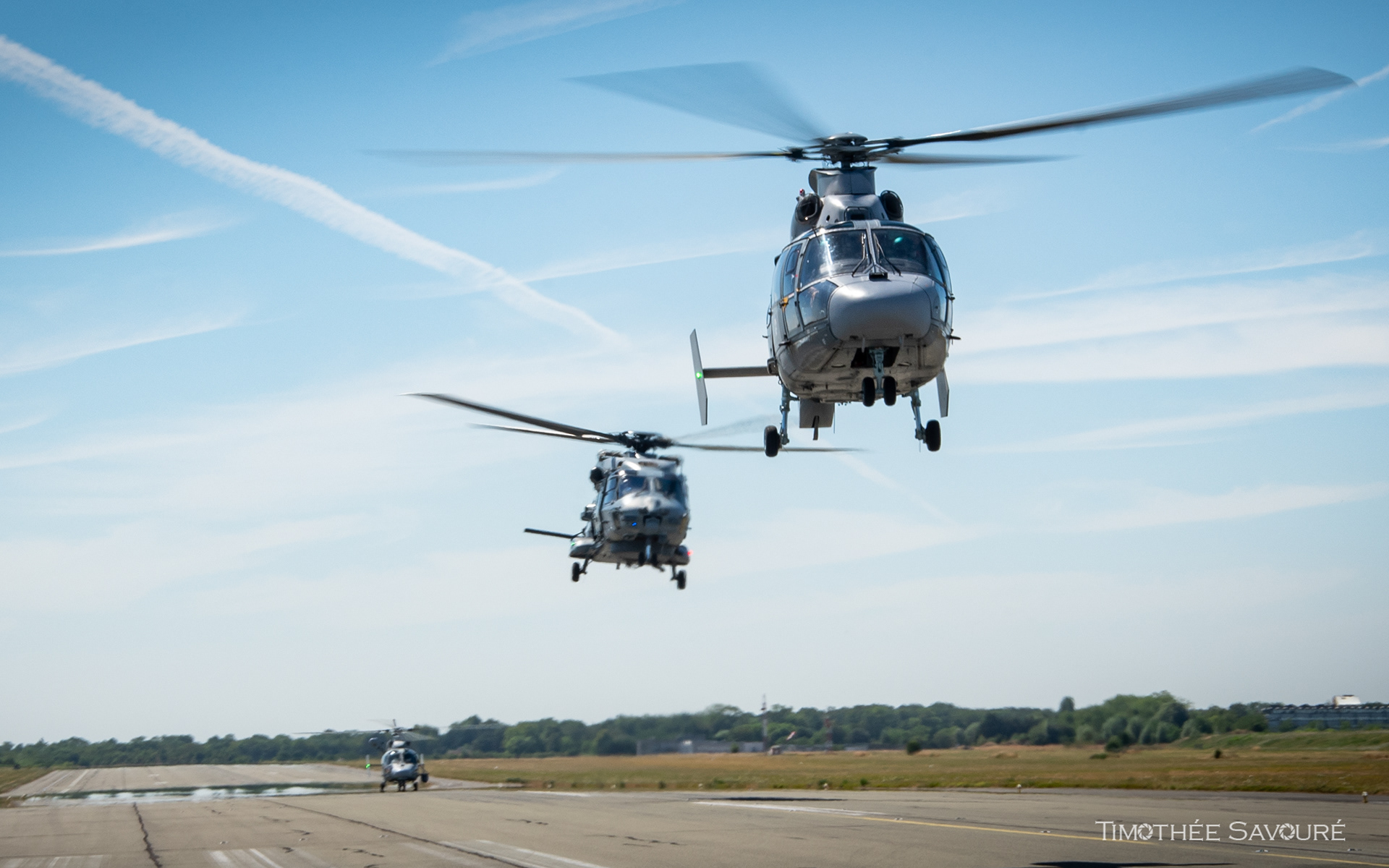
Marine Nationale Cyclone formation landing back in Villacoublay after the flypast
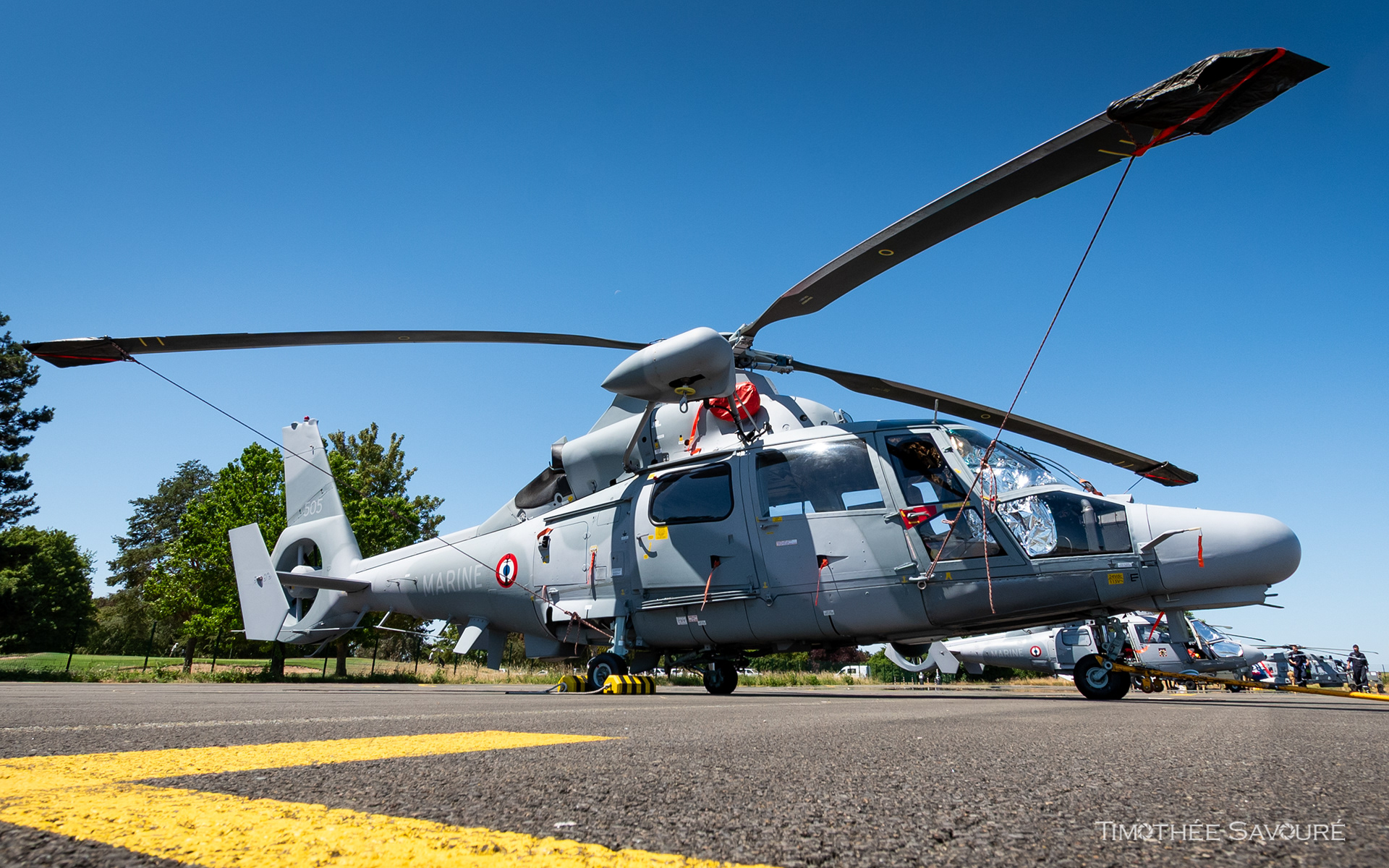
Marine Nationale Panther on the ground in Villacoublay
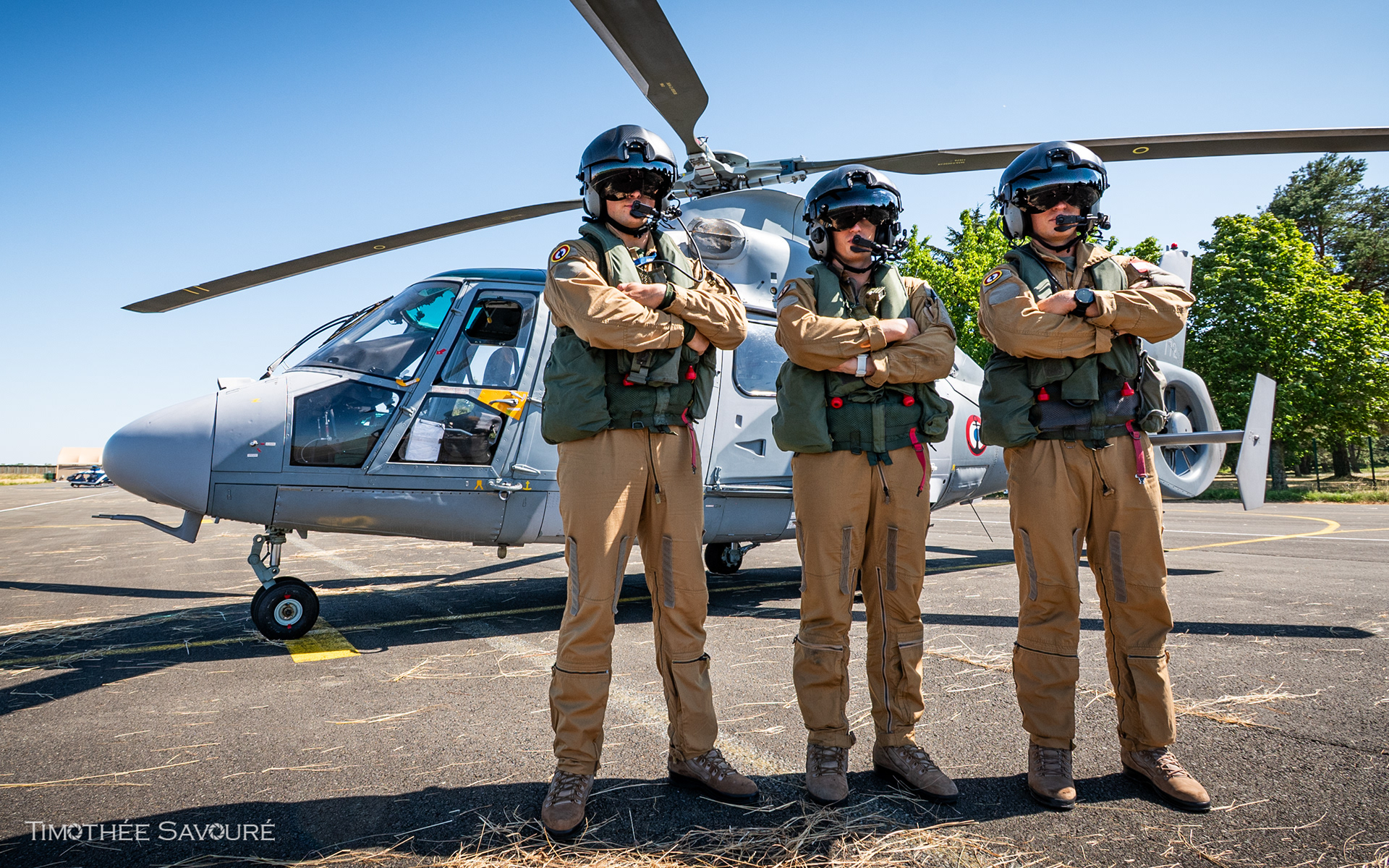
The flight crew of Cyclone 3 helicopter for Bastille Day
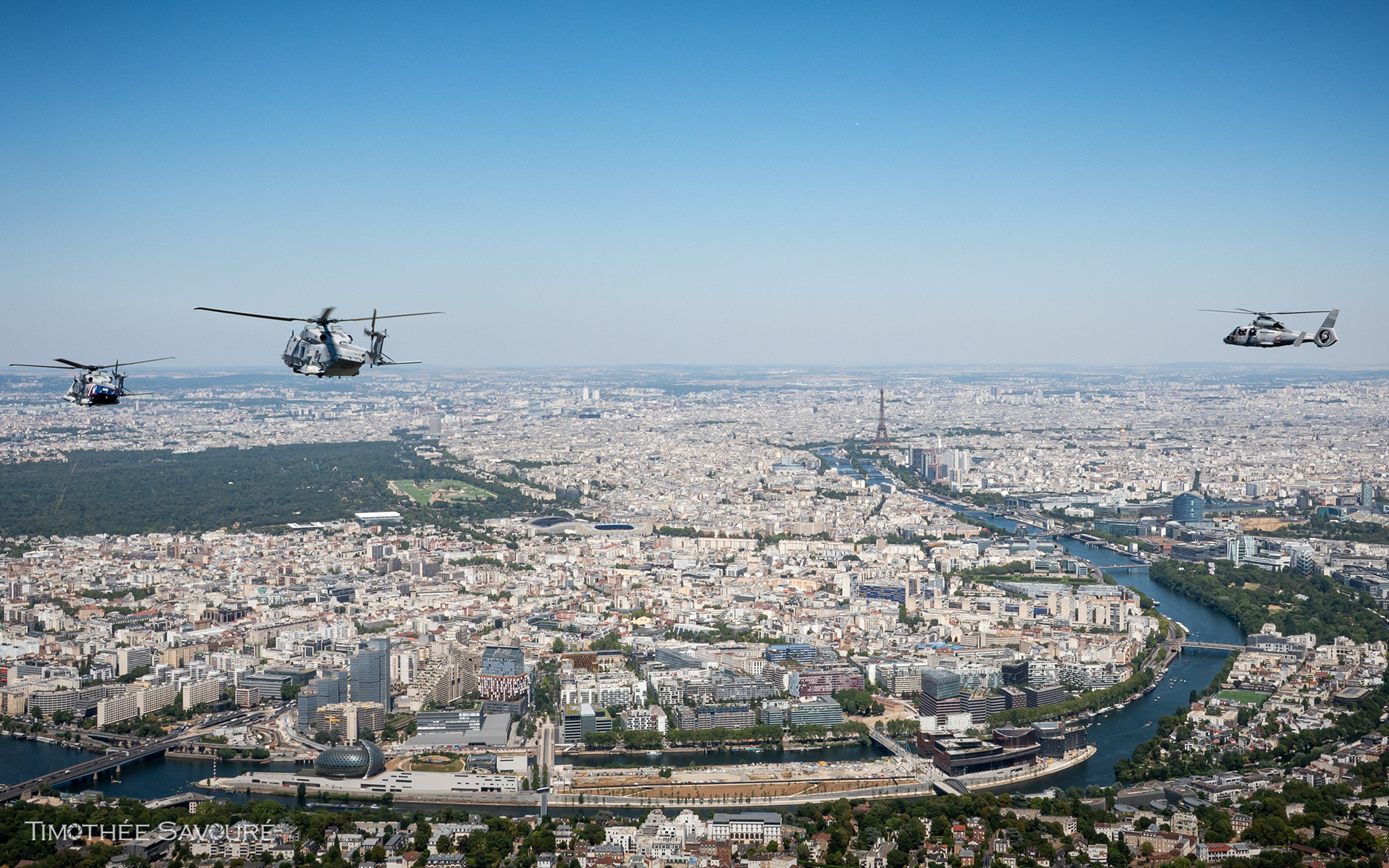
Marine Nationale helicopters heading for Paris
To discover my report about the 2025 edition of Bastille Day, click on this link!