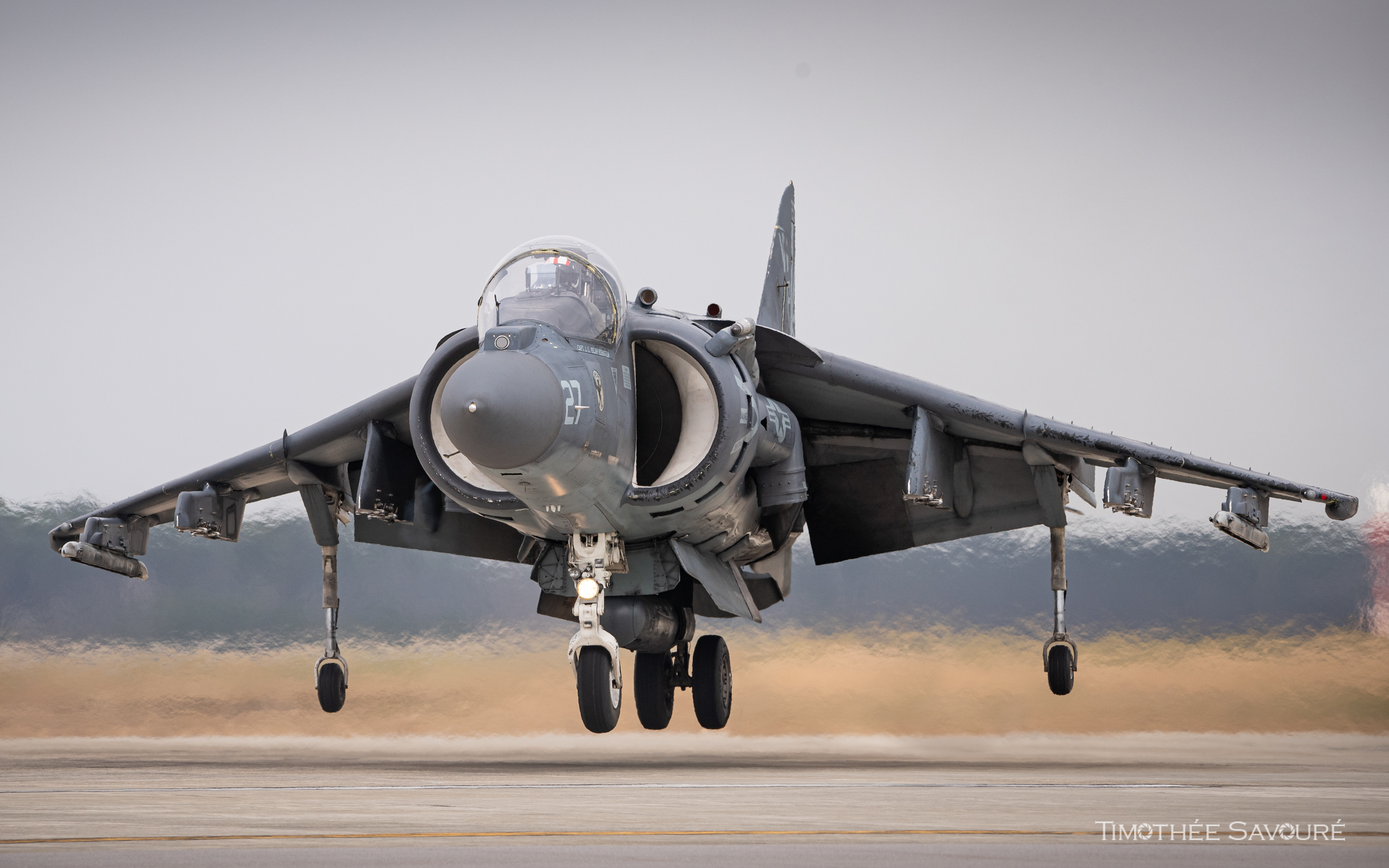
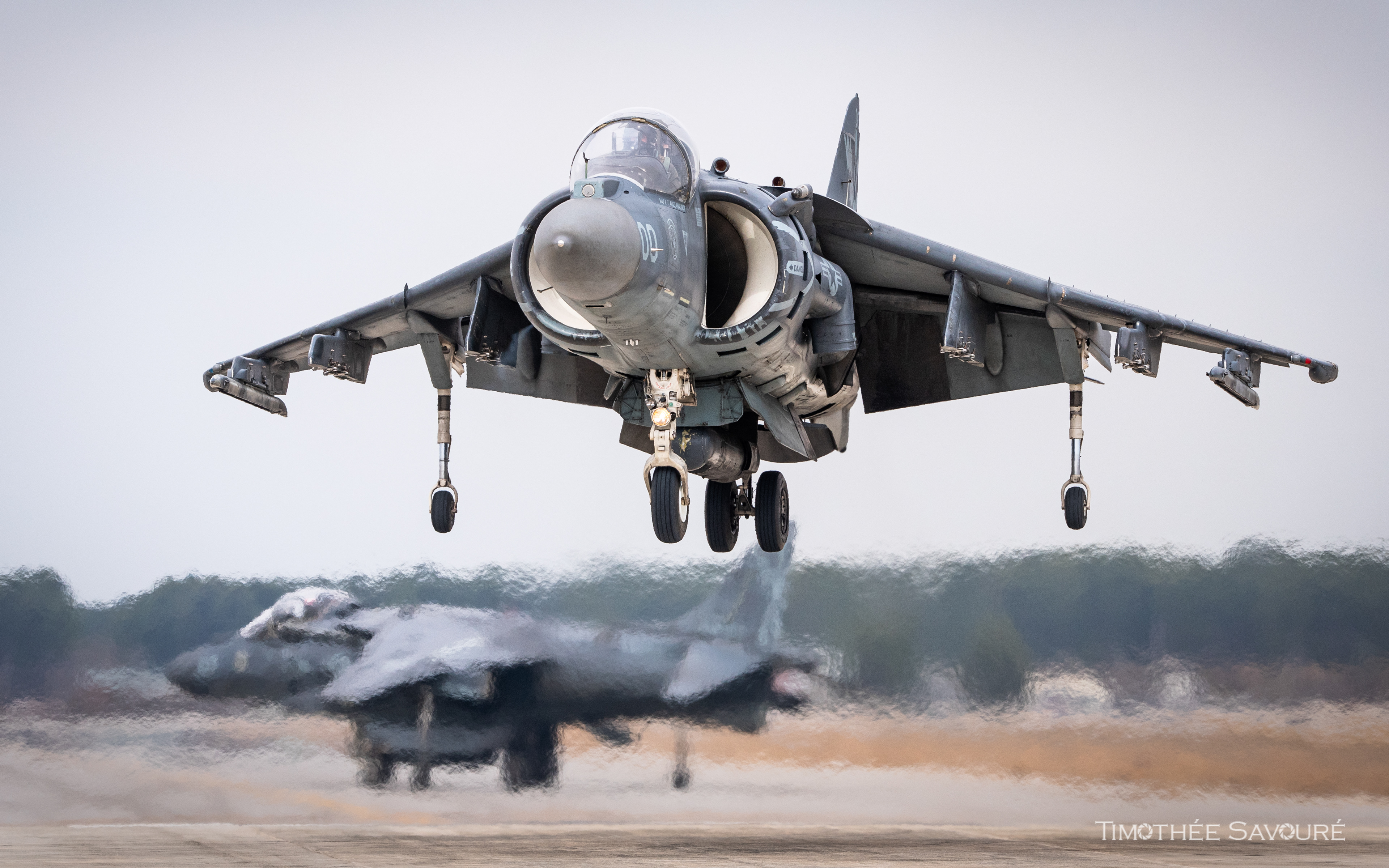
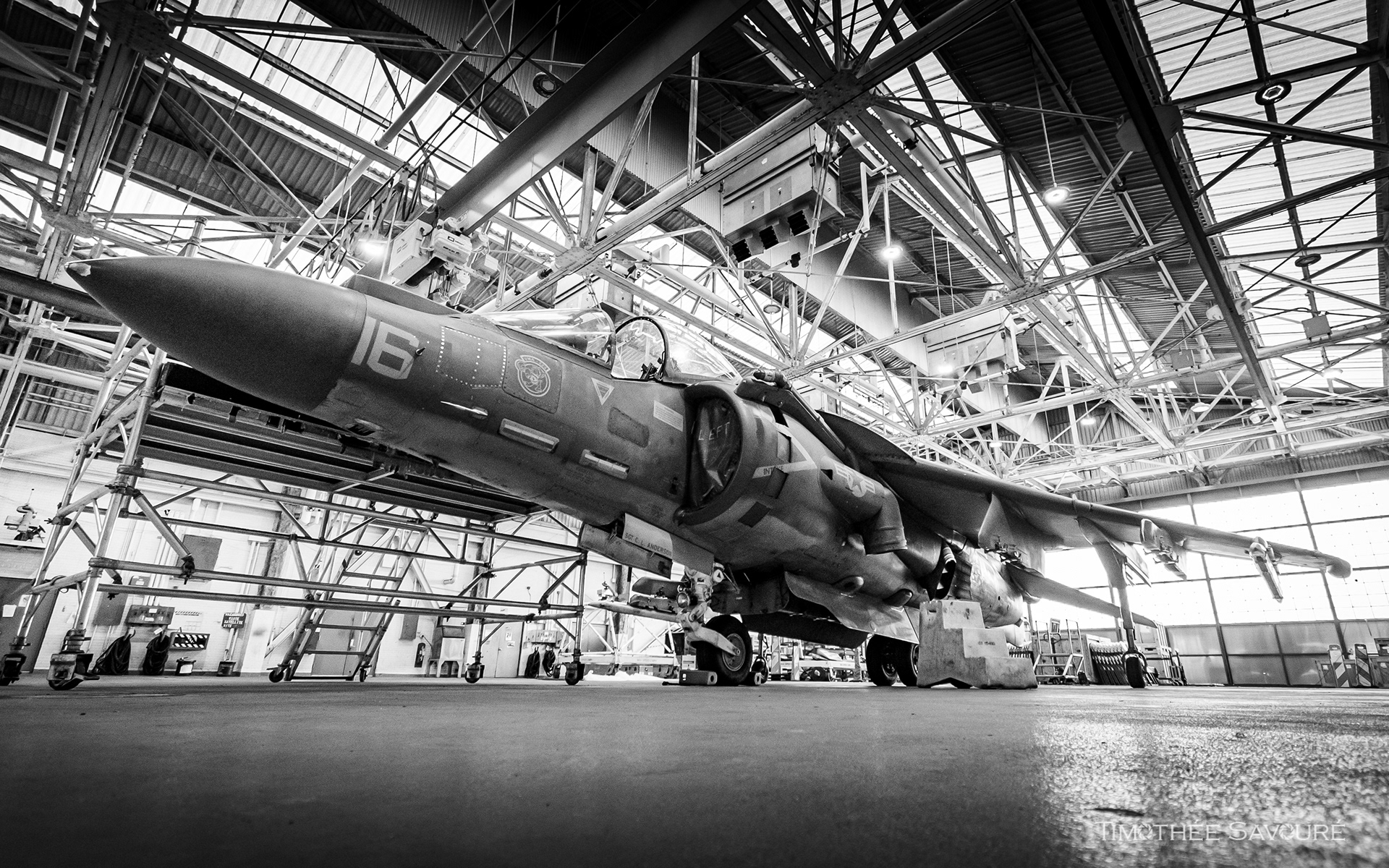
In June 2026, the United States Marine Corps will say definitive goodbye to the McDonnell Douglas AV-8B+ Harrier II jump jet, after almost four decades operating this legendary VSTOL aircraft. This ground-attack fighter has been a key element in the United States, and even though the future is bright for V/STOL aircraft, the emotion of those who have worked on this platform is real until sundown.
The AV-8B Harrier
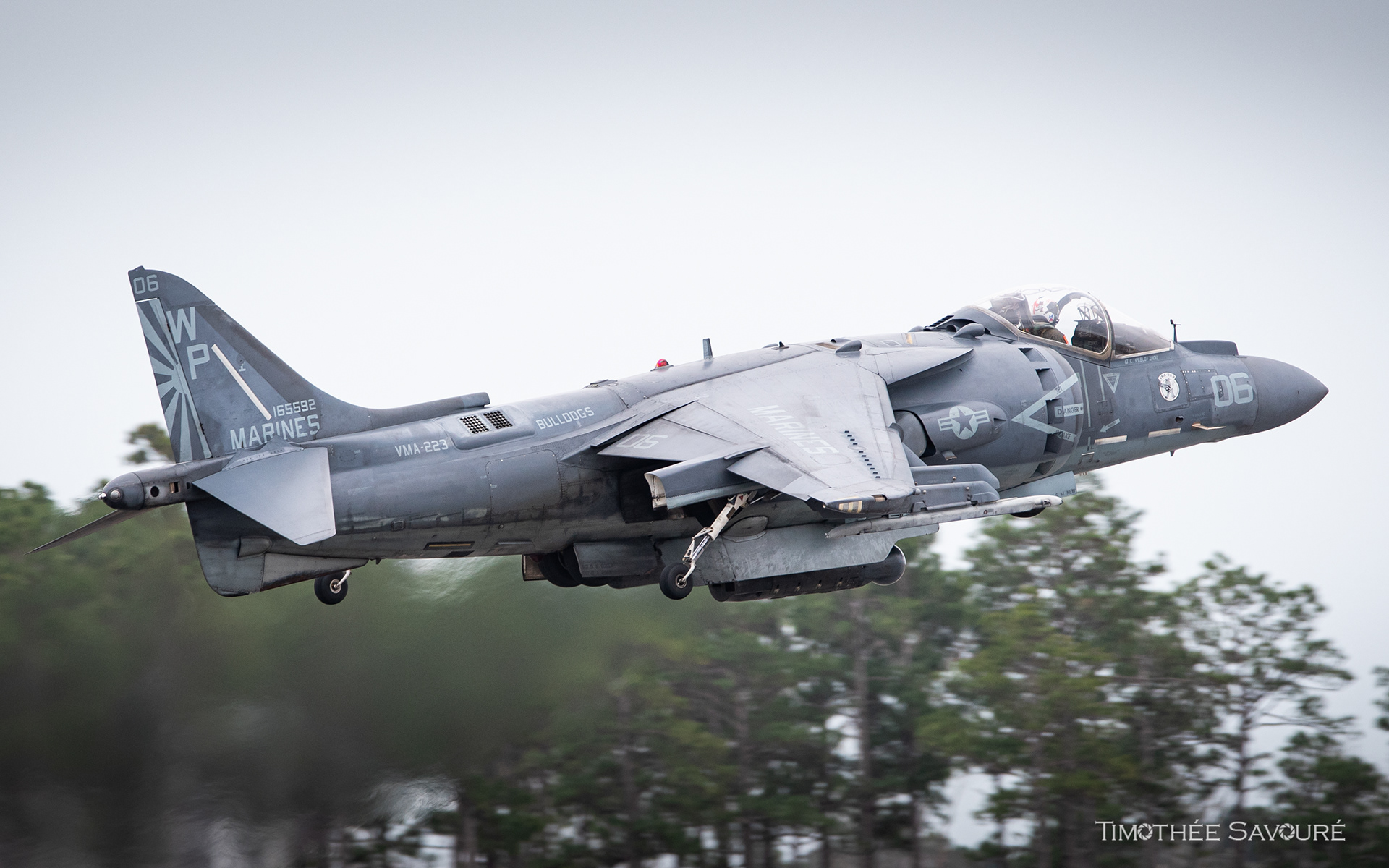
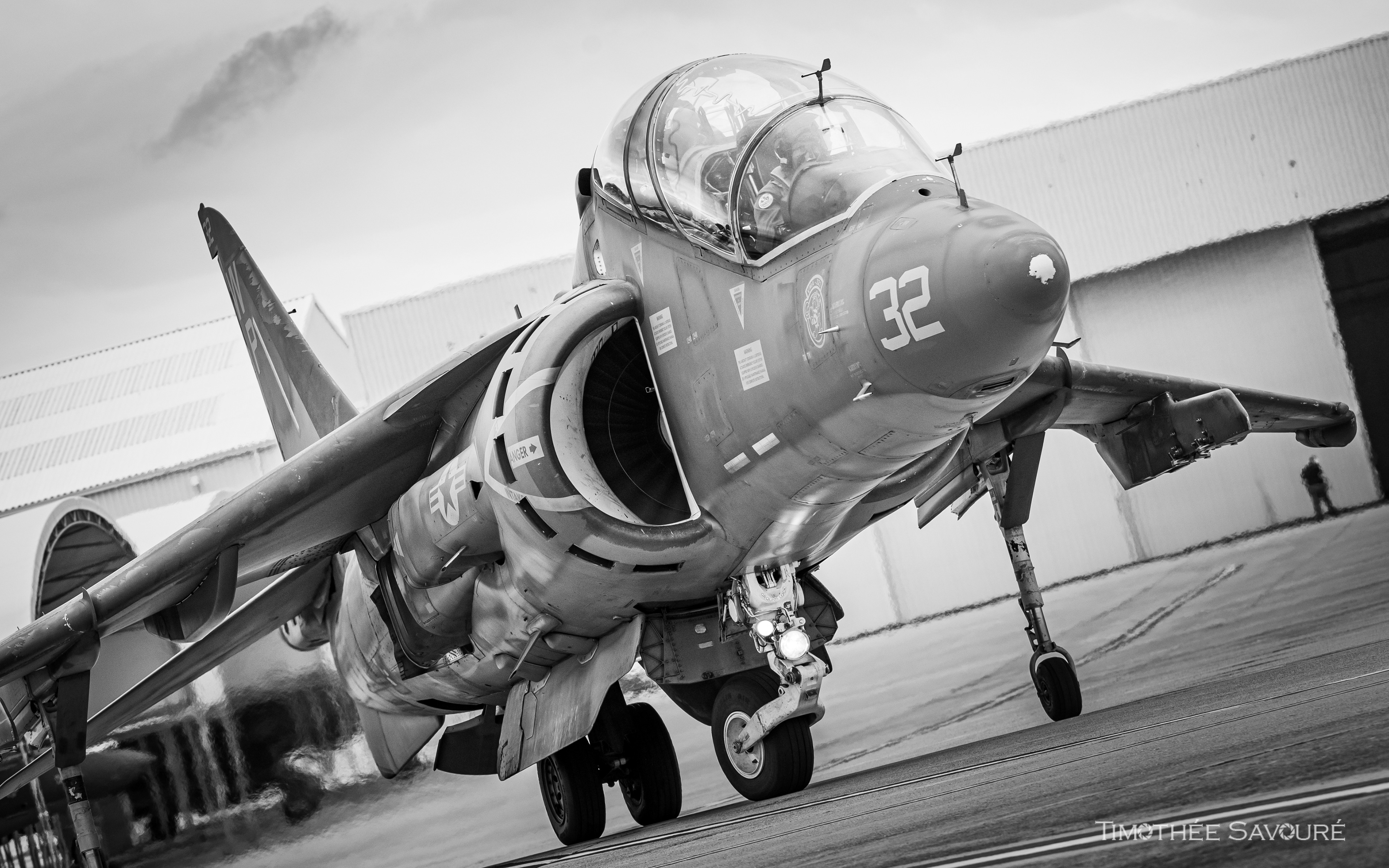
The McDonnell Douglas AV-8B Harrier II is a single-engine ground-attack aircraft that constitutes the second generation of the Harrier family, capable of vertical or short takeoff and landing (V/STOL). The aircraft is primarily designed for light attack or multi-role missions, ranging from close air support (CAS) of ground troops to armed reconnaissance.
The story of the Harrier jump jet began in the 1950s, when engineers in Europe and the United States searched for ways to keep aircraft operational even if runways were destroyed. Early vertical flight concepts proved too heavy and complex, until Hawker Siddeley introduced a radically simpler idea: a single engine with vectored thrust. This led to the Rolls-Royce Pegasus, whose four rotating nozzles allowed an aircraft to take off vertically, hover, and transition smoothly into conventional flight.
The story of the Harrier jump jet began in the 1950s, when engineers in Europe and the United States searched for ways to keep aircraft operational even if runways were destroyed. Early vertical flight concepts proved too heavy and complex, until Hawker Siddeley introduced a radically simpler idea: a single engine with vectored thrust. This led to the Rolls-Royce Pegasus, whose four rotating nozzles allowed an aircraft to take off vertically, hover, and transition smoothly into conventional flight.
Experimental aircraft such as the Hawker P.1127 and the Kestrel validated the concept and paved the way for the first operational Harrier, the world’s first V/STOL jet fighter-bomber. Building on this foundation, a joint US–UK program in the early 1970s sought to address the limitations of the original aircraft, focusing in part on a more powerful Pegasus engine. The goal was also to increase payload: the first version of the AV-8A Harrier could only carry half the payload of the A-4 Skyhawk. Budget constraints forced the UK to withdraw in 1975, leaving the United States to continue the effort alone.
From there, McDonnell Douglas performed a major redesign of the AV-8A. While keeping the general layout, the new aircraft introduced a larger composite wing with additional hardpoints, a raised cockpit for improved visibility, and a redesigned fuselage with significant aerodynamic and structural refinements. Powered by an upgraded Pegasus engine, the result was an incredible leap in capability. Some systems of the AV-8B were re-used from other platforms such as the F-18 Hornet, for example the inertial navigation system or the Multipurpose Color Display.
The AV-8B Harrier II first flew in November 1981 and entered service with the United States Marine Corps in January 1985, marking the arrival of a far more capable and mature evolution of the Harrier concept. Later upgrades added a newer radar and increased missile compatibility. The updated aircraft was ordered by the USMC in 1987 and, after much consideration, the Spanish and Italian navies developed a joint requirement for a fleet of air-defense Harriers, in addition to the Royal Air Force’s already existing fleet of Harriers.
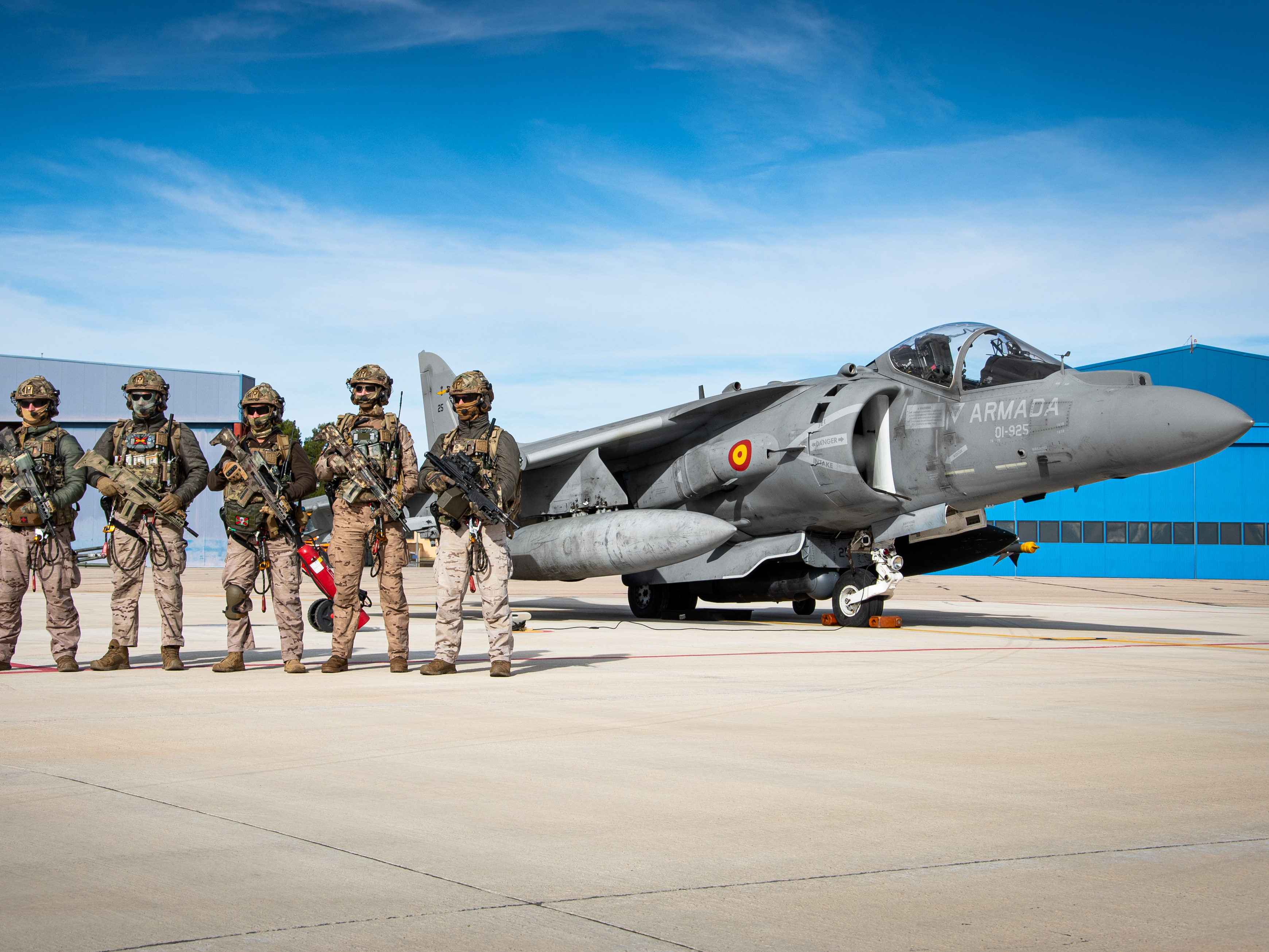
The Harrier is specifically designed for expeditionary operations and CAS, and has filled that role within the air forces that used them as the premier aircraft to bring support to forces on the ground, both from the United States and from partner nations. It can operate from smaller expeditionary airfields, that other tactical aircraft cannot operate from. Its STOL ability allows operations from smaller deck carriers that support aircraft. Italy, Spain and the United Kingdom have taken advantage of this, as none of these countries have a real aircraft carrier equipped with cable arrest and catapult.
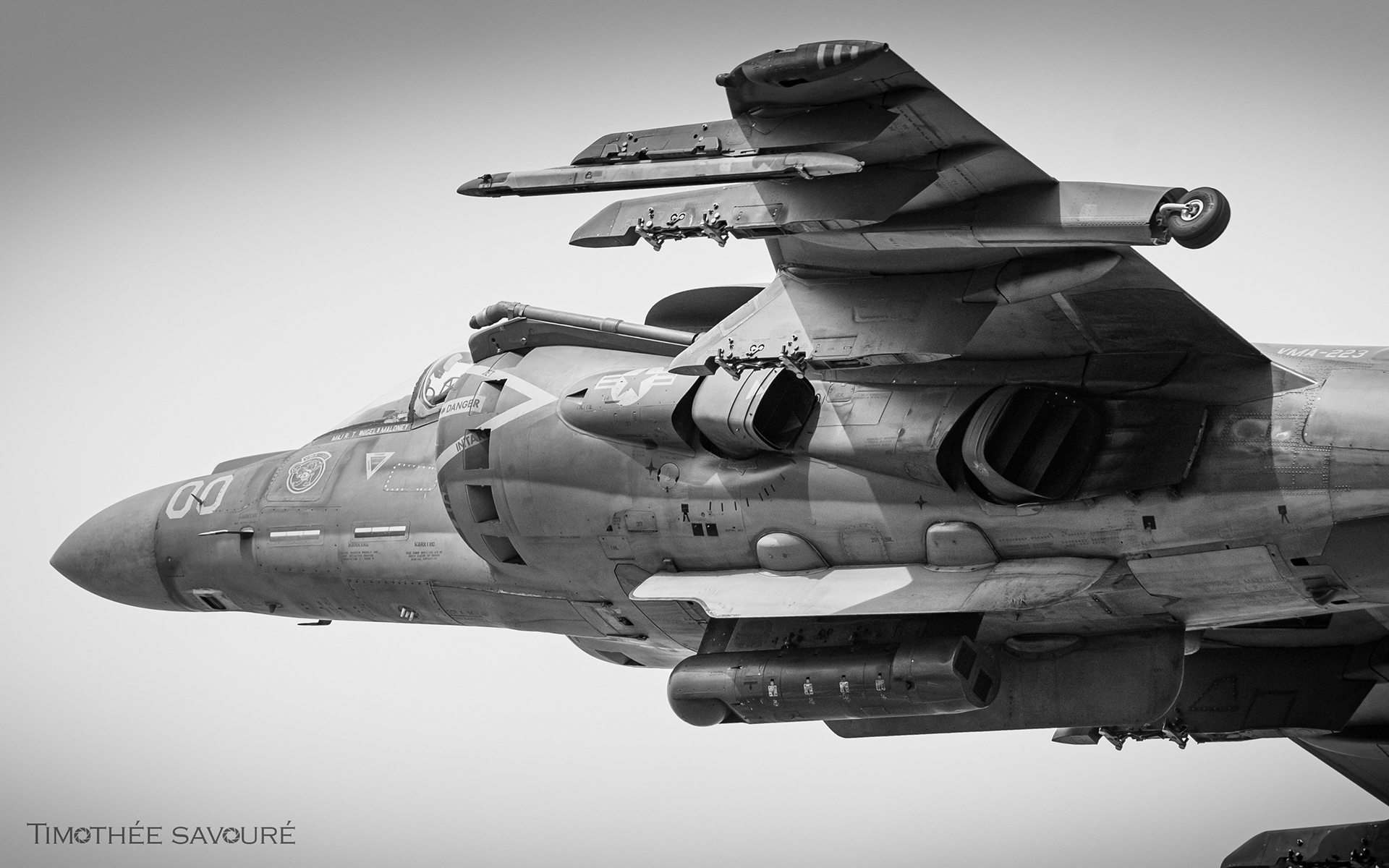
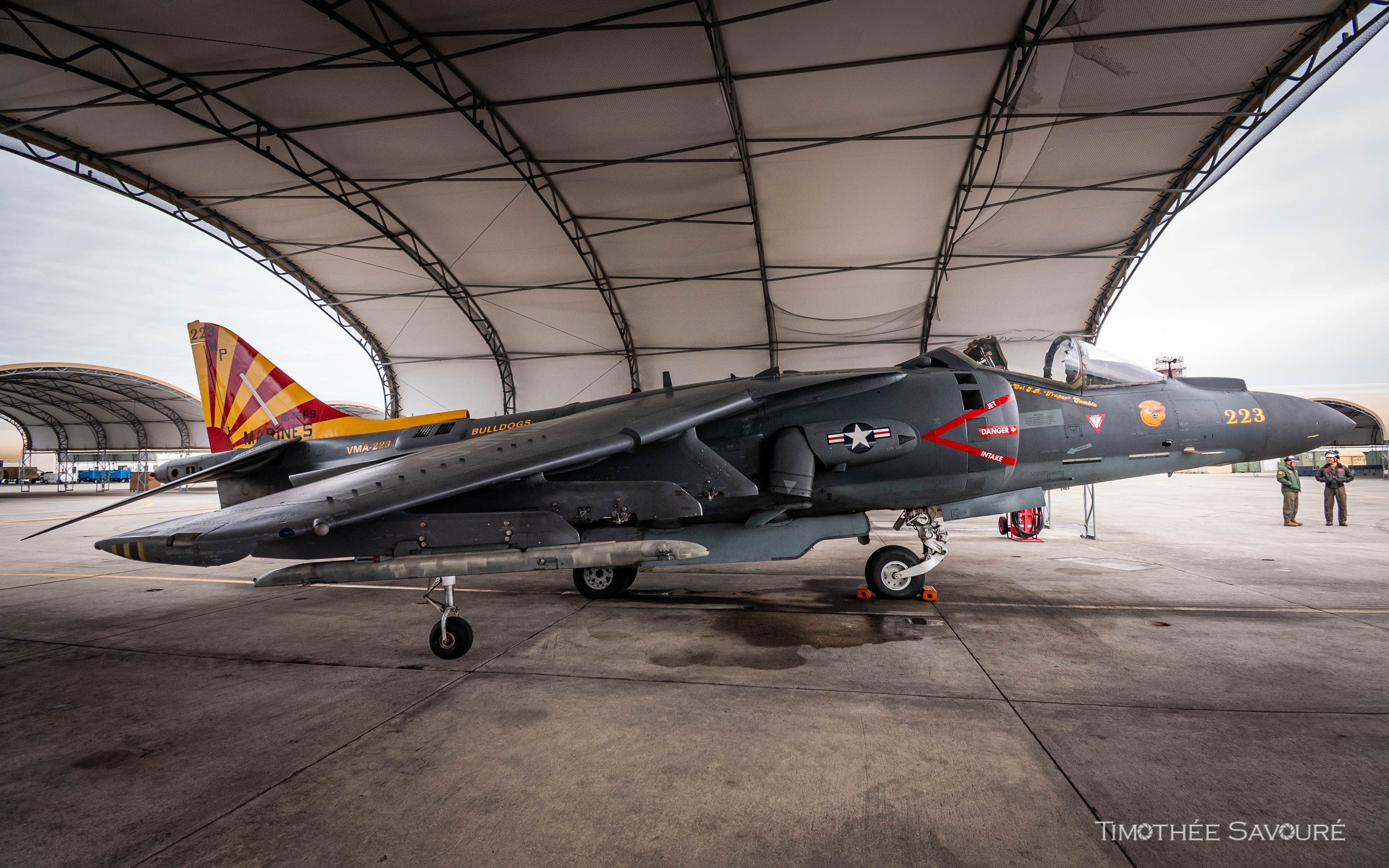
The AV-8B+ can be equipped with a wide range of systems that make it a versatile CAS aircraft. With 7 hard points (3 under each wing and one center point), it can carry various types of ordnance, including laser-guided bombs such as GBU-12 or GBU-16, as well as GPS-guided bombs like the GBU-32, in addition to conventional unguided bombs such as the Firebomb. For targeting and situational awareness, the aircraft uses FLIR systems, allowing effective day and night operations, along with the AN/AAQ-28 LITENING designation pod for tracking and guiding ordnance. Together, these systems allow the Harrier to bring a very precious firepower in support of ground forces. It also carries 3 flare baskets, containing up to 30 flares each, for defence against external threats.
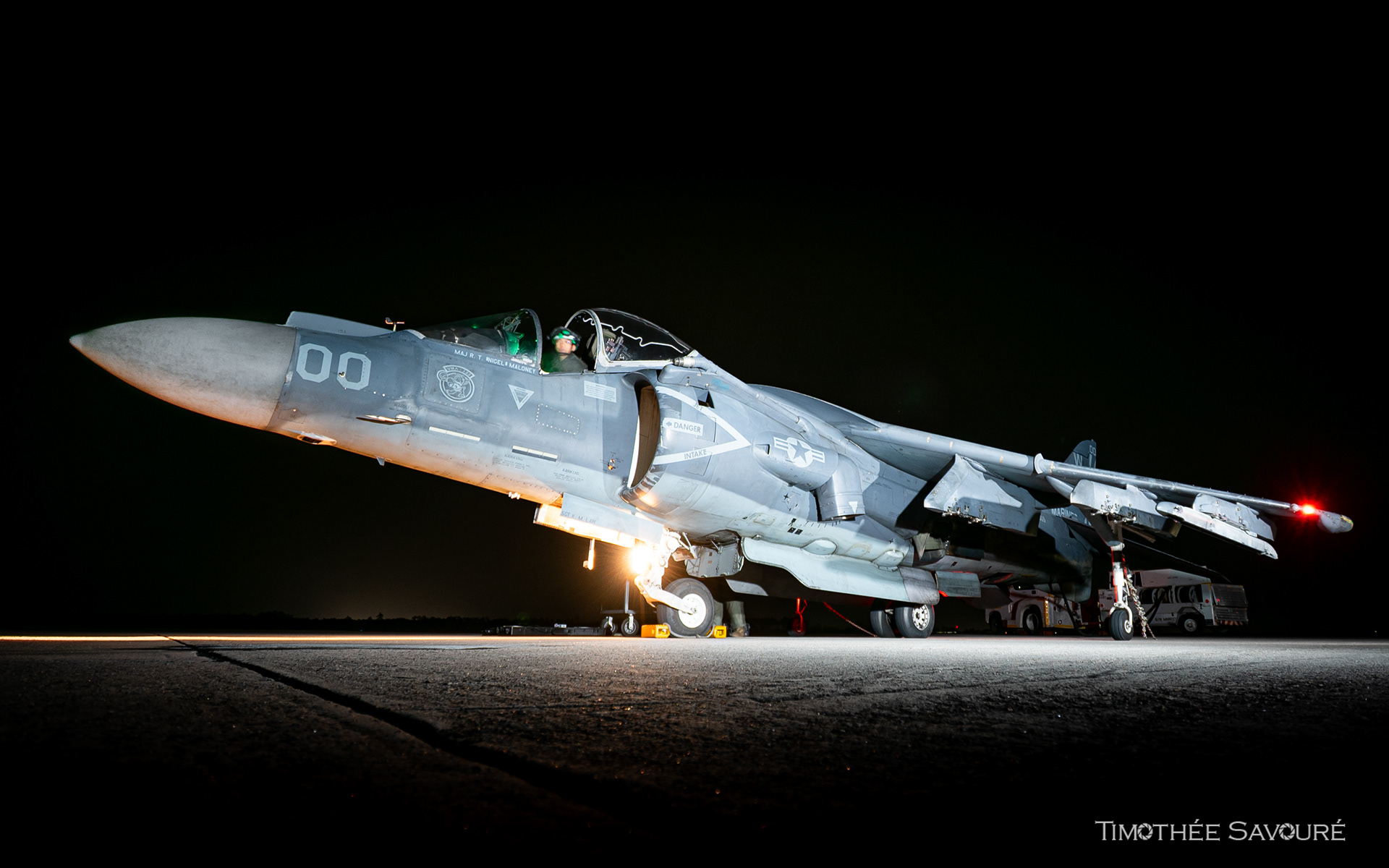
The Harrier in the USMC
The AV-8B Harrier II was built with a purpose to support a very specific way of war within the United States Marine Corps. From the beginning, it was designed for expeditionary operations and Close Air Support (CAS), and over decades of service it became the Marine Corps’ premier platform for delivering airpower to troops on the ground, whether these troops were U.S. forces or came from allied and partner nations.
What made the Harrier different was its ability to operate where other tactical aircraft could not: thanks to its short takeoff and vertical landing capability, it could deploy from austere, expeditionary airfields with minimal infrastructure, often close to the front lines. Compared to conventional aircraft, the Harrier is also able to operate from smaller amphibious assault ships (“small deck carriers”) giving Marine Air-Ground Task Forces their own fixed-wing airpower at sea. This flexibility allowed the Harrier to fill the unique and essential gap that previously existed between sea-based aviation and ground operations, or with helicopters and fixed-wing aircraft.
The Harrier’s role was clearly demonstrated during a lot of operations. The last real deployment was Operation Inherent Resolve, where the VSTOL aircraft operated from both ships and forward bases. In that context, the aircraft was not only used for strikes but also as a tool of presence and deterrence, the missions that it was made for. There were also reports of Harriers being deployed to Puerto Rico in December 2025 amid rising tensions with Venezuela, although nothing has been confirmed about their detailed participation.
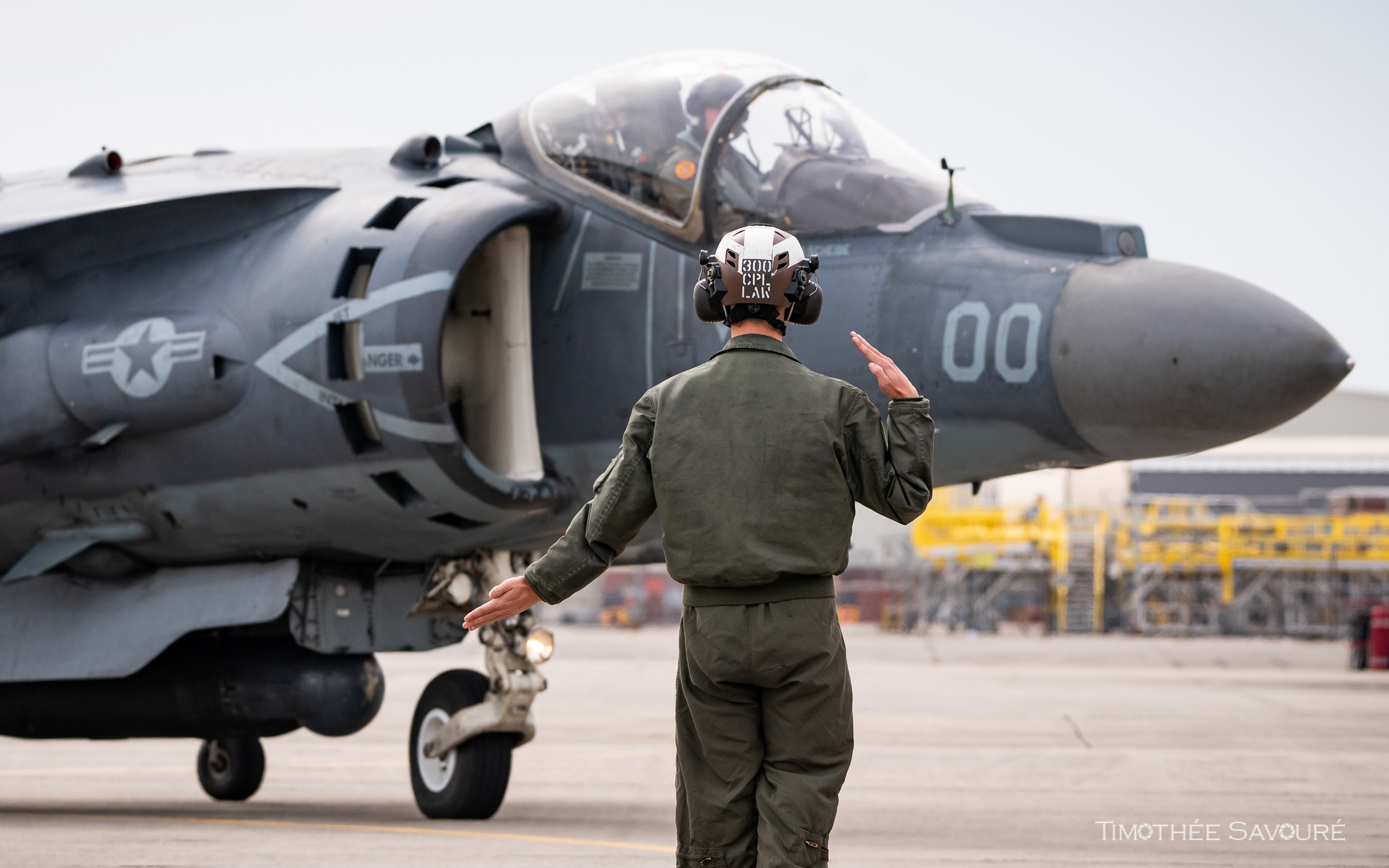
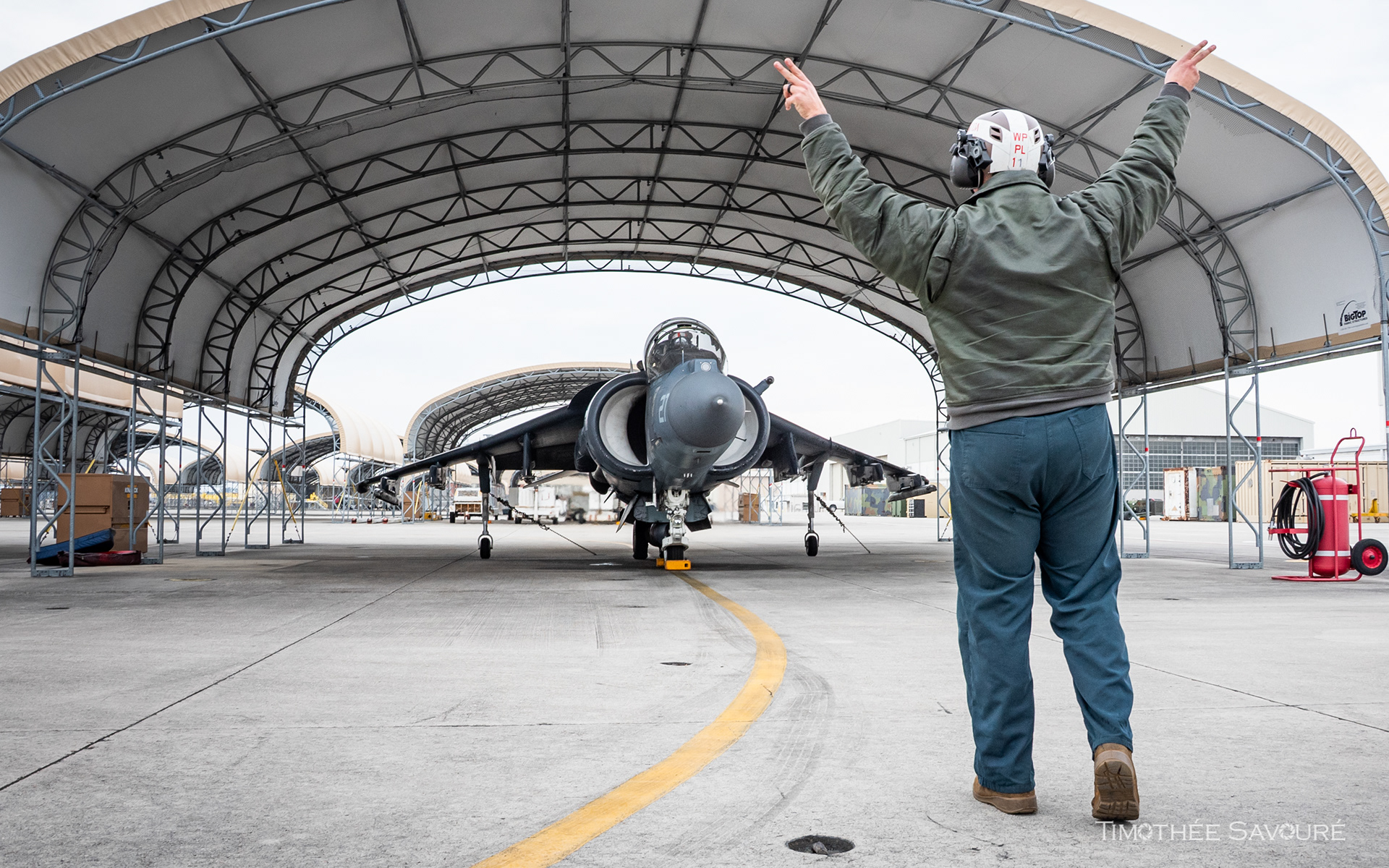
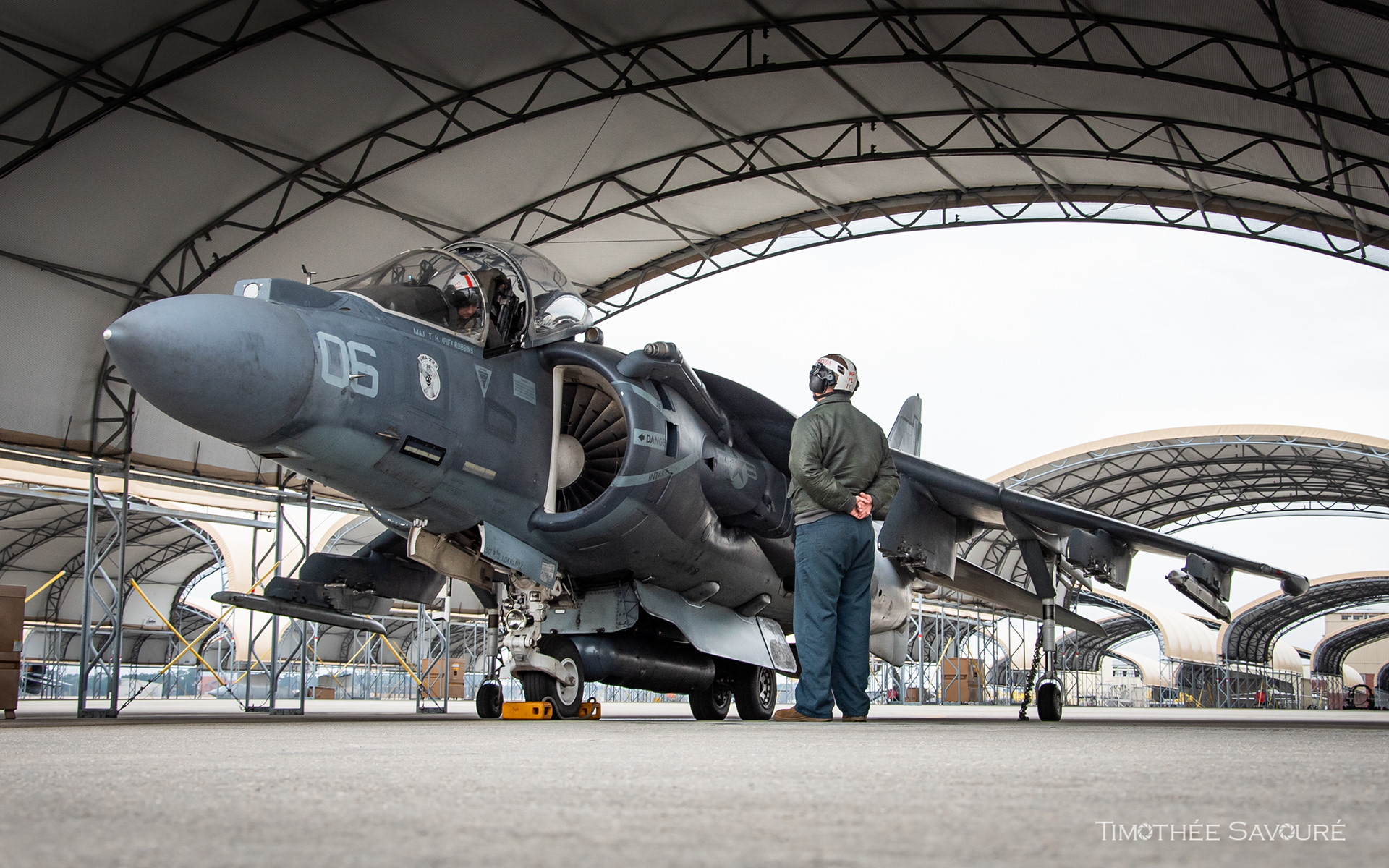
Maintaining an aircraft like the Harrier among the USMC required to follow a strict maintenance program. Squadrons performed line maintenance and some basic to medium maintenance visits. Depot maintenance was performed in the two Fleet Readiness Centers (FRC), one of them being at MCAS Cherry Point (FRC East) while the other was in Lemoore (FRC West). During these heavy maintenance visits, upgrades were carried out, and all the parts of the aircraft were inspected to the last screw. The last Harrier depot maintenance visit was carried out in 2024 in anticipation for the retirement of the type. For line maintenance and small hangar checks, the Marine Corps had incorporated maintainers in squadrons, but also had the help of V2X, a private company with mainly retired Marines in their teams. By working alongside military personnel, V2X provides technical expertise and continuity that help keep these aging platforms mission-ready. Maintenance-wise, the Harrier’s closest cousin was the F-18 Hornet due to some commonalities such as the radar (upgraded to F-18 standard with the Harrier “Plus” in the beginning of 2000s) and the inertial navigation system.
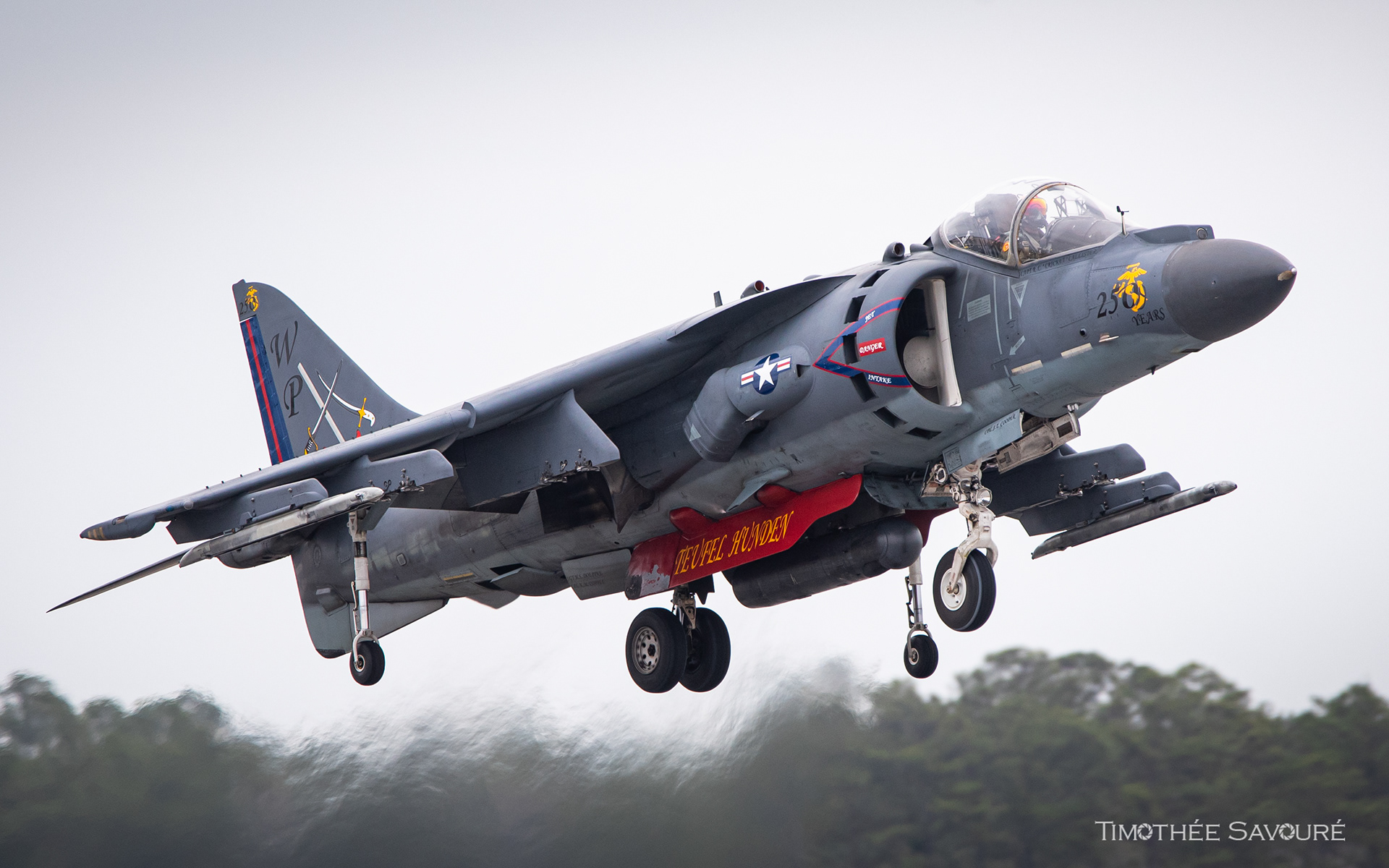
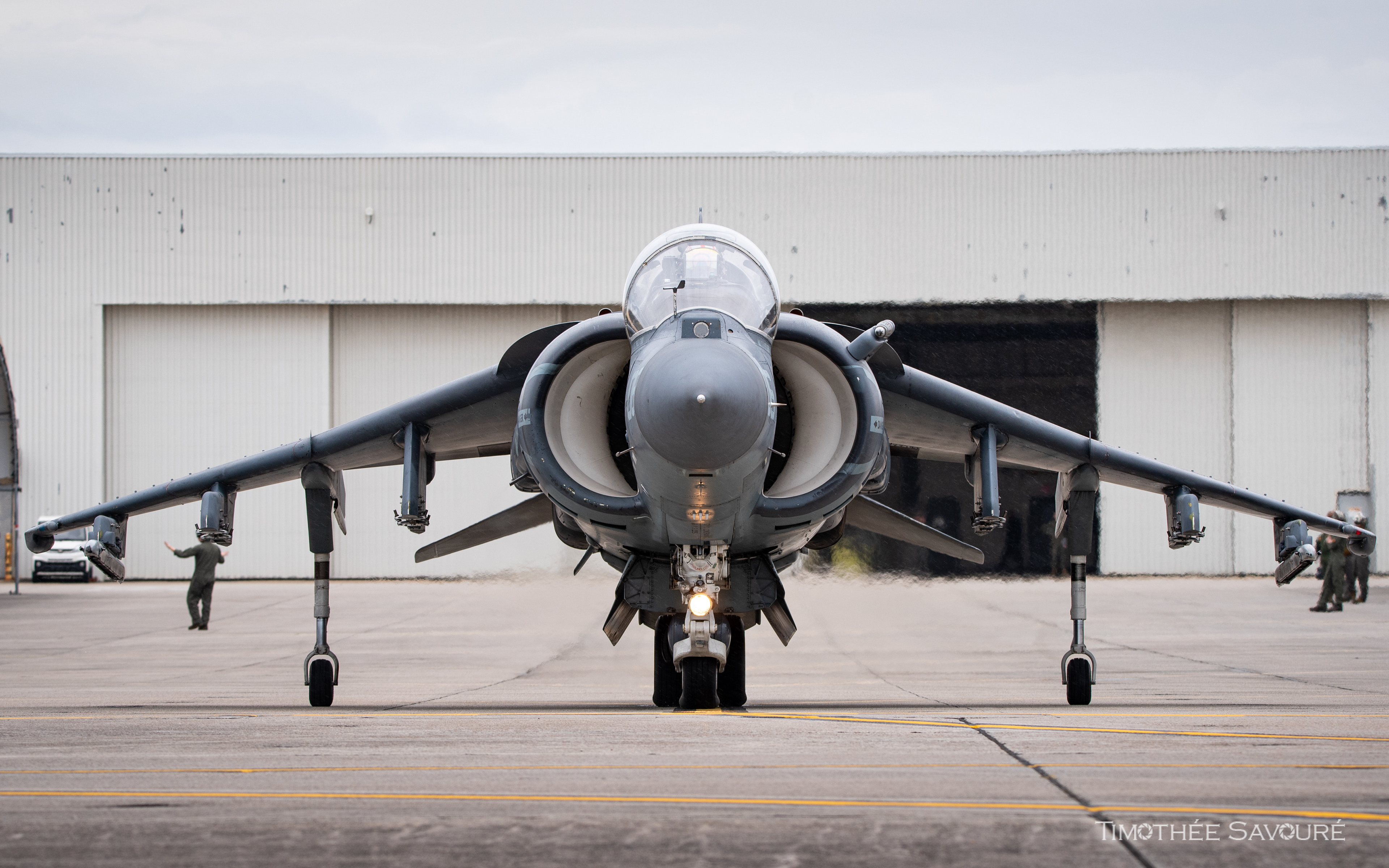
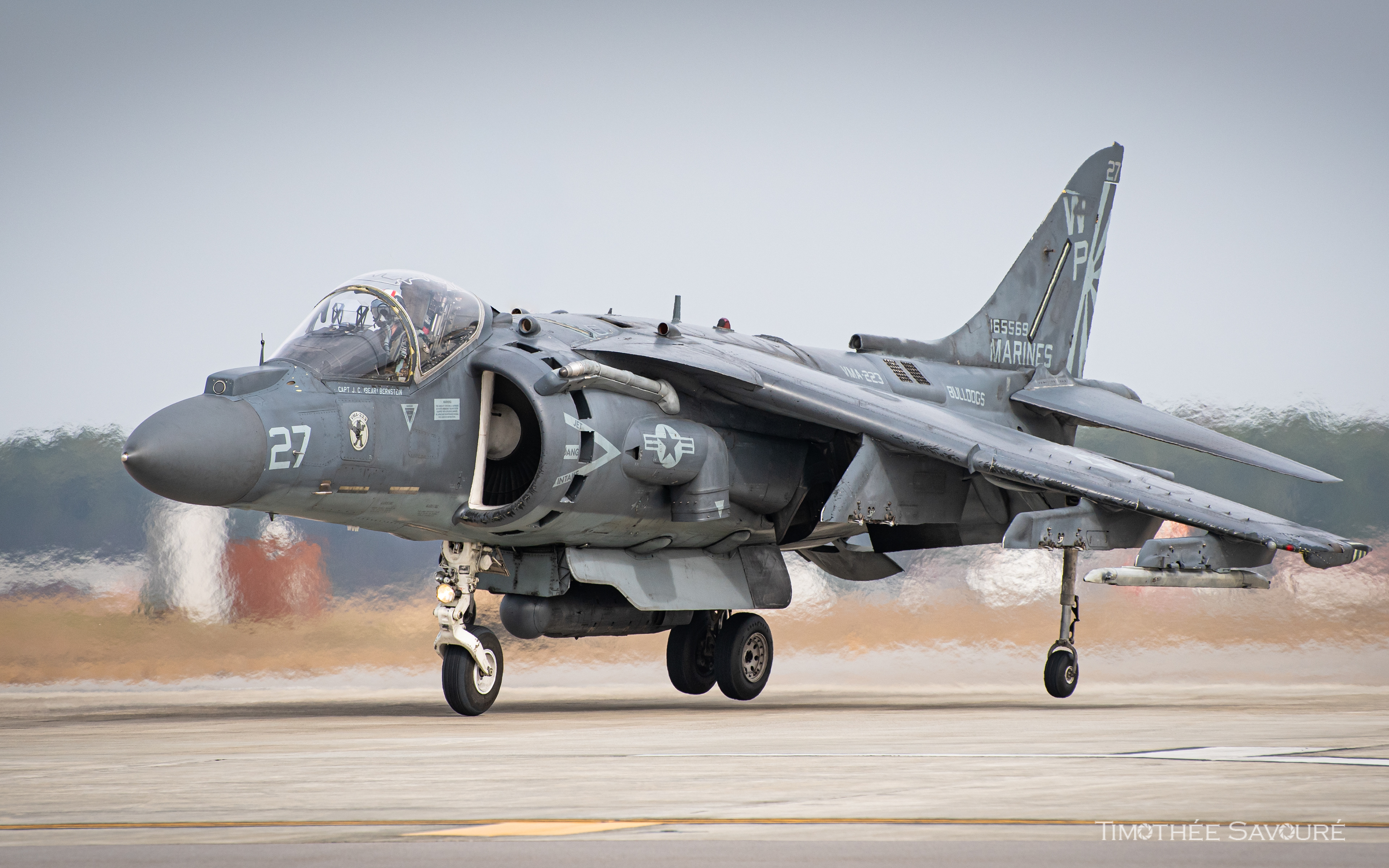
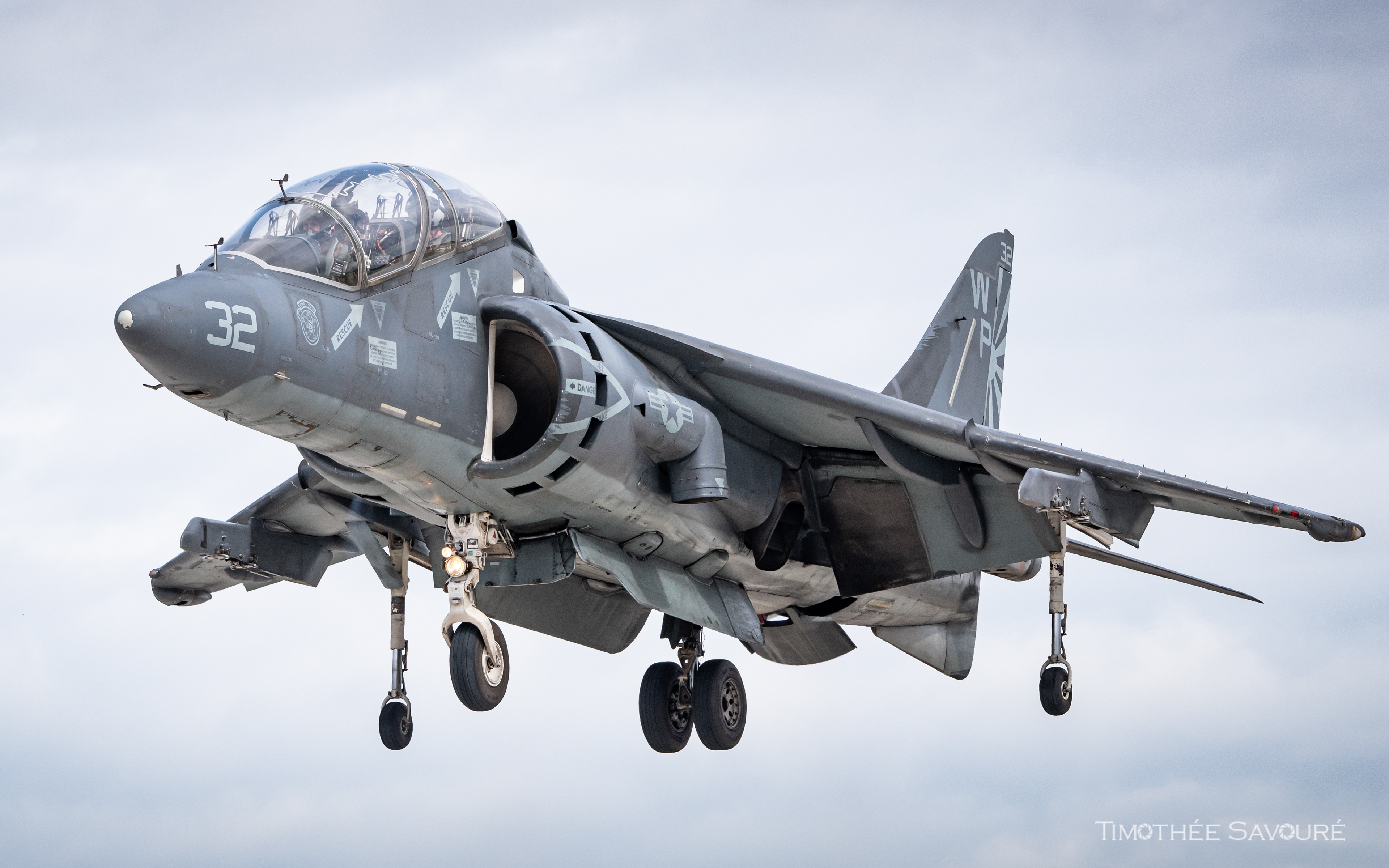
The Great American Bulldogs
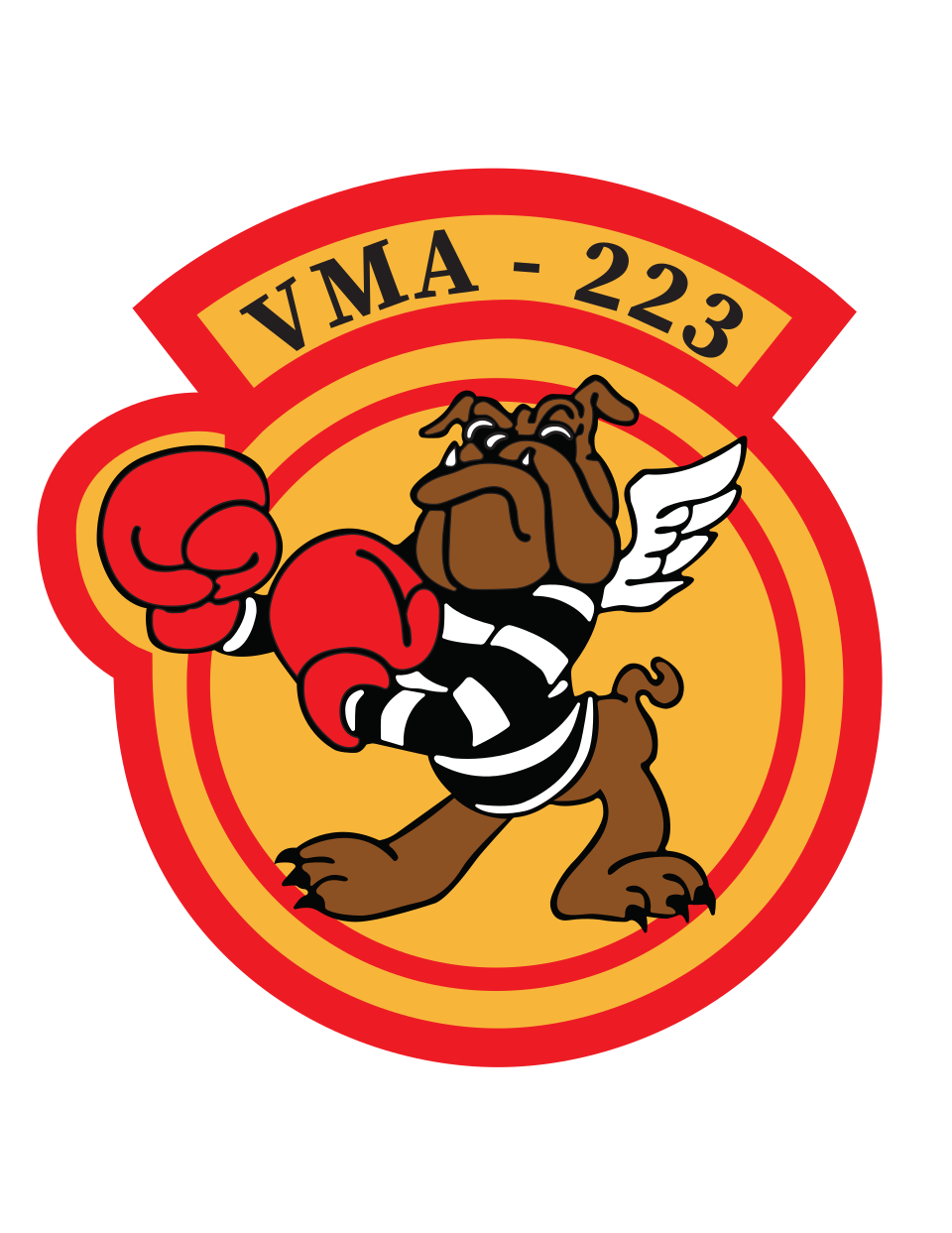
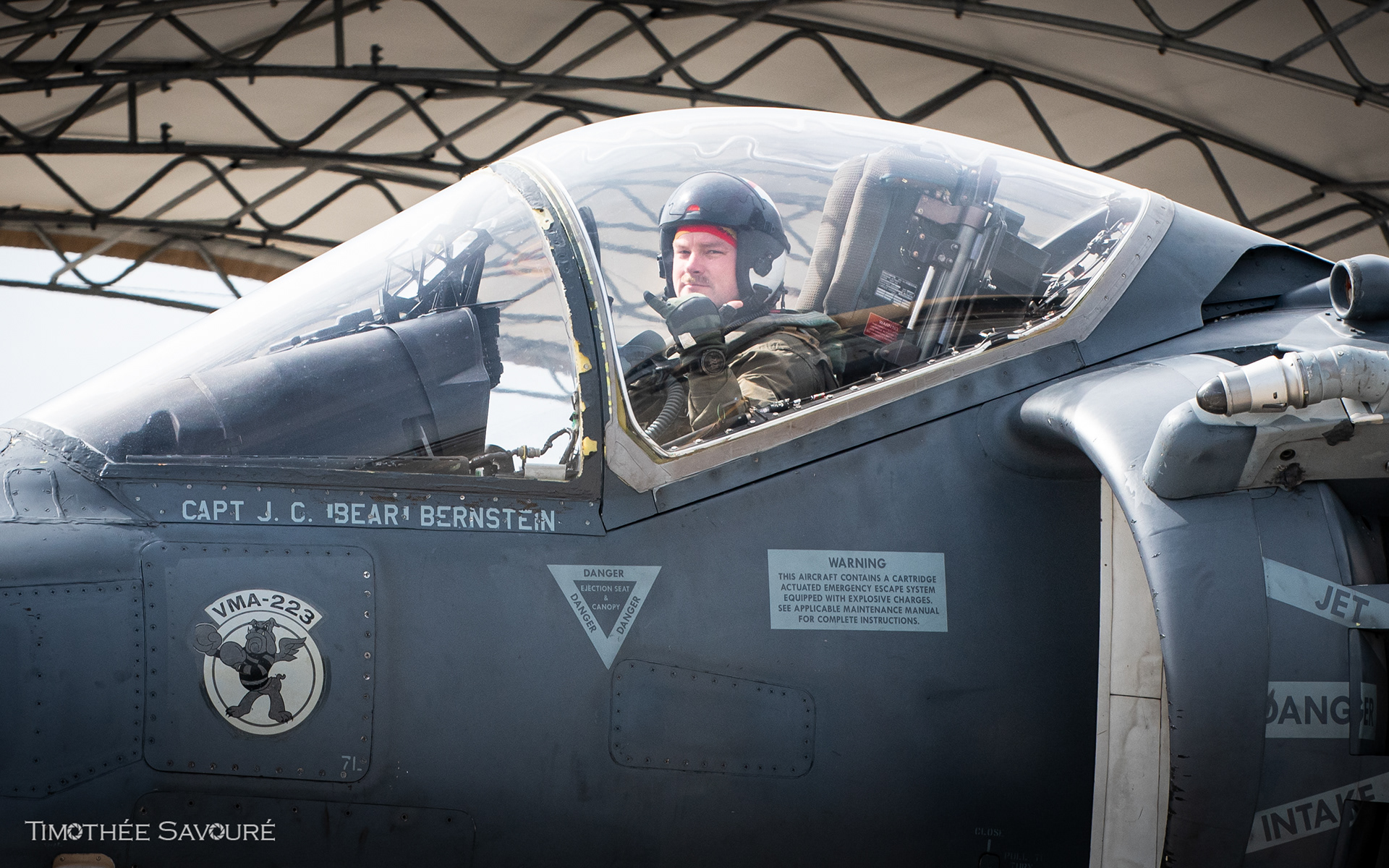
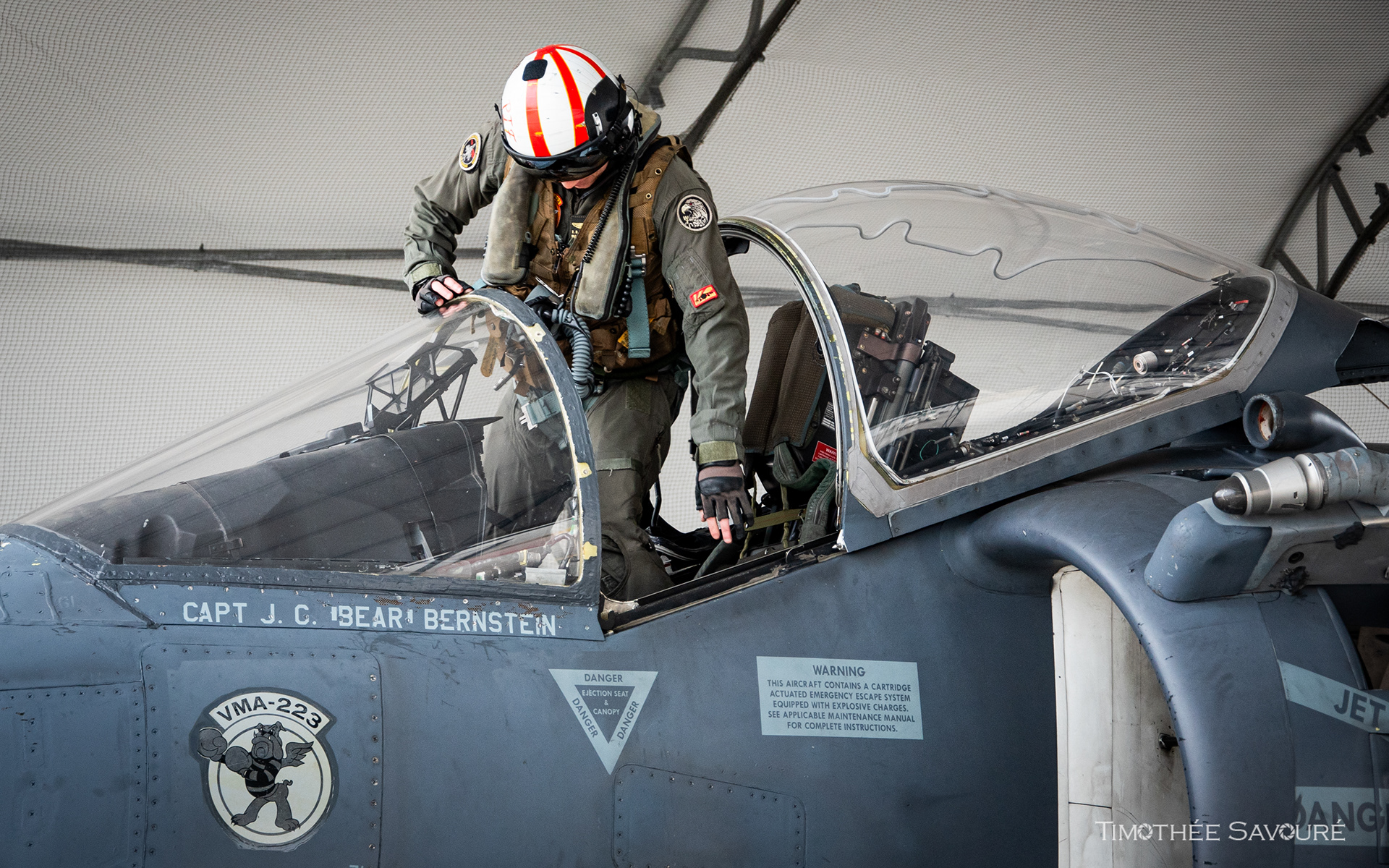
VMA-223, known as the “Bulldogs”, was originally commissioned in Hawaii in 1942 as VMF-223, a Marine Fighting Squadron flying the rugged Brewster F2A Buffalo and soon after, the Grumman F4F Wildcat. Just a few months after its activation, VMF-223 became the first fighter squadron committed to combat during the Battle of Guadalcanal when they landed at Henderson Field. At the time, the role was establishing air superiority during one of the war’s early campaigns against Japanese aircraft. It departed the Solomon Island in October 1942, having accounted for 83 enemy aircraft shot down. The legacy of this period lives on, the rising sun still serving as a symbol of the squadron today, painted on the rudder of their aircraft.
Following World War II, VMF-223 transitioned through several generations of aircraft, reflecting the rapid evolution of military aviation. In the early jet age, the squadron operated platforms such as the Vought F4U Corsair and later moved into jet aircraft, including the McDonnell F9F Panther and North American FJ-4B Fury in 1957. At that time, the squadron transitioned to attack roles and was redesignated as VMA-223. The Fury was operated for only a few months before being replaced by a much newer airframe: the Douglas A-4 Skyhawk. This reliable platform was widely used in Vietnam for strike and CAS missions. For 5 and a half years, the squadron performed sorties in the Far East supporting allied ground forces.
This period cemented the squadron’s identity as a dedicated attack unit focused on supporting ground forces. In 1970 the "Bulldogs" were reassigned to the 3rd Marine Aircraft Wing and returned to MCAS El Toro. VMA-223 operated the last production A-4M aircraft, 2960th Skyhawk produced and registered 160264. The aircraft was painted in a special livery with the flags of all the nations that operated the legendary scooter.
In the 1980s, the Great American Bulldogs entered a new era with the introduction of the AV-8B Harrier II. This transition fundamentally changed how the squadron operated, enabling it to deploy from amphibious ships and austere forward bases in support of Marine Expeditionary Units. In 2001 and 2002, VMA-223 flew the Harrier in the beginning phases of Operation Enduring Freedom. A year later, the squadron operated from the decks of USS Kearsargue and USS Bataan to conduct strikes over Iraq. The last war detachment of VMA-223 was in 2011 for Operation Enduring Freedom.
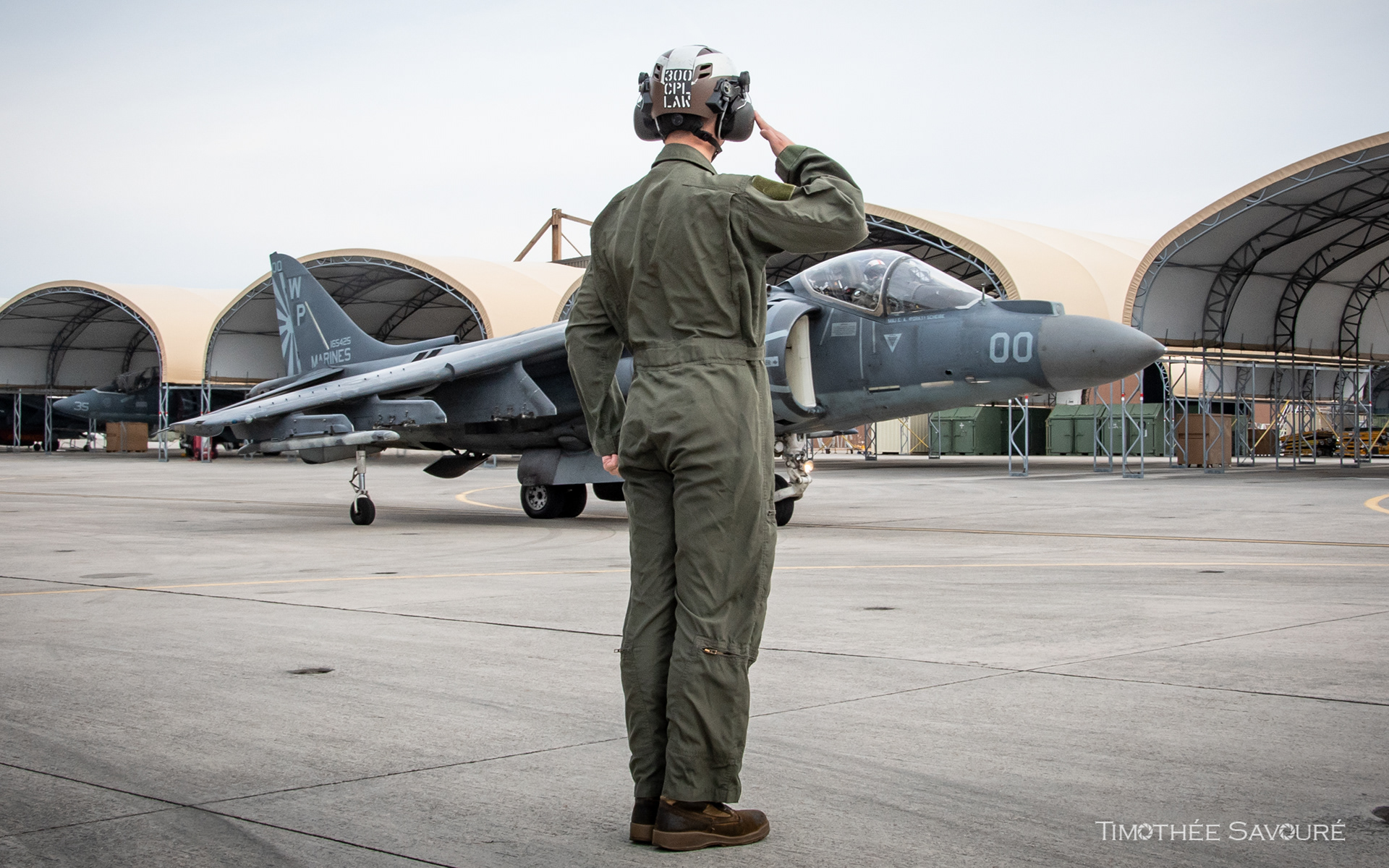
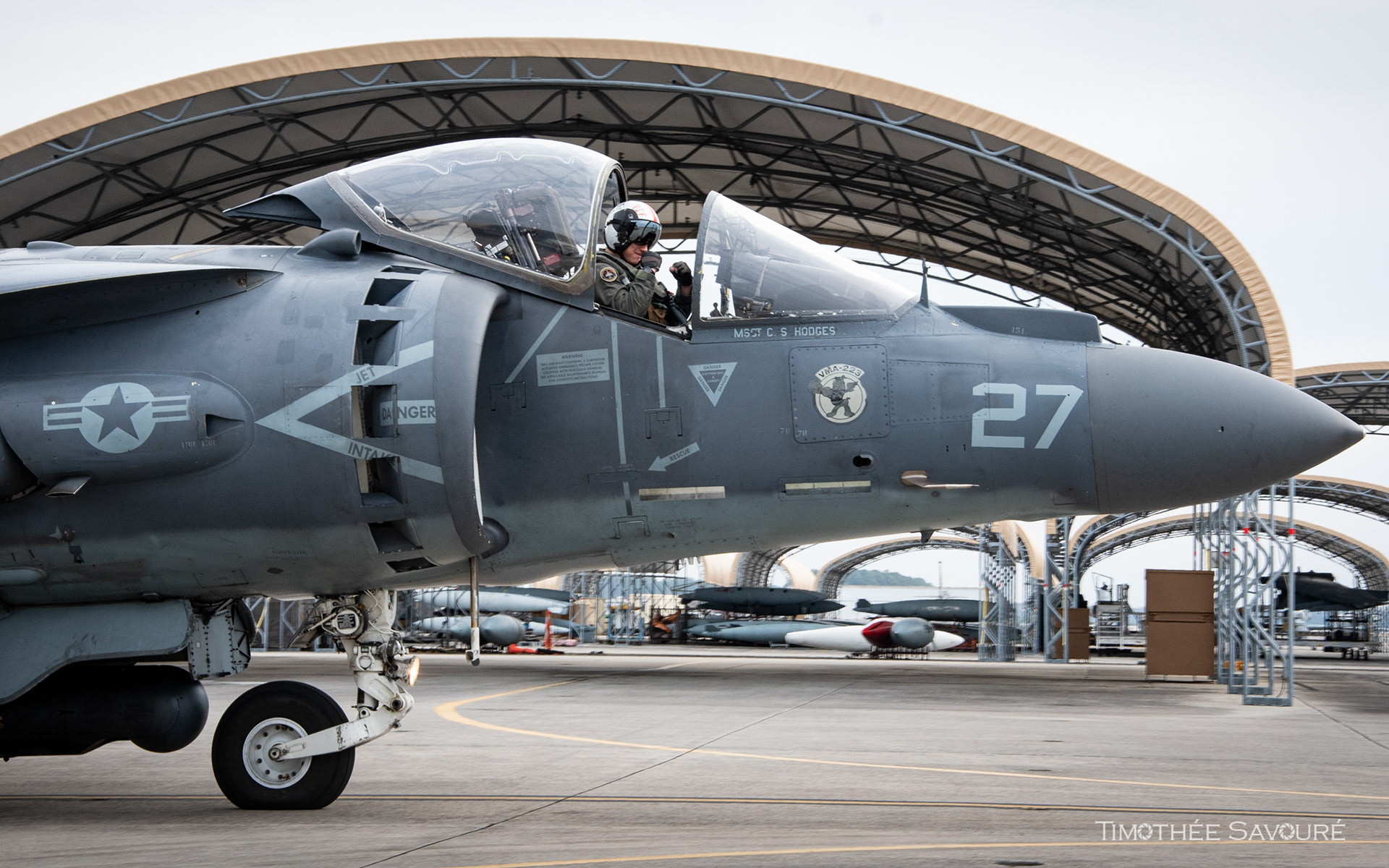
Today, VMA-223 is stationed at MCAS Cherry Point, part of 2nd Marine Aircraft Wing, and stands as the final active Harrier squadron in the Marine Corps, representing the end of more than half a century of V/STOL operations. Late 2021 the last AV-8B training squadron VMAT-203 was decommissioned and the jets transferred to VMA-223, which took over the training mission thanks the T-birds (TAV-8B+ two-seater jets). The final few Harrier pilots were formed in 2026 and will be among the decreasing number of Marines that flew this legacy aircraft.
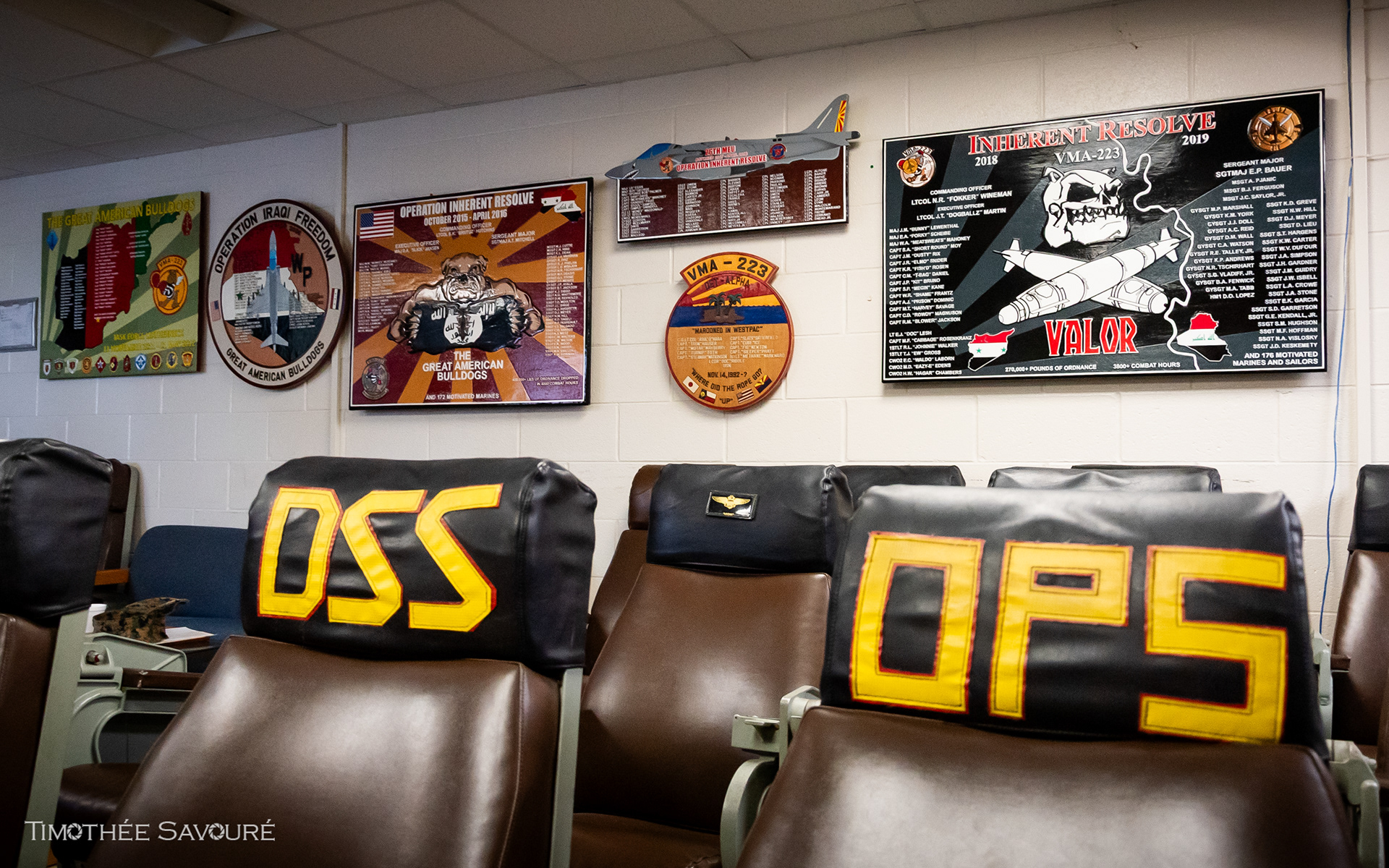
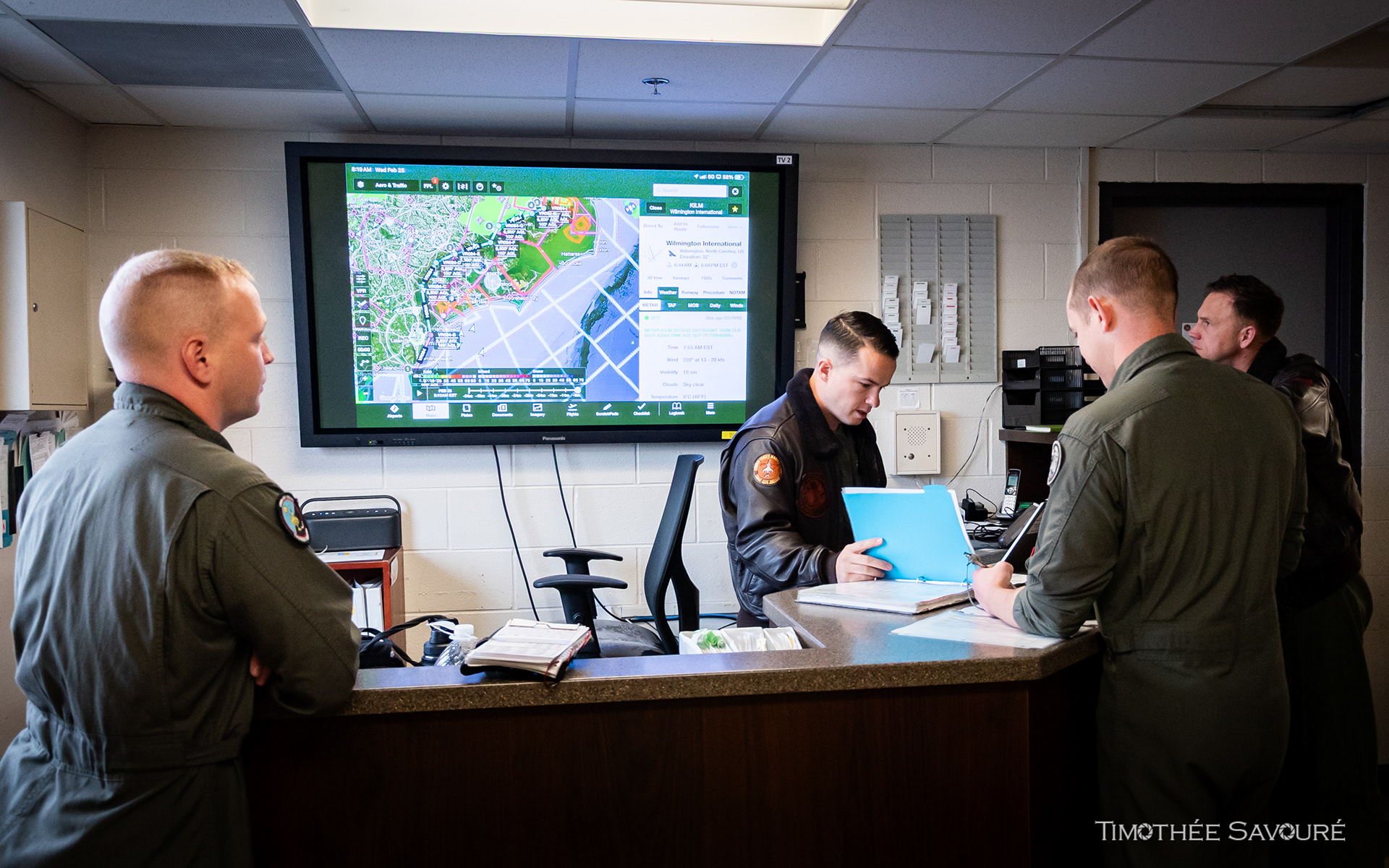
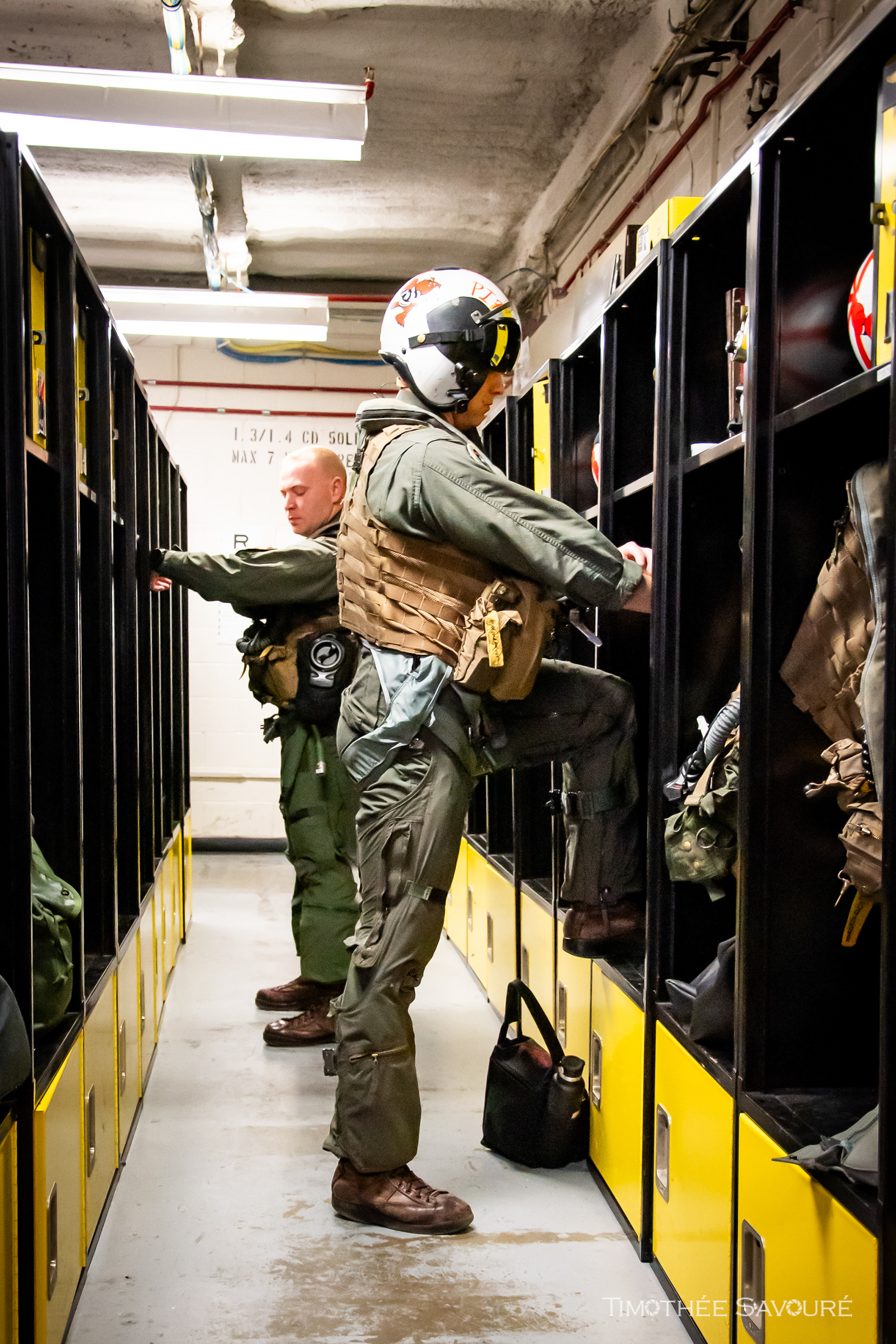
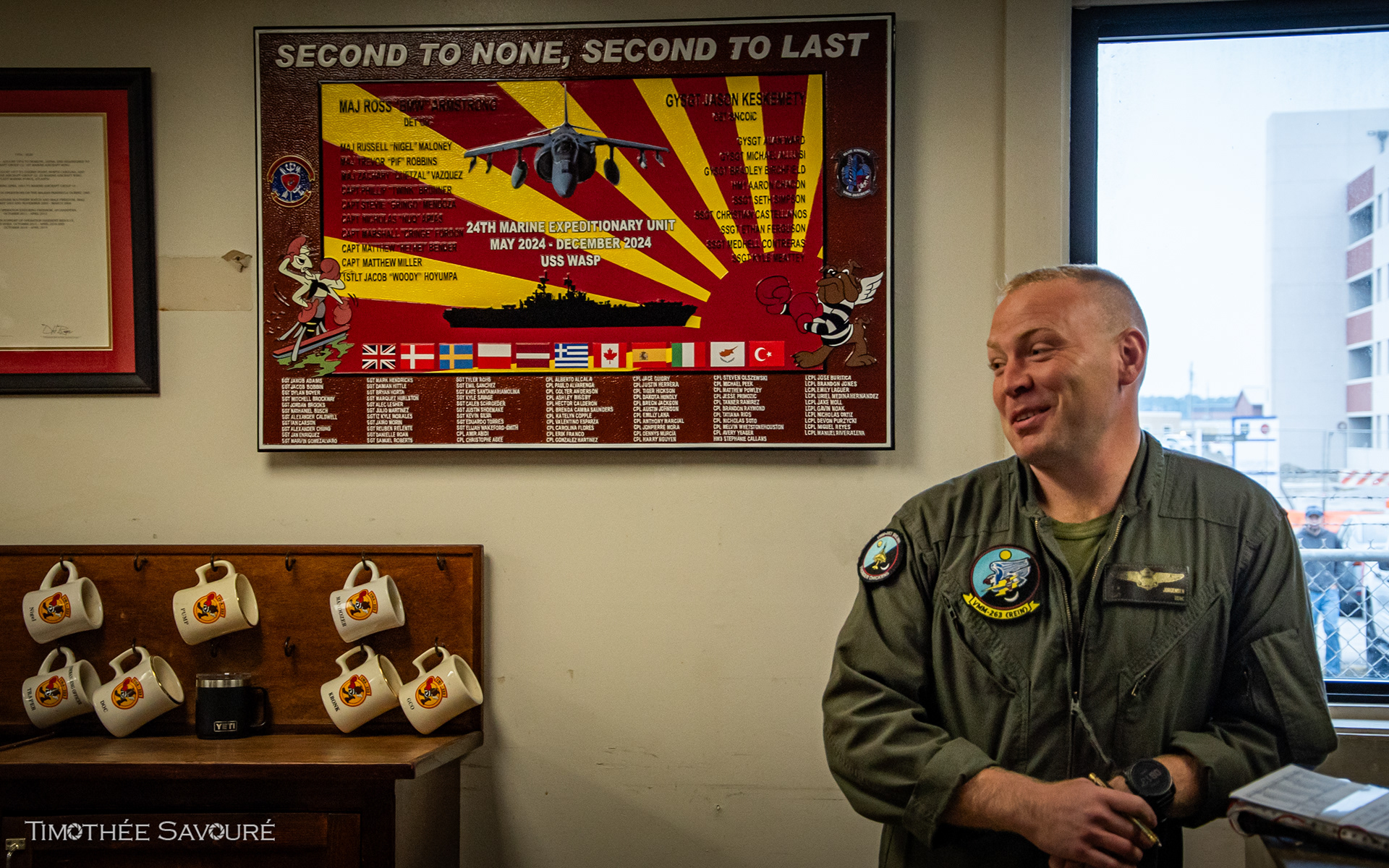
VMA-223 Ready Room
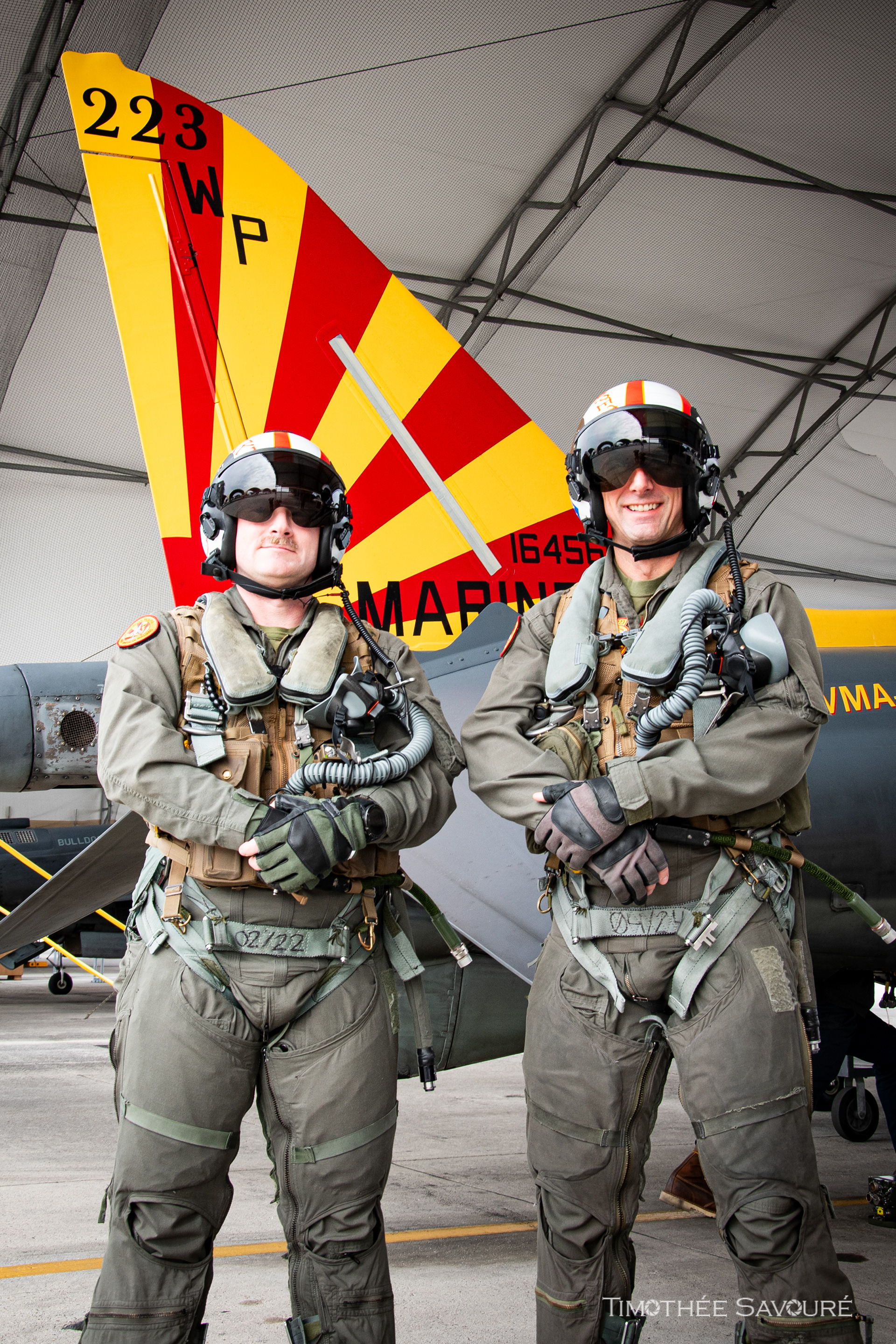
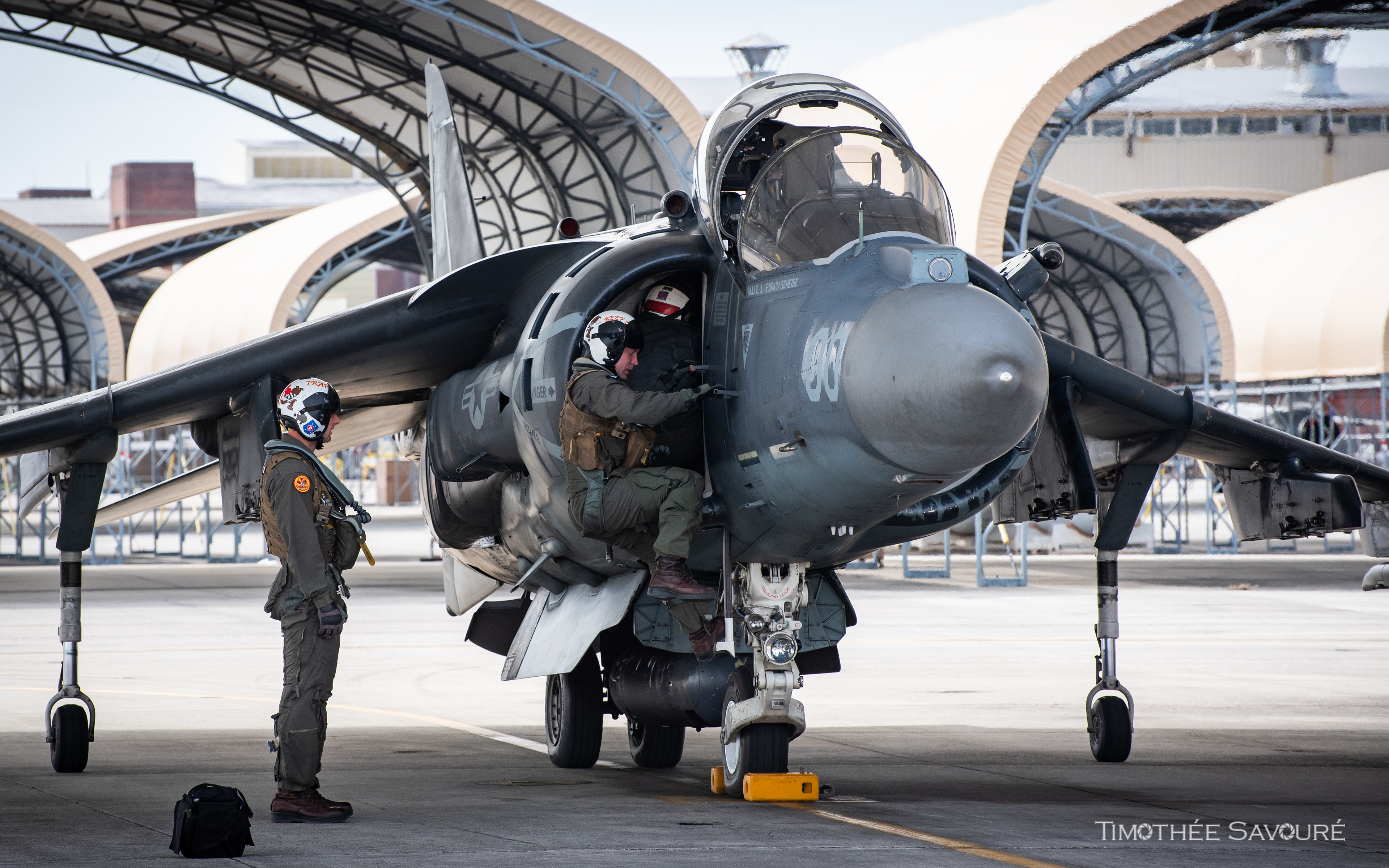
Major Sheibe (left) and LieutCol Cumbie (right), VMA-223 Executive and Commanding Officers
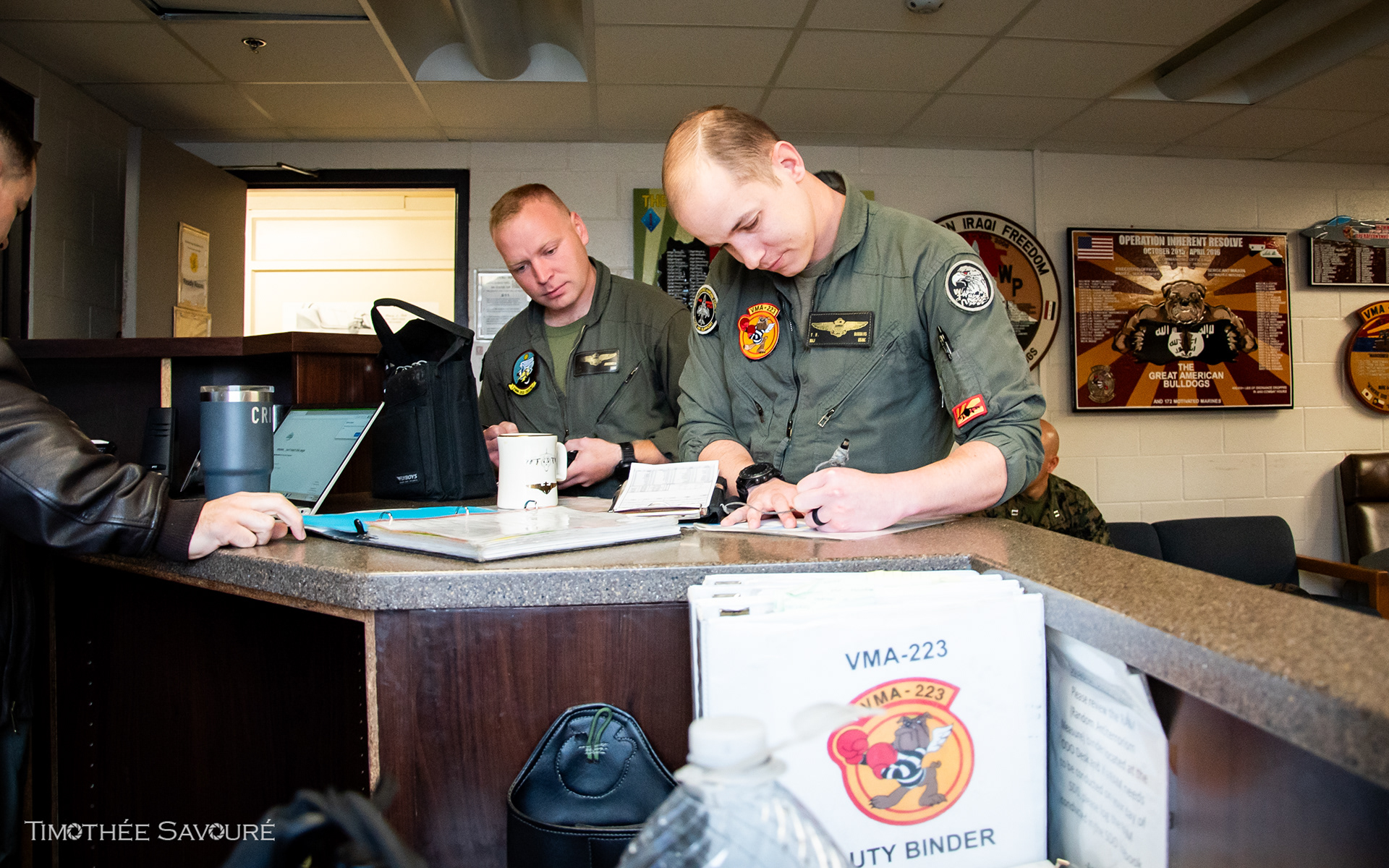
The future
Despite the evolution of technology and the introduction of newer aircraft, the core mission profile of the Harrier has remained unchanged. From its early days in Marine service through 2026, it has always revolved around three main functions: presence, deterrence, and action. To this day, whether flying combat missions or conducting training sorties, the last Harrier squadrons have continued to operate with that same mindset. Even as the aircraft approaches retirement, that continuity remains evident. Passionate Marines are still maintaining and operating the airframe during its final months of service, following the same philosophy and ensuring that it remains an effective platform. In many ways, the Harrier’s legacy within the Marine Corps is defined not only by its unique capabilities, but also by its role as a direct link between aviation and the Marines it supports on the ground.
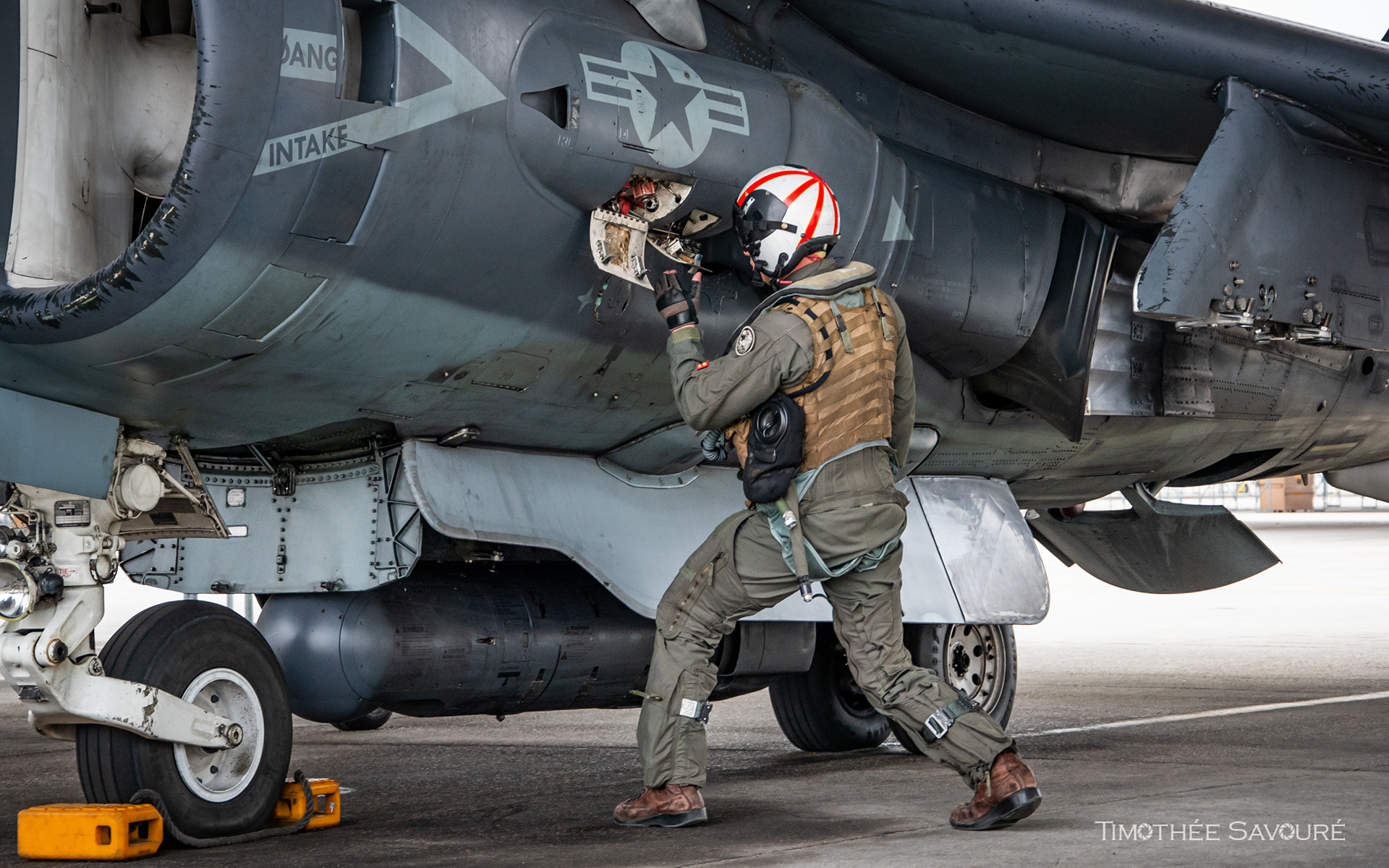
When asked what comes next, some Marines remain uncertain and, despite having strong career opportunities ahead, simply want to enjoy the final months of Harrier operations. Some have worked on the platform for decades, and the transition to newer aircraft will take time. One maintainer told us: “I have worked all my life on that aircraft. I’ll miss the morning FOD walk, when we walk the line. Sometimes I walk behind the jet and kind of touch it, just saying, ‘Are you ready, buddy?’”. The USMC, however, has been preparing for this transition for many years. As early as 15 years ago, some pilots were already moving from the Harrier to the F-35B Lightning II, ensuring there would be no capability gap for operational and security reasons. Leadership is also closely focused on making sure every Marine has the opportunity to continue his or her career after the Harrier’s sundown.
In 2026, VMA-223 still operates a squadron-strength fleet of Harriers, around 12 aircraft. After retirement, some jets are expected to be transferred to museums or air stations as gate guardians, although the exact fate of each aircraft has not yet been decided. What is certain is that both the public and Marines alike will still be able to see these legendary airframes again—though no longer in flight. The smoke, the sound, and the unmistakable silhouette of the Harrier will become part of history, remembered by those who were part of the AV-8B Harrier II community.
With the imminent retirement of the legacy Harrier, the Marine Corps is preparing its full transition to a fifth-generation fighter force. At the same time, the “Great American Bulldogs” are expected to be redesignated as VMFA-223, continuing their legacy with the F-35B while maintaining their core mission of supporting Marines on the ground.
Jet Blast Area would like to thank the United States Marine Corps and 2nd Marine Aircraft Wing, as well as MCAS Cherry Point and VMA-223 Bulldogs for their availability and their warm welcome. Special thanks to Captain Ballard, Major Scheibe, Lieutenant Colonel Cumbie and the whole squadron for their insights, their time and for taking into account the photographic requests.
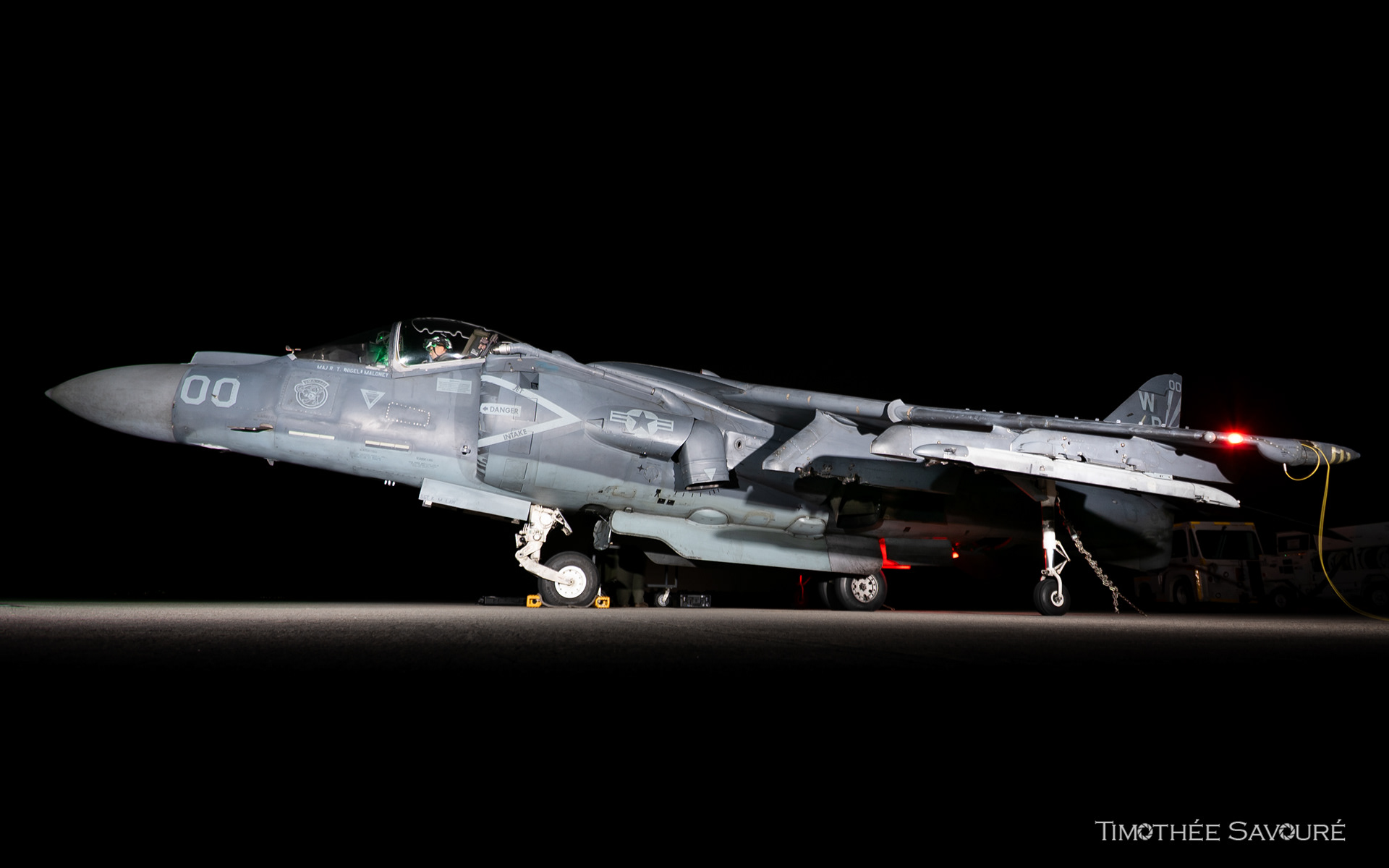
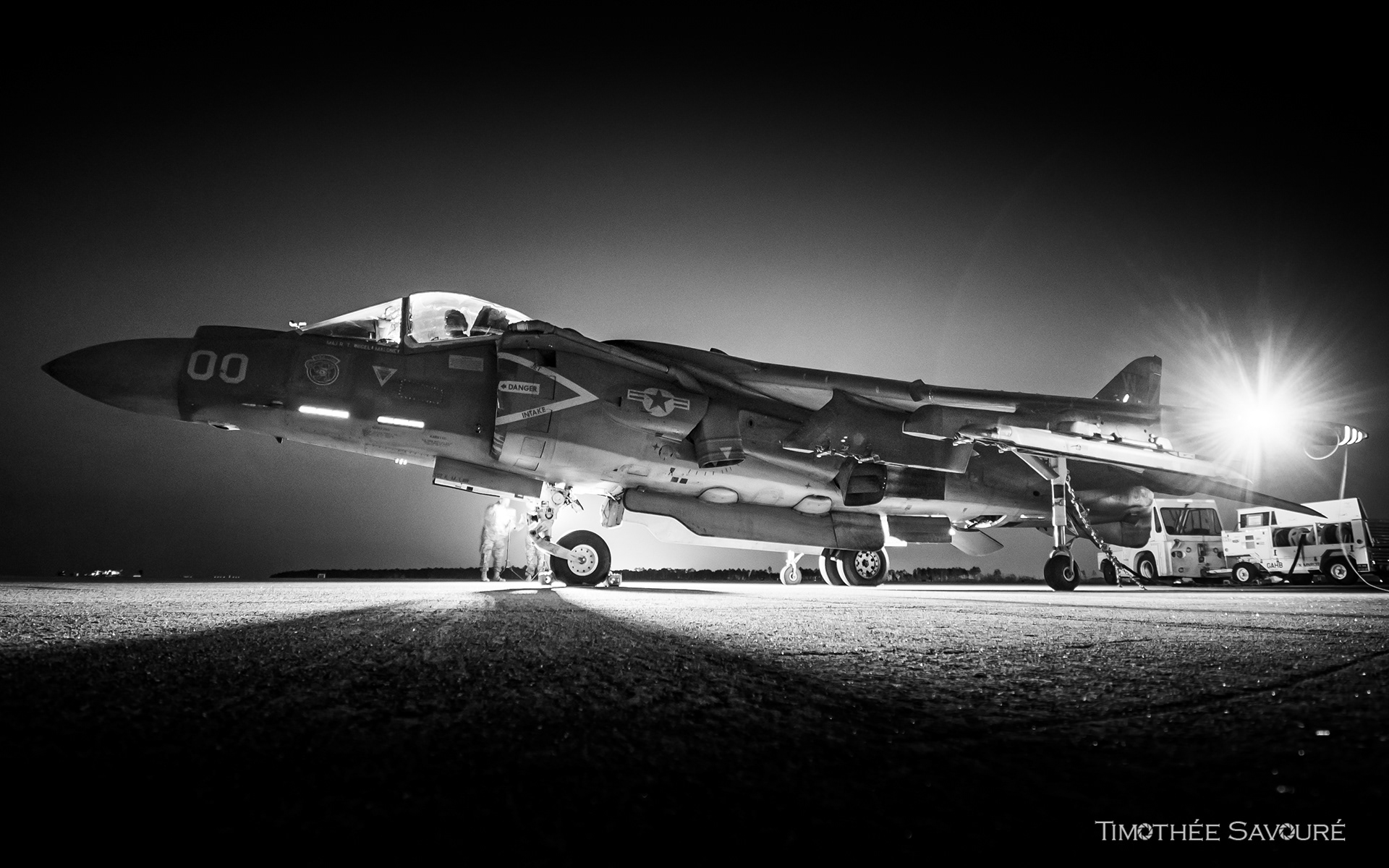
Dark ops in MCAS Cherry Point with VMA-223
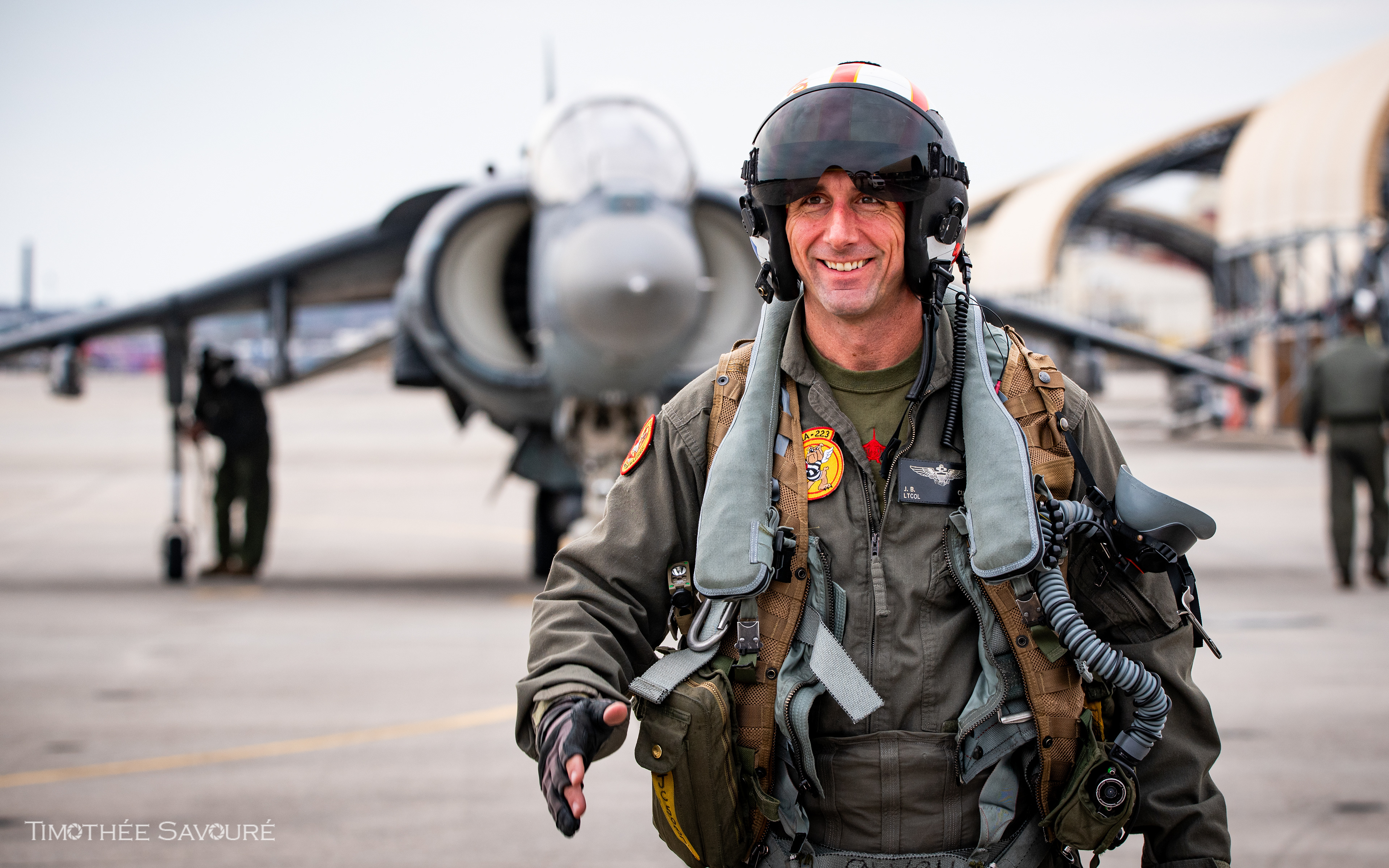
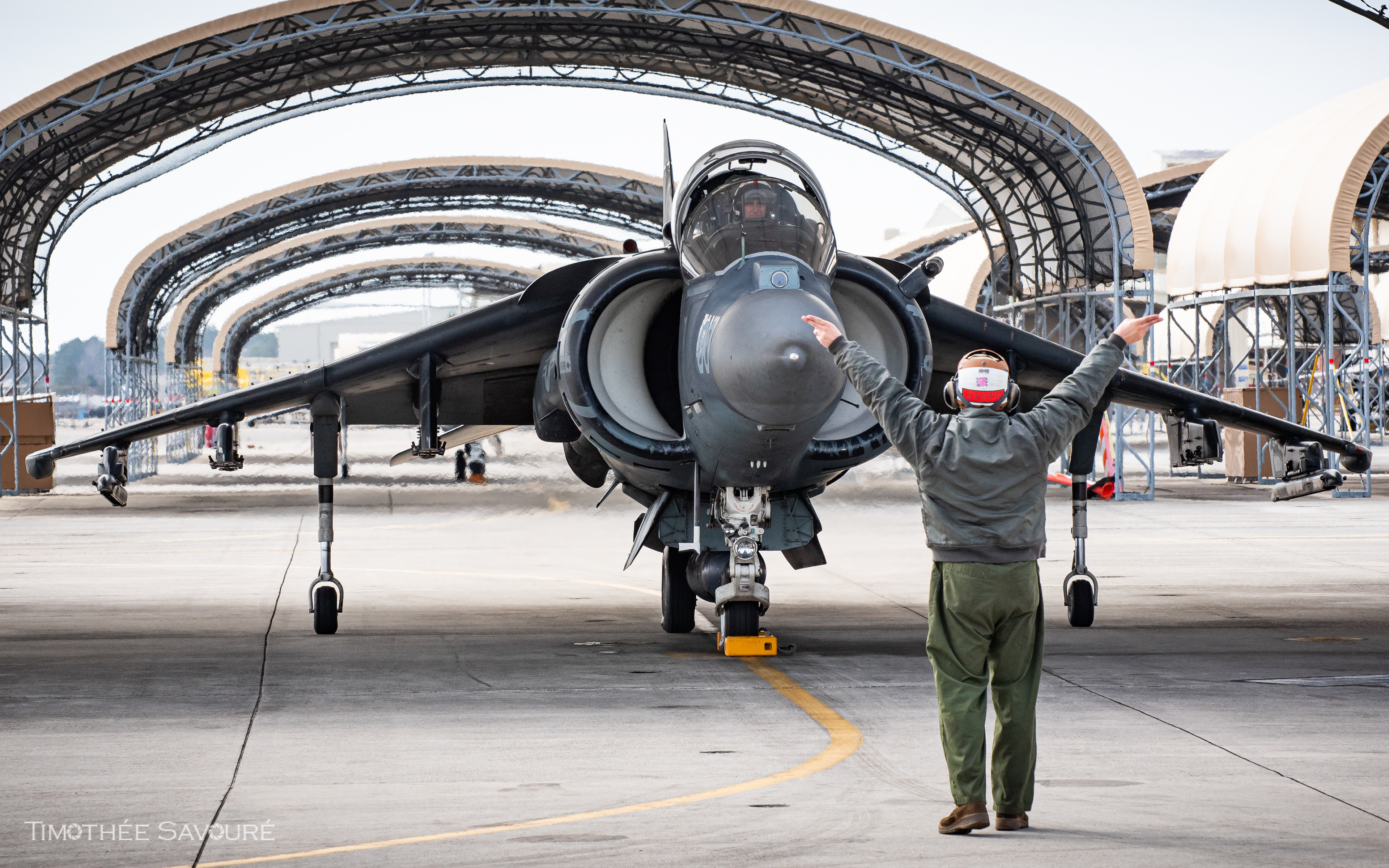
Lieutenant Colonel Cumbie, VMA-223 Commanding Offier
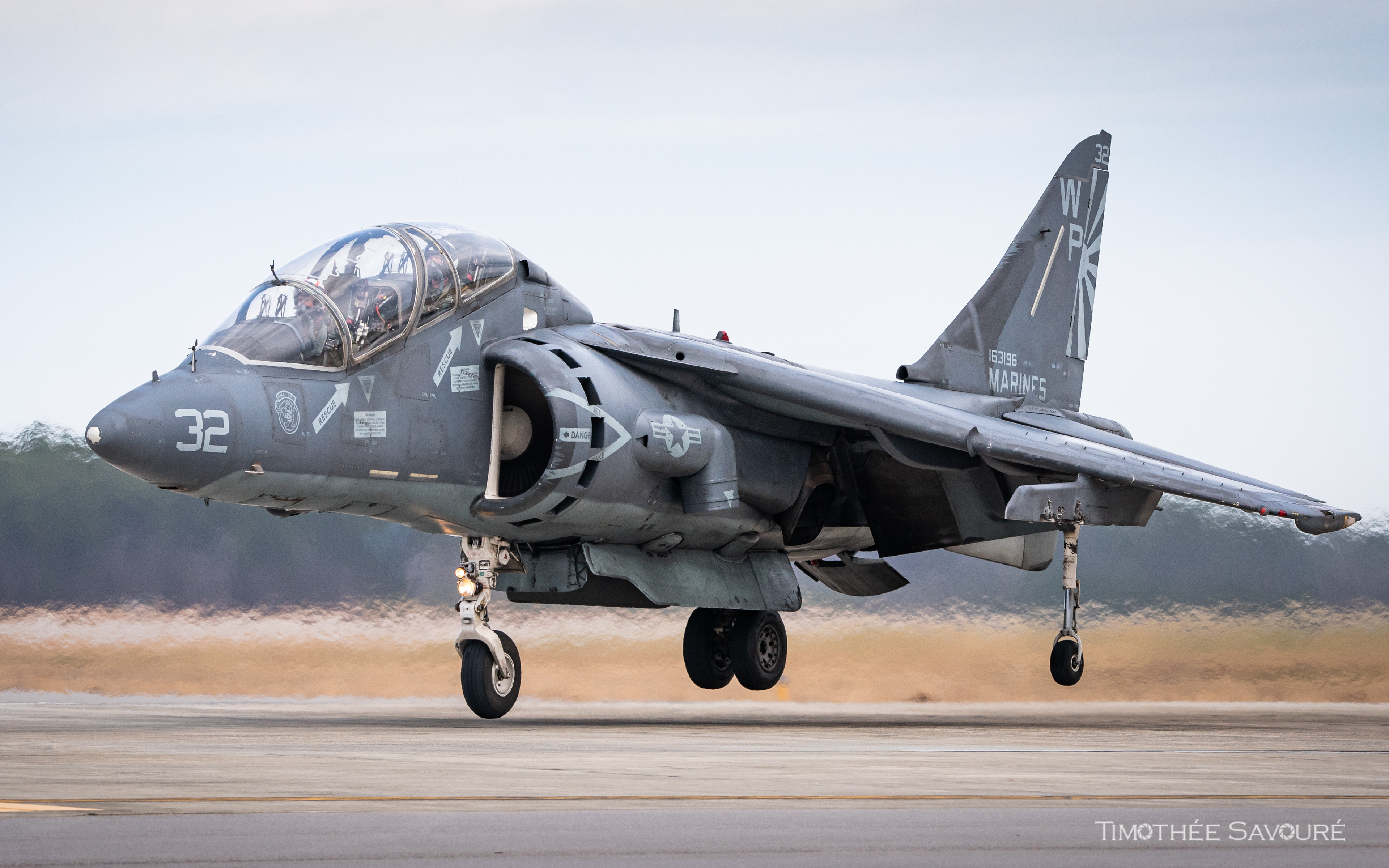
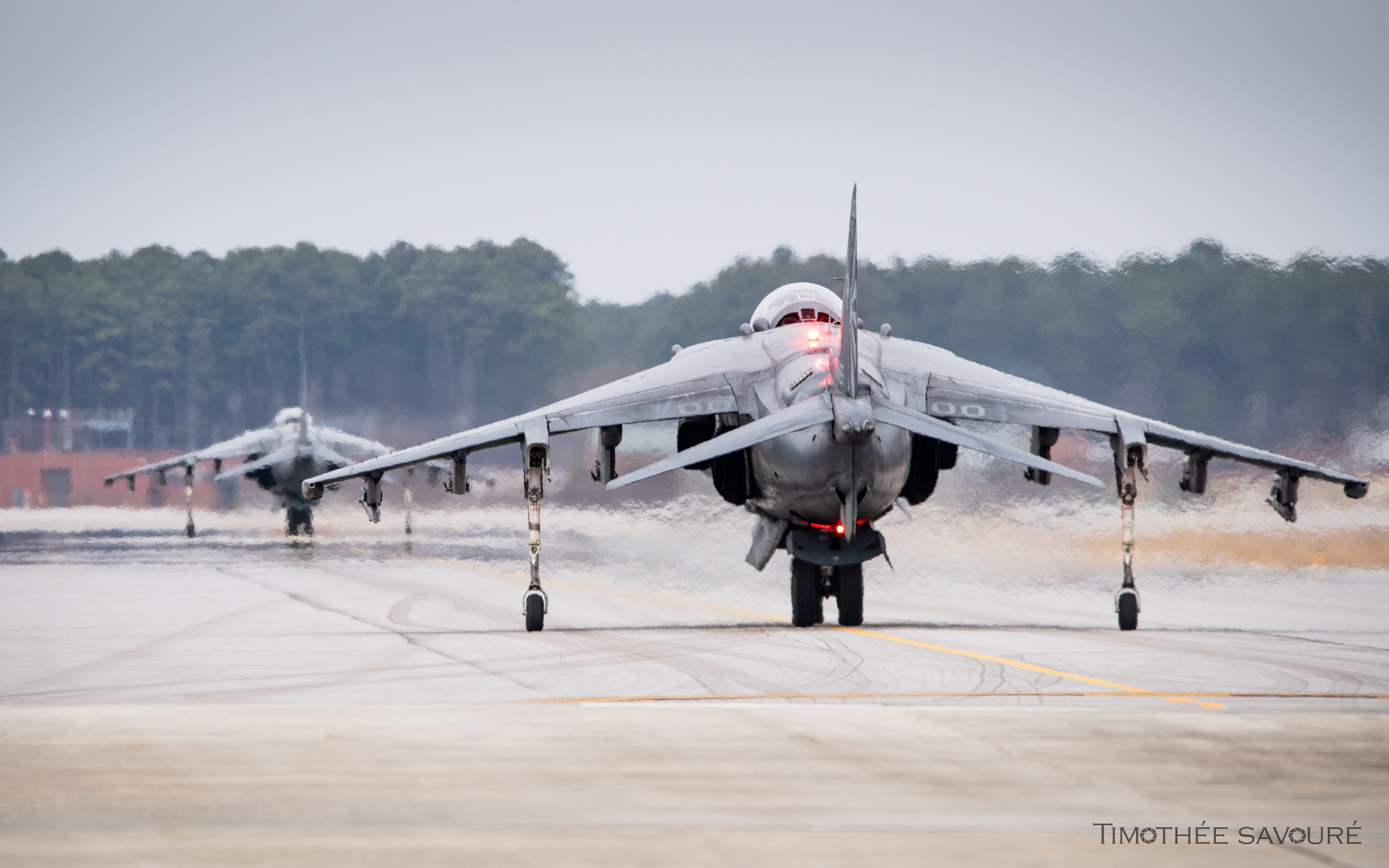
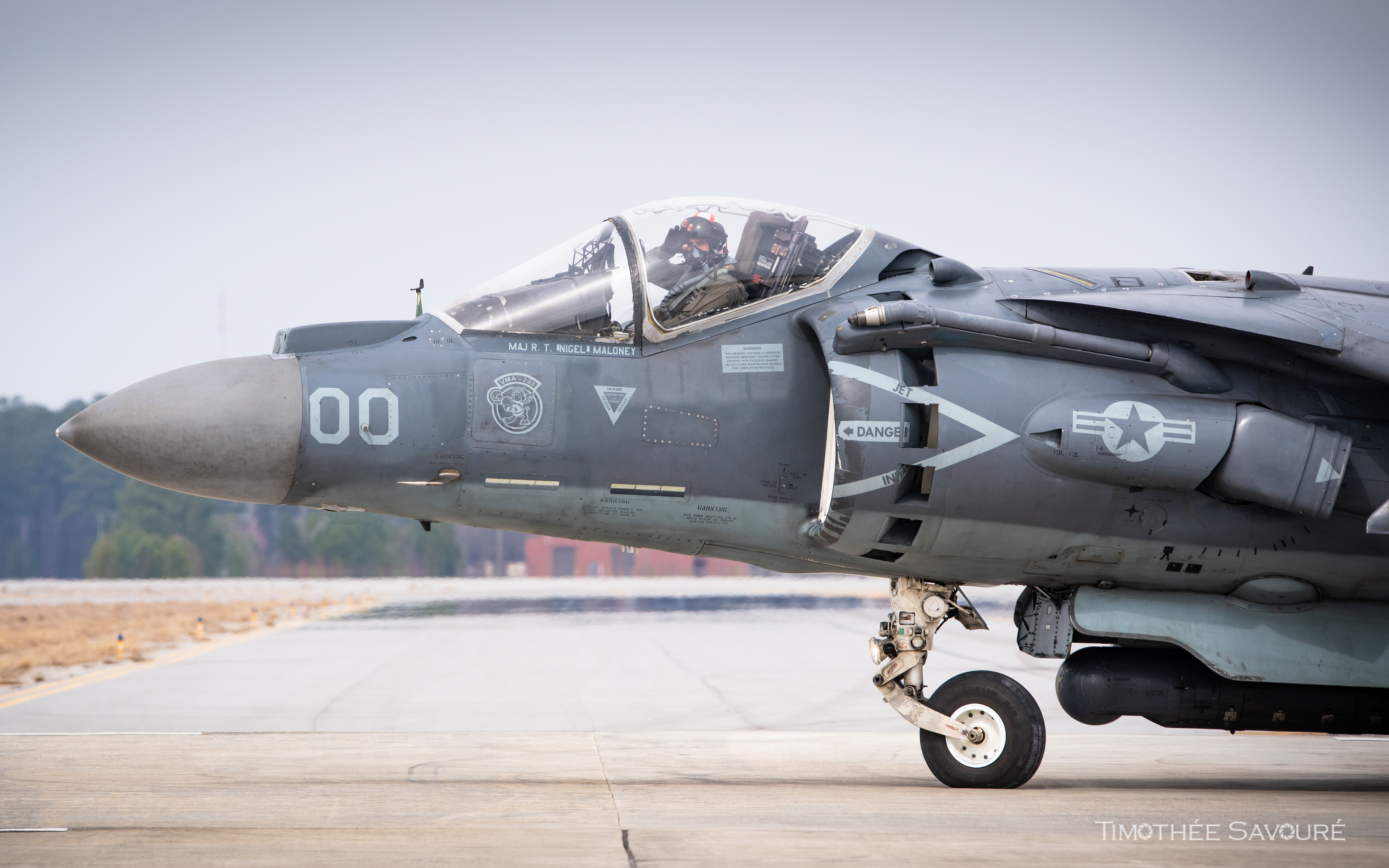
Major Sheibe, VMA-223 Executive Officer
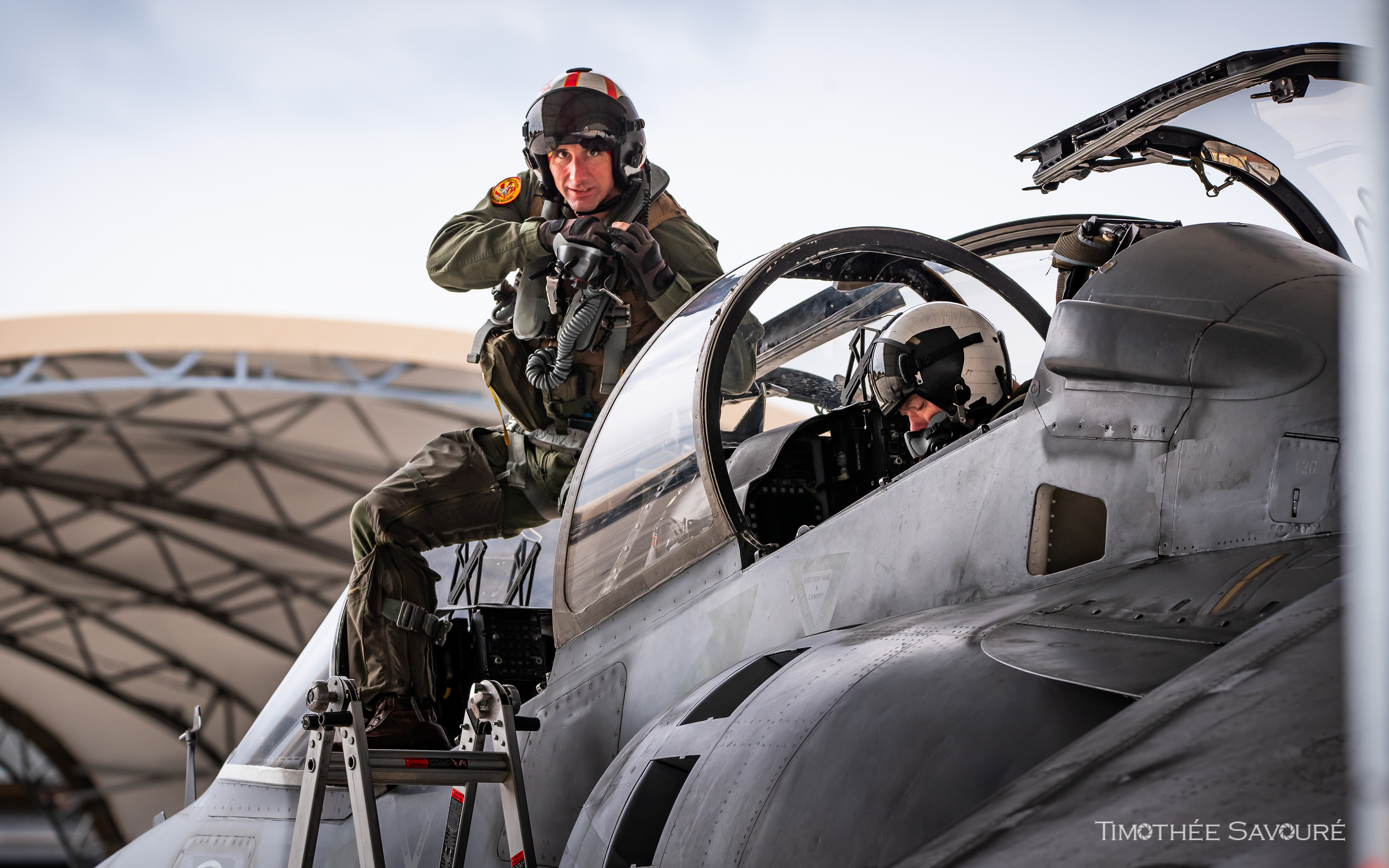
Lieutenant Colonel Cumbie, VMA-223 Commanding Offier